DHL: What is the Future of Sustainable Packaging?
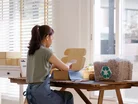
Global logistics company DHL has released its predictions for what sustainable packaging will be like in 2026.
It is encouraging companies to make the right choices on biodegradable materials and smart packaging in order to appeal to consumers that are seeking out more eco-friendly brands.
This comes after the recently introduced Packaging and Claims Knowledge (PACK) Act in the US government, which aims to standardise regulations on recyclable packaging claims across the country.
Congressman Randy Weber, who introduced the PACK Act, says the legislation will help consumers recycle their packaging: “Americans want to do the right thing, but misleading labels make that harder.”
Biodegradable or compostable materials
DHL says that businesses will try to move away from plastic packaging in 2026, instead favouring paper-based and biodegradable alternatives.
It predicts that there will be a rise in bio-based materials including polylactic acid (PLA), which is a compostable plastic made from cornstarch, and mushroom-based packaging grown from mycelium.
These materials can be used as an alternative to plastic in packaging manufacturing, with an improved environmental footprint as they can break down in compost conditions within a few months.
Leendert Van Delft, VP Global Sales Programmes, Marketing & Global E-Commerce at DHL, says: “Thanks to growing demand, these materials are no longer just for big-budget brands either.
“Today, SMEs can source them through specialised packaging suppliers, co-packing partners or even in ready-to-use formats designed for e-commerce.”
DHL also says companies should start “lightweighting” in their packaging development – which means using less material while preserving durability.
This can involve using thinner cardboard, different folding designs or new materials engineered for strength.
These smart designs can reduce shipping costs as well as cutting down on emissions throughout the packaging production process.

Taking a circular approach to packaging
In recent years, circularity has been on the rise as packaging manufacturers aim to increase the lifespan of their products and materials.
DHL predicts that there will be a decline in single-use packaging, as circular packaging is gaining momentum.
It says by using circular packaging, especially with initiatives such as deposit return schemes, customers are more likely to buy from a company again if there is an incentive to return the packaging.
Smurfit Westrock is a global leader in the sustainable packaging industry, with a holistic approach to embedding circularity across its value chain.
Its closed loop manufacturing model starts with using renewable raw materials to create its paper-based packaging alternatives.
For example, Smurfit Westrock has developed a paper-based alternative to shrink wrap on bottles, which is robust and effective at protecting and carrying bottles.
It also produces paper-based punnets for fresh produce, which are 100% recyclable, renewable and biodegradable.
This helps optimise the supply chain while allowing consumers to efficiently recycle the packaging at home.
Tony Smurfit, President and Group CEO of Smurfit Westrock, says: “As a company we are focused on bettering the planet, supporting our people and the communities in which we operate, while delivering impactful business.
“Smurfit Westrock aims to create the ‘go-to’ packaging partner of choice, helping our customers deliver on their sustainability goals.”
The rise of smart packaging
DHL says that in 2026, there will be a rise in “smart packaging”, which can help customers learn how to responsibly dispose of materials using QR codes and NFC tags.
One company showcasing this technology is food & drink company Danone.
Danone began rolling out smart packaging in 2024 on its Silk milk products.
The cartons feature a QR code-enhanced How2Recycle Plus label, which was launched by The Recycling Partnership.
The How2Recycle Plus label includes a Recycle Check QR code, which allows customers to receive localised recycling information.
Danone says that the smart packaging helps its consumers participate in recycling across the US and that the company plans to include the label on its other products.
Katherine Huded, Vice President of Recyclability Solutions at The Recycling Partnership, says: “With a How2Recycle label already inside nearly every home in America, the new label, featuring Recycle Check, delivers real-time information on what is accepted for recycling locally to people across the country.
“Reducing confusion on what can be recycled is essential to improving the US recycling rate.
“Real-time, location-specific education is a critical tool for recovering the 76% of what could be recycled but is instead sent to landfills or incinerators.”
Company portals


Executives

Katherine Huded
Vice President of Recyclability Solutions
Leendert van Delft
Vice President Global Sales Programs, (Digital) Marketing & Global E-commerce

Tony Smurfit
Chief Executive Officer