Are the Days of Tesla EV Sales Domination Over?
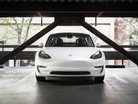
Tesla announced the biggest drop on record for its quarterly delivery numbers in Q2 of 2025.
It delivered 384,112 vehicles – nearly 3,000 short of expectations.
The company is facing a fair few headwinds, including a public social media feud between CEO Elon Musk and US President Donald Trump, but the drop in deliveries did not stop a rise in its stock price.
Tesla’s revenue is currently driven by EV sales, but it is working on a range of other products including robotaxis, humanoid robots, solar panels and battery storage.
EV market dominance
Previously, Tesla held a dominant share of the US EV market – nearly 75% in Q1 of 2022.
This has since dropped, reaching a low of 43.5% in Q1 of 2025.
General Motors is one of the companies catching up, with brands including Cadillac and Chevy now selling EVs.
Cassandra Garber, Chief Sustainability Officer at General Motors said: “We’re now the #2 EV company in the US, thanks to the dozen EV models we offer across the Chevrolet, Cadillac, GMC Hummer and Buick brands.
“I love our vehicles! You need to experience GM’s incredible advancements in design and technology.”
Globally, Chinese brand BYD held a leading share of the EV market in 2024 with 22.2% compared to Tesla’s 10.3%.
Other brands, like Wuling, BMW and Li Auto, are starting to catch up with Tesla.
Solar panels and battery storage
Tesla develops, manufactures, sells and installs photovoltaic solar energy systems and related services alongside its EVs.

It entered the solar market in 2016 with its acquisition of SolarCity for US$2.6bn, aiming to create a vertically integrated sustainable energy company.
In 2024, Intersect Power announced a 15.3 GWh storage contract with Tesla for its solar and storage project portfolio.
“Intersect continues to be an exceptional partner and their development expertise combined with the plug-and-play nature of Tesla’s vertically integrated technology enables the speed and scale needed to enhance grid resilience and support greater renewables integration,” said Mike Snyder, VP, Energy and Charging at Tesla.
Tesla’s robotaxi launch
Tesla’s robotaxis rely on different technologies to its competitors, opting to rely primarily on in-vehicle cameras.
Waymo and Zoox, owned by Google and Amazon respectively, use a mix of radar and LiDAR technology.
Using camera technology may help to keep costs down, but it has drawn scrutiny from regulators and consumers.
The US National Highway Traffic Safety Administration (NHTSA) has stated that it "does not pre-approve new technologies or vehicle systems", instead requiring manufacturers to certify compliance with safety standards whilst the agency investigates potential safety defects.
When the autonomous vehicles were launched in June 2025 in Austin, Texas, some social media footage appeared to show the robotaxis violating some traffic regulations.
The NHTSA confirmed that it was in contact with Tesla regarding this footage.
Humanoid robots
Optimus, also known as Tesla Bot, is a humanoid robot under development by Tesla.
In 2022, Tesla CEO Elon Musk said that he believes Optimus could become more significant than the company’s vehicle business in the future.
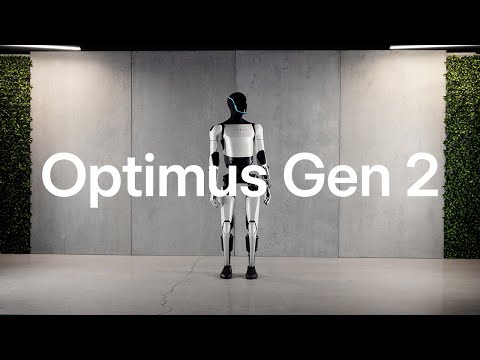
When it was announced in 2021, Tesla said that the robots will be controlled by the same AI system the company is developing for use in its cars.
The company’s website says that Optimus is “capable of performing unsafe, repetitive or boring tasks” and makes use of advanced AI.