
Inside Avery Dennison's Sustainable and Circular Factory
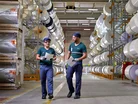
Avery Dennison has reached a significant sustainability milestone in China, with its Guangzhou operation becoming the first in the pressure-sensitive labels industry to receive national-level “green factory” accreditation.
This recognition is particularly rare in a country where manufacturing plays such a central role in the global economy.
To date, only around 6,000 factories across China have been awarded this accreditation, with just 1,300 receiving the honour in 2025.

Setting a benchmark for sustainable operations
This recognition is the result of years of continuous improvements across operations.
While visitors may first notice the automated logistics systems and precision coating and die-cutting lines on site, the accreditation reflects deeper structural changes.
These include enhancements in energy efficiency, closed-loop wastewater and emissions management and systematic strategies for material reuse.
This is “proof that sustainability and industrial performance can go hand in hand,” writes Mike Colarossi, Head of Enterprise Sustainability at Avery Dennison, on LinkedIn.
“This is leadership in action.”
Driving towards sustainability goals
The Guangzhou milestone is part of Avery Dennison’s broader sustainability journey.
The company has set ambitious 2025 and 2030 sustainability goals, aligning with seven of the United Nations Sustainable Development Goals (SDGs).
Key targets include:
- Ensuring all core product categories meet the third-party verified ‘Sustainable ADvantage standard’. As of 2024, 78% of Avery Dennison’s Solutions Group and 67% of its Materials Group have achieved this.
- Reducing Scope 1 and 2 GHG emissions by 70% from a 2015 baseline, as well as working with supply chains to reduce its Scope 3 GHG by 30% against its 2018 baseline. So far, Scope 1 and 2 emissions have been cut by 54%, with a longer-term ambition to reach net zero by 2050.
- Sourcing 100% of paper fibre from certified, deforestation-free sources, now at 97% compared to 45% in 2015.
- Diverting 95% of waste away from landfill, with a minimum of 80% of waste recycled – 91% of operations are already landfill-free and 68% of waste recycled.
Avery Dennison also aims to deliver a 15% increase in water efficiency at sites, located in high or extremely high risk countries, according to the 2024 results 17% has increased.
An industry first
Avery Dennison has developed the first radio-frequency identification (RFID) label to receive APR Design for Recyclability recognition from the Association of Plastic Recyclers, marking an industry-first validation of RFID compatibility with North America's PET recycling stream.
By combining its CleanFlake adhesive technology with materials science expertise, the company has created a proprietary RFID label that cleanly separates from PET during mechanical recycling, reducing contamination and improving recovery rates.
With 96% of the top 50 brands committed to recyclability and waste reduction targets, according to Bain & Company, this breakthrough offers a practical solution to advance circular packaging.
“RFID technology is essential for the effective and sustainable management of modern supply chains, supporting brands with greater inventory visibility, product traceability and loss prevention,” says Pascale Wautelet, Vice President, Global R&D and Sustainability at Avery Dennison Materials Group.
“APR’s recognition marks a pivotal step forward in advancing circular packaging and supporting the global transition to sustainable material use.
“As consumer goods companies set increasingly ambitious recycling targets, Avery Dennison remains committed to helping our customers reduce waste by investing in innovation and designing products that can be effectively recycled.”
Given PET’s widespread use in bottles, food containers, cosmetics and household products, recycling-compatible RFID technology has the potential to reduce plastic waste at scale, extend PET’s lifecycle and support brands in achieving their sustainability goals.
Avery Dennison plans to make this innovation widely available later this year while working with independent certifiers to expand recognition across global markets.
A commitment to circularity and innovation
Circularity remains at the heart of Avery Dennison’s product innovation.
The company is developing solutions to ensure that single-use consumer packaging and apparel labels can be recycled, composted or reused.
By embedding recycled or renewable content into its materials, Avery Dennison is actively contributing to the circular economy.
The Guangzhou accreditation is more than recognition; it is a signal of the future of manufacturing.
By proving that sustainability and industrial excellence can align, Avery Dennison is helping raise the bar for the entire pressure-sensitive labels sector.
With progress already evident against its 2025 targets and more ambitious 2030 goals in place, Avery Dennison’s path forward demonstrates a clear commitment: to embed sustainability into every aspect of operations while contributing to global climate and circular economy priorities.
