BESS-as-a-Service: How ABB is Removing Battery Barriers

Global demand for electricity is growing fast with the expansion of electrification and digital technologies.
Electricity demand from data centres alone is projected by the IEA to more than double globally, reaching 945 TWh by 2030.
In the United States, it predicts total electricity demand will grow by about 25% from 2023 to 2030.
Battery energy storage systems (BESS) can shift surplus solar and wind energy to hours where there is higher demand for power, allowing operators to meet peaks without using fossil fuel generators.
According to the IEA, there has been strong growth in both utility-scale and behind-the-meter batteries, with around 42 GW added in 2023 alone.
However, high upfront costs and infrastructure requirements have kept BESS out of reach for many companies.
A whitepaper from ABB, in partnership with GridBeyond, shows how BESS-as-a-Service could help businesses to overcome electricity challenges.

Stuart Thompson, President of ABB Electrification Service, says: "The business case for battery storage has never been stronger.
“We need energy solutions that deliver immediate financial returns, operational resilience and the flexibility to adapt to changing market conditions.
“With BESS-as-a-Service, the barriers to entry are eliminated: no upfront capital, no technology risk, just immediate access to cost savings and new revenue opportunities.
“Whether companies are pursuing sustainability goals or simply looking to optimise their energy spend, battery storage delivers tangible value from day one."
Why BESS is needed now
As systems decarbonise, variable renewables create timing gaps between when energy is generated and when it is needed.
Without storage, this excess energy is curtailed.
On site storage can reduce grid reliance, flatten demand peaks and increase use of self-generated solar.
Typical commercial and industrial BESS units range from 500 kW to 20 MW and can occupy roughly four parking spaces, so deployment is feasible even on constrained sites.
Batteries can also complement heat pumps and electric vehicle (EV) charging, shifting solar from midday to evening operations.
What is different about BESS-as-a-Service?
Instead of buying and operating a system, BESS-as-a-service customers pay a predictable OPEX fee for a behind-the-meter battery that ABB designs, installs and manages over a 10 to 20 year term.
Performance, availability, maintenance and replacement are on ABB’s account and optimisation and market participation are handled on the customer’s behalf.
“Our new managed BESS-as-a-Service is the first of a range of ABB service-based models that will allow businesses to adopt advanced energy solutions without the financial strain of large initial investments,” Stuart explains.
“Battery storage technologies are a key enabler of the energy transition, and by removing financial and technical barriers, our new ‘as-a-service’ model will empower businesses to take control of their energy needs, strengthen their resilience and unlock new value from their assets.”
The role of AI in energy storage
“Through its AI platform, GridBeyond is a key player in supporting businesses’ energy transition and helping to deliver net zero globally,” says Michael Phelan, CEO and Co-Founder of GridBeyond.
“AI technology has become essential in forecasting energy availability, market prices and optimising asset utilisation.
“At GridBeyond, we use AI for real-time decision-making, from forecasting renewable energy availability to optimising production schedules and asset participation in energy markets.
“Our AI algorithms analyse historical data, weather patterns and other relevant factors to generate precise forecasts that enable us to anticipate fluctuations in energy supply and demand.”
AI, Michael explains, can also help to forecast market prices, helping to optimise asset use and maximise revenue generated.
“This enables us to navigate dynamic market conditions, anticipate challenges and seize opportunities proactively, ensuring our managed batteries remain agile and competitive in a rapidly evolving landscape,” he says.
Company portals


Executives
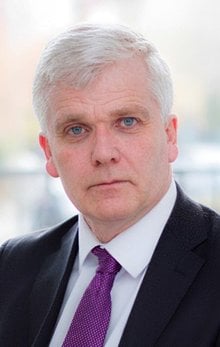
Michael Phelan
Chief Executive /Co-founder
Stuart Thompson
President, Electrification Service Division