
Building Trust in Nature-Based Solutions With Veritree
To invest in nature, organisations need strong systems that let them track progress openly and transparently.
As more people focus on nature-based solutions, corporate social responsibility and land cleanup, the main challenge is making sure investments lead to real, lasting ecological restoration.
For many years, environmental reporting mostly used simple statistics, like counting the number of saplings planted.
But just tracking inputs does not ensure healthy ecosystems. The most trusted projects are those that are monitored throughout the entire life of the land to make sure the benefits last.
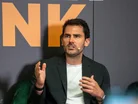
At Sustainability LIVE: The Leadership Summit in London this June, Veritree CEO and Co-Founder Derrick Emsley talked about how hard it is to scale reliable nature-based solutions.
"Nature itself is an incredibly hard, challenging place to work," Derrick says.

"It's not as easy as just a checkbox. In a lot of cases, organisations want to invest in nature, but they don't understand how. And what you see a lot is groups looking for either the input — the tree being planted — or the outcome, which may be carbon or biodiversity.
“But connecting those two dots is where a lot of these projects tend to fail. You might fund the tree planting, but you're not funding the actual healthy forest at the end of it. Or you're trying to fund the carbon impact, but you're not actually funding the appropriate inputs and steps in the journey to get there.
“Then five years in, you realise the impact wasn't actually there.
"Nature itself is a long-term investment. It's about connecting the inputs within those projects to the actual tangible outcomes, and monitoring that journey through the entire project.
“That, to us, is what makes a high-quality, high-integrity nature-based project."
Transitioning to a restorative model
Global businesses are now expected to reduce their impact on the environment as a basic standard.
By going beyond just reducing harm and working on active ecological restoration, organisations can create lasting value and connect more deeply with their stakeholders.
"At the end of the day, organisations are all going to be looking to try to do less bad in the world," Derrick says.
"At the end of the day, you don't build a movement by doing less of something. You build a movement by motivating people to do more good. And that's really where this idea of the transition from sustainability and less bad to restoration and doing more good [comes in]. That's what we believe in."
Veritree has worked with the likes of Samsung to plant more than 2,000 trees, and hotel operator Shangri-La on "subforests" in London, Paris and Bengaluru.
Designing for long-term health
To judge a project's success five or ten years later, you need to start with baseline assessments, involve the local community, and check results directly on the ground instead of relying on remote guesses.
"It all comes down to the ecosystem and the goals that you establish at the beginning," Derrick says.
"It starts with a high-quality project design. What was the land before this work happened? What is a healthy forest in this kind of ecosystem? It's defining those: what does it look like for the communities that are going to be impacted in the forest adjacent space here?
“It's also understanding the steps over the next three, five and 10 years to actually ensure that the communities are impacted appropriately and enrolled in the project. It's about monitoring it effectively from the ground up."
"Because a lot of problems happen when you try to monitor from the sky down and you find out five years later that none of the impact actually happened.”
Restoring trust in nature investments
However, keeping track of the benefits from these long-term commitments is not easy.
Uncertainty and complex compliance rules make it hard for organisations to invest money or share their progress.
“At the end of the day, organisations are all going to be looking to try to do less bad in the world ”
Having reliable data to address these concerns would help speed up the use of nature-based solutions.
“If you look at the last five years of climate initiatives in general, what you've often seen is that a lot of groups are worried about the risk of getting it wrong,” says Derrick.
“So for me, the biggest gap isn't funding.
“Our view is that the technology and the infrastructure to monitor these projects transparently across the entire life cycle of the project is what's needed.
"We don't need 14 more standards or 100 more additional standards to layer on the existing ones.
“What we need is the tools to scale these projects from the ground up in a rapid, measurable, transparent way and then allow the organisations that are funding these projects to have the confidence to really invest in them."
Company portals

Executives
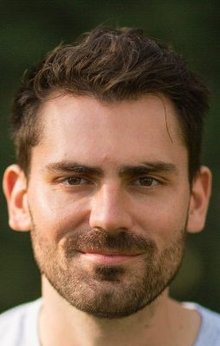
Derrick Emsley
CEO and Co-Founder