
Can Microsoft & TealWaters' AI Save Disappearing Ecosystems?
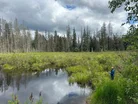
Wetlands are under threat and disappearing at a worrying pace as urban growth and farming continue to drain these vital ecosystems.
Microsoft now backs a project using AI to find wetlands that have long evaded conventional mapping.
Through its AI for Good Lab, the tech company funds TealWaters, a research outfit that’s building mapping tools to track down these overlooked environments and prevent them from vanishing completely.

AI turns detective to trace disappearing wetlands
As a 2023 Nature study shows, 21% of wetlands have already disappeared over the last 300 years.
While that number reflects centuries of damage, the loss continues.
Wetlands often get dismissed as unproductive ground, patches of soggy land that need draining to make way for agriculture or urban sprawl.
But these hard-to-find ecosystems are also some of the most powerful when it comes to storing carbon and supporting biodiversity.
The challenge lies in locating them before they’re gone.
TealWaters introduces the Wetland Intrinsic Potential tool, which uses machine learning (ML) to find wetlands that traditional mapping overlooks.
Aerial imagery, elevation models and water flow patterns feed into the tool.
It processes all this through Microsoft’s Azure cloud platform and applies computer vision and neural networks to detect the signatures of wetlands hiding beneath dense tree cover.
“Wetlands are super important ecosystems that provide a ton of functions for communities, but we don’t know where they are, what they’re doing and how to protect them,” says Meghan Halabisky, TealWaters’ Chief Scientist and a remote sensing expert at the University of Washington.
Using AI, the tool doesn’t only locate wetlands but also estimates their carbon storage and monitors changes over time.
It can even highlight where wetlands once existed but no longer do, offering a blueprint for restoration.
“Increasingly, we understand how vital wetlands are to a healthy planet,” says Juan Lavista Ferres, Microsoft’s Chief Data Scientist and Director of the AI for Good Lab.
“TealWaters’ work plays a critical role in shaping a sustainable future and is a great example of how AI can help us better understand rich, diverse ecosystems.”
Supporting land stewards with smarter data
The technology is already helping Indigenous communities protect their lands.
The Tulalip Tribes in Washington state use the tool to map wetlands across their ancestral territory.
For them, this isn’t just about environmental protection, it connects directly to their cultural identity and food systems, from huckleberries to salmon.
“Much of the tribe’s culture relies on its reciprocity with the land and you have these beautiful wetlands that are biological hotspots for so many different species," says Steve Hinton, a conservation scientist with the tribe.
“The tool helps us understand moisture on the landscape in a way that’s crucial for our cultural and environmental resilience.
AI enables us to go through those mountains of information, helping us manage our lands and tell our story more effectively.”
The team selects Washington state as the proving ground for the project.
Its diverse geography, ranging from coastal wetlands to mountainous forests, gives the model a wide testing range.
The goal is to build a high-resolution wetland map, with an emphasis on carbon-rich peatlands and forested wetlands that are usually missed.
And the benefits don’t stop with tribes.
Smaller cities that lack wetland experts or mapping resources are also using the tool.
By replacing consultant fees and lengthy fieldwork with smart data analysis, the tool helps local governments make better planning decisions, without heavy costs.
“There are folks like the Tulalip Tribes using this tool to broadly ask how water is held across the landscape and where wetlands can be restored to store water longer through the season,” explains Maureen Ryan, TealWaters’ Multidisciplinary Development Lead.
Making the tech scale globally
TealWaters brings together collaborators from the University of Washington and California-based geospatial firm TerrainWorks.
Microsoft supports the project with access to its Planetary Computer, a cloud platform housing environmental datasets used to refine models and expand tool access globally.
“We’re working with Microsoft to see how we can improve our models with deep learning and make the tool scalable and easy to deploy for different communities,” says Meghan.
Mark Newell, TealWaters’ Business Development Lead says: “When you drain a wetland, we often don’t realise what we lost, because the land kind of looks the same and feels more ‘useful’.”
“But wetlands are a giant battery for all this habitat, carbon, water and cooling.”
As the technology advances and spreads to other regions, its role becomes clearer, mapping and managing the planet’s hidden wetland assets could be key to meeting sustainability targets.
By combining AI with ecological knowledge, the partnership offers new tools to safeguard ecosystems that store carbon, regulate water and support biodiversity, all while helping communities on the front line of environmental change.
