Circularity: How JLR is Partnering to Reduce Vehicle CO₂e
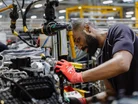
Jaguar Land Rover (JLR) has unveiled a concept vehicle featuring 49 components designed to reduce environmental impact.
The Cornerstone project represents collaboration with more than 40 companies in the supply chain.
The initiative could deliver CO₂e savings of more than one tonne per vehicle compared to current manufacturing methods and materials.
According to JLR, this reduction matches the emissions from one passenger flying between Paris and New York.
Paul Francis, Senior Manager Circularity at JLR, says: "What we're achieving with Cornerstone shows how JLR can lead in advancing circularity across the automotive industry, and the value of a coordinated, multi‑party approach to deliver progress faster."
Supply chain partnerships
The concept vehicle builds on partnerships across multiple tiers of the automotive supply network.
Paul explains the company maintains performance and quality requirements throughout the development process.
"It's essential we maintain the highest performance and quality standards," Paul explains.
"When we engage early on shared goals and each partner in the value chain brings their expertise collaboratively throughout development, production efficiency and overall outcomes improve significantly.
"This is how real, honest progress is made, and how the economic opportunity of circularity can be realised."
The collaborations have produced several material innovations.
These include fully closed-loop recycled glass with a 36% reduction in CO₂e emissions.
Other developments include electronics designed to allow headlamp repairs through de-bonding technology.
Speaker components now incorporate magnets made from 95% recycled materials.
JLR says building components for an actual bodyshell helps establish implementation routes for production vehicles.
Four innovations already have deployment schedules for upcoming models.

These planned integrations include recycled door glass and lower-emission steel.
Seat foam from recycled sources and new headlamp technology will also feature in future vehicle programmes.
Testing through the Circularity Lab
The company operates a Circularity Lab at its Gaydon facility in the UK.
The site combines design operations, research capabilities and test track infrastructure.
Teams from different departments work together in the laboratory space.
Specialists in sustainability, engineering, procurement and design examine where circular economy challenges exist in current vehicles.
The process involves disassembling vehicles to identify barriers to material reuse and recycling.
JLR says teams work directly with suppliers to understand and resolve these obstacles.
Information gathered from laboratory testing feeds into vehicle development decisions.
Early analysis of front bumpers found that manufacturers could achieve equivalent quality and performance using fewer polymers.
According to JLR, this change could save 177,500kg of CO₂e across a single model line.
The modification could also reduce costs by more than US$700,000.
Andrea Debbane, Chief Sustainability Officer at JLR, said: "I am so excited about the potential of this way of working."
"It represents a collective commitment to doing things differently, challenging us to rethink our approach from all angles to find the solutions needed to design and build the cars of the future."
Circular economy in automotive manufacturing
Material scarcity and supply chain resilience concerns could be influencing manufacturers to examine circular economy models.
Geopolitical factors may also play a role in these business decisions.
The World Resources Institute projects global raw material extraction will increase by 150% by 2060 under current consumption patterns.
This scenario could deplete high-grade commodity reserves.
Closed-loop material systems like the recycled glass process developed by JLR could reduce competition for diminishing raw material supplies.
Rare earth elements face particular supply constraints.
A small number of countries control primary processing of these materials.
Reusing rare earth elements could allow manufacturers to reduce dependence on international supply routes and avoid export restrictions or trade tariffs.
Remanufacturing operations and circular reverse logistics typically operate on local or regional scales.
This could shorten supply chains and reduce exposure to global logistics disruptions.
Mary Creagh CBE, the UK's Minister for Nature, says Cornerstone project “shows how industry can innovate with government providing a stable policy and investment framework".
Company portals

Executives

Andrea Debbane
Chief Sustainability Officer
Paul Francis
Senior Manager, Circular Economy