
COP30: Will Summit be a Climate Triumph or a Farce?
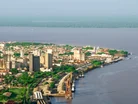
The Amazon basin is known as the Earth’s lungs. So what better place to hold COP30 than Belém, in the heart of the South American rainforest?
Following the controversy-dogged COP29 in Baku, Azerbaijan, there are high hopes that this Conference of the Parties will breathe new life into a brand that was becoming synonymous with lobbying and political obfuscation.
But the location has thrown up new problems, which threaten to overshadow the sole purpose of COP30 – to advance climate action.
The lowdown on the location
From 10-21 November, Belém, the capital of Pará state, Brazil, will be rammed to the rafters with politicians, diplomats, business leaders, sustainability executives, lobbyists and journalists.
COP30 is widely trailed as the most important climate conference since Paris 2015 and more than 60,000 people are expected to attend.
Its location is no accident: it is soaked with symbolism. Discussions about the survival of the planet are being held where its breath is formed and where 15-20% of global freshwater is stored.
Helder Barbalho, governor of host Pará state, says: "COP30 is an opportunity to hold climate discussions surrounded by the world's largest rainforest."
Belém's infrastructure has undergone massive transformation to accommodate the conference. Federal, state and municipal authorities have coordinated extensive preparations, designed to create lasting benefits beyond the conference dates.

Sweeping programme with 30 themes
The COP30 presidency has unveiled an ambitious Thematic Days calendar spanning more than 30 interconnected themes.
The programme is flagged as "a catalyst for implementation and inclusion", with each thematic day featuring high-level panels bringing together government officials, corporate leaders and civil society representatives.
The breadth of topics reflects the growing recognition that climate action requires systematic transformation across all economic sectors.
For sustainability leaders, this comprehensive approach offers numerous touchpoints for corporate engagement and partnership development.
- Location: Belém, Pará, Brazil – the first COP held in the Amazon basin
- Dates: 10-21 November 2025, with a pre-summit on 6-7 November
- Expected attendance: Over 60,000 participants from 200 countries
- Thematic focus: More than 30 interconnected climate themes
- Mutirão: Delegates will work as a group on a shared task
- Infrastructure: A four-lane highway being built through the Amazon
- Fossil fuels: Brazil’s oil sector regulator is set to auction exploration rights to oil and gas blocks
- Regional significance: First major COP in Latin America since Lima, Peru, in 2014
- Corporate presence: Enhanced private sector participation mechanisms
- Next stop: The location for COP31 is the subject of an arm-wrestle between Australia and Turkey
The Amazon paradox
Hosting COP30 in the Amazon creates compelling narrative power but also generates legitimate concerns.
The region's remoteness and limited infrastructure raise questions about accessibility and carbon footprints from international travel.
Environmental groups worry about the impact of 60,000 visitors on fragile Amazonian ecosystems.
COP30 president André Corrêa do Lago says that companies and NGOs should show up in Belém, despite logistical challenges. He acknowledges related climate events occurring throughout Brazil but emphasises the importance of centralised participation in the official venue.
While some sustainability executives question whether the symbolic value justifies the environmental cost, others argue that experiencing the Amazon first hand will galvanise more ambitious corporate commitments.
All eyes on Brazil's climate leadership
No nation is without a negative climate backstory. But Brazil’s is more prominent and jarring than most.
For decades, the world has watched rapid deforestation of the Amazon rainforest.
COP30 is seen as an opportunity for the Brazilian government to take firm action to slow and stop the process.
Going into the conference, Brazil has shown willing by toughening up its climate targets.
It now aims to reduce net greenhouse gas emissions by between 59% and 67% by 2035.
However, corporate leaders remain cautious about Brazil's long-term consistency. Political changes could reverse current policies, creating uncertainty for companies making substantial investments based on Brazilian climate leadership.
Enhanced corporate climate commitments?
Previous conferences have seen companies use the platform for significant sustainability commitments, from net zero targets to supply chain transformations. The Amazon setting creates pressure for particularly ambitious corporate pledges.
Sustainability in the food and agriculture sector is a particular focus, given the Amazon's role in global agricultural systems. Companies across commodities, consumer goods and retail face scrutiny about their Amazonian supply chain practices.
Financial services companies are preparing climate finance commitments, while technology firms plan announcements about carbon removal and monitoring systems.
The conference's thematic diversity provides multiple opportunities for sector-specific initiatives and cross-industry collaborations.
In the balance
As with every global climate conference, it comes with no guarantees of positive outcomes.
Rising temperatures and fears of their impact on ecosystems and populations give greater urgency than at any previous COP.
The Amazon location should be enough to shake world leaders into action.
But geopolitics, climate change denial, lobbying from “big oil” and countless other factors are lined up to distract and derail.