How SKF’s Decarbonised Factories Cut Manufacturing Emissions
With the manufacturing sector responsible for one fifth of global carbon emissions according to the World Economic Forum, many companies are working to decarbonise their factories and operations.
One of these companies is SKF, a global industrial machinery manufacturer, which focuses on reducing energy waste and having a positive impact on the environment.
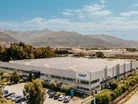
As of December 2025, six of SKF’s factories have been verified as decarbonised sites, joining the company’s three existing sustainable facilities.

What is a decarbonised factory?
The six additional decarbonised factories join the previously recognised factories in Steyr, Austria, Tudela, Spain and Gothenburg, Sweden.
Each of SKF’s factories has an individual decarbonisation roadmap which outlines the site’s emissions reduction trajectory.
Specific actions, investments and expected improvements are included in the company-wide strategy, which helps each site with energy efficiency and phasing out fossil fuels.
In order to qualify as a decarbonised site, the location must meet the following defined criteria:
- Emissions reduction: the site must show at least a 95% reduction in Scope 1 and 2 emissions compared to a 2019 baseline.
- Energy performance: there must be a record of continuous improvement in energy performance.
- Future planning: the site must have a clear and actionable plan to address and mitigate any remaining greenhouse gas emissions.
These criteria apply to any SKF site with an annual energy consumption that exceeds 2 GWh.
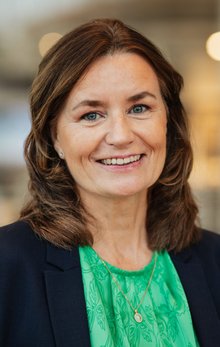
Sofie Runius Cederberg, Head of Sustainability at SKF, says: “We are proud to see six additional decarbonised SKF factories, representing an important step in our overall net zero journey.
“By reducing the carbon footprint of our products, we are also enabling our customers to develop sustainable solutions as well as supporting society in the transition to a more sustainable future.”
Global impact: six new decarbonised factories
The newly recognised factories allow SKF to make a positive impact on a global scale, with the sites located in Malaysia, Mexico, India, Italy and the US.
For these sites, the company has invested in energy efficient technologies including heat pumps and advanced chillers, bringing energy savings despite an increase in production.
The nine total decarbonised facilities represent almost 20% of SKF’s baseline manufacturing emissions, allowing it to reduce its overall carbon footprint.
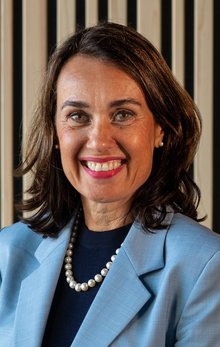
Susanne Larsson, Chief Financial Officer, Chief Sustainability Officer and SVP Finance at SKF, says: “Climate change is a global challenge and this achievement reflects our commitment to climate action and operational excellence.
“By investing in renewable energy, energy efficiency and innovative solutions, we are also increasing our own resilience by lowering our energy demand.”
How do the factories fit into SKF’s strategy?
SKF’s decarbonised sites help advance the company towards its goal of decarbonising its operations by 2030.
It has also set a science-based target to reach net zero emissions throughout the supply chain by 2050.
SKF was among the first industrial companies to have its goals validated by the Science Based Target initiative (SBTi), with its sustainability targets in line with the Paris Agreement’s 1.5C goal.
The company says that it will achieve its 2030 decarbonisation goal through energy and material efficiency improvements and switching to renewable energy sources for its operations.
It also plans to optimise its supply chain, especially by helping its customers reach their own sustainability goals.
This involves making its products lighter, more efficient, longer lasting and repairable, to help reduce the footprint of its products and the materials used.
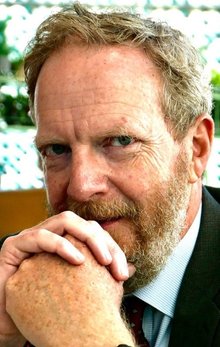
Rob Jenkinson, Net Zero Manager at SKF, says: “Achieving our net zero goal by 2050 is ambitious, but also needed to speed up both innovation and change in society.
“To do this we need to continue working with all stakeholders involved, to not just be a part of creating the change in our own operations but going further by calling for change along the entire supply chain.”
Company portals

Executives
Rob Jenkinson
Net Zero Program Manager
Sofie Runius Cederberg
Head of Sustainability
Susanne Larsson
CFO, CSO & EVP