The US Summit: Discussing Decarbonisation Strategies

Sustainability leaders are facing mounting pressure to streamline emissions data, supplier engagement and regulatory compliance.
At Sustainability LIVE: The US Summit, leaders gathered to hear about the importance of cross-sector collaboration in meeting these challenges and reaching net zero.
The Global Decarbonisation Strategies panel, in association with EcoVadis, examined pathways across energy, transport, manufacturing and finance, focusing on scaling clean technologies and advancing regulation.
The panel featured four sustainability leaders:
- Dexter Galvin, SVP Climate at EcoVadis
- Chelsea Lamar, Vice President of Global Sustainability at AIT Worldwide Logistics
- Maurice Loosschilder, Global Head of Sustainability at Signify
- Linda Caramichael, Head of Climate Action and Sustainable Operations at Kenvue

The balance between AI and climate
The panel featured discussions about how tech giants and utilities are negotiating the tension between rapid AI deployment and net zero commitments.
“I think it is hard to balance a little bit between the climate prioritisation and the operational need for the hyperscalers,” Chelsea said.
“Not that it's impossible or not that they shouldn't, but it is just quite difficult because we have a couple different levers. One is, and I'm speaking specifically about freight because that's what I know, but one is operationally, can we do consolidation? Can we mode shift? Are there any of these options that we have?
“Oftentimes, lately, it has not been an option to try and move something with ocean instead of air or to do consolidation because they just need everything so quickly because of the demand for AI within our society.”
Dexter added: “I think AI is the greatest efficiency tool that we've ever had. And I think climate change is a product of waste and inefficiency.
“So I think it's about how we efficiently deploy AI to solve the existential question of our time. I think there's a gap in governance on AI. I think we need to understand and put some discipline in how companies are actually rolling out AI and how they're using it.
“But it can be made a lot more efficient and easier to get at the data that we need if we leverage AI on that front.”
Domestic renewables versus oil and gas
The speakers also touched upon the shift towards domestic renewables and nuclear, against the volatility of the global oil and gas markets.
“I think all these domestic renewables, they play a role,” Maurice said, “they're a piece of the puzzle and it's a complex puzzle, but I think from our point of view, the most important part is that we start using less energy and that's by far the most important. So increasing energy efficiency.
“And if we go back to the COP28 in Dubai, we all agreed to triple the amount of renewable electricity generation, increase as well as doubling the amount of energy efficiency improvement rates. So it's super important that we start using less because we cannot keep using more and then rely only on the domestic renewables that we have here.”
Linda added: “I think that the energy has always been regional and local. So the concept of having domestic renewables, it for sure decreases the volatility, but it doesn't take the risk away. It just introduces different risks.
“So now you're talking about local grids, local capacity, making sure that after you are energy efficient and reduce your demand as much as possible, that you can get those electrons to your plant or your house or wherever you need them.
“And so we at Kenvue, we like to look at it sort of as a global strategy and a local implementation plan and kind of top down, bottom up. So every site has its own decarbonisation roadmap. It's very local.”
Company portals



Executives
Chelsea Lamar
Vice President, Global Sustainability
Dexter Galvin
Climate Ambassador
Linda Caramichael
Head of Sustainability (Climate, Nature & Human Rights)
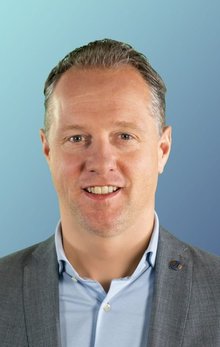
Maurice Loosschilder
Head of Sustainability