
Ecolab: Consumers Don't Know the Scale of AI's Water Problem
A new study from Ecolab has revealed that the general public does not fully understand the scale of AI's water problem, with consumers far more aware of AI's energy consumption than its substantial water requirements.
The third annual Ecolab Watermark Study, released this week, surveyed adults across 15 countries and found that while most consumers grasp AI's power needs, far fewer recognise the amount of water required to regulate the temperature of data centres.
In the US, for instance, just 41% of consumers acknowledge water use in AI operations, compared with 55% who recognise its significant power consumption.
That gap in public awareness widens considerably in Asia Pacific and Latin America, according to the research conducted in partnership with Morning Consult in March 2025.

Reusing waste water is an untapped opportunity
These findings arrive at a time when the construction of data centres is skyrocketing all over the world and water resources are growing scarcer.
"By 2050, the world will have nearly 30% more people and require 47% more energy. Water demand will continue to surge – yet by 2030, the world already faces a projected 56% water deficit," says Christophe Beck, Chairman and CEO at Ecolab.
Christophe also emphasises that while energy can be generated, water cannot be created, which makes it a necessarily finite constraint on AI expansion.
What's more, just 20% of industrial wastewater is reused for data centre cooling systems right now, which means that the vast majority of water that AI uses could be drinking water.
"We see wastewater as an engineering flaw and a missed opportunity as a driver for business growth," Christophe says.
He suggests that AI itself could provide solutions through data analytics, real-time monitoring and temperature adjustments, potentially enabling data centres "that use less water than a car wash".
Nevertheless, the study finds that consumers remain fairly optimistic about AI's potential to drive positive societal change.
Why consumer trust in corporate water management has fallen
The study also uncovered a pronounced trust deficit between consumers and businesses regarding water stewardship.
Whilst most respondents agreed that businesses should invest in technologies to mitigate AI's impact on natural resources, majorities across regions doubted whether companies would actually manage water responsibly.
Fewer than half of consumers in the US (43%), Europe (44%), Asia Pacific (48%) and Latin America (48%) believe businesses are employing smart water management strategies such as reuse or recycling in daily operations.
We see wastewater as an engineering flaw and a missed opportunity as a driver for business growth.
Trust in government action was marginally lower across all regions surveyed, with just 42% of US consumers believing governments are effectively implementing water reduction and recovery practices.
The disconnect is particularly stark given that 67% of consumers across regions believe both businesses and governments should prioritise efforts to lessen climate change impacts.
"Global consumers recognise smart water management is essential for a resilient future, and they expect businesses to lead with both transformative technologies and transparent action to make it a reality," says Emilio Tenuta, CSO at Ecolab.
Emilio suggested businesses have an opportunity to deploy AI-driven water solutions that serve local communities whilst driving innovation.
The research indicates consumers are increasingly willing to support companies demonstrating environmental consciousness, with purchasing preferences shifting towards brands with responsible water practices.
The demand for water security
Water-related extreme weather events are amplifying consumer concerns, with respondents across all regions fearing personal or familial impact from droughts, floods and wildfires within the next five years.
Latin America registered the highest near-term concern, whilst awareness that climate change increases water stress remains consistently high across regions.
Despite elevated anxiety about water availability and quality, the study found declining concern about water scarcity compared with previous years, suggesting growing confidence in potential solutions.
More than 60% of consumers in each surveyed region believe water scarcity can be effectively addressed, with optimism particularly pronounced in IMEA (83%) and Latin America (84%).
Global consumers recognise smart water management is essential for a resilient future, and they expect businesses to lead with both transformative technologies and transparent action to make it a reality.
The future of water governance
The research underscores that no single entity can prevent water challenges independently, with collaborative partnerships between businesses, governments and communities essential to unlocking solutions.
Agriculture continues to be identified as the industry most responsible for water consumption, though the study positions AI and data centre growth as an emerging concern requiring immediate attention.
The research comes as Ecolab, which reported annual sales of US$16bn, continues to position itself as a provider of water management solutions to industrial clients globally.
Company portals
Executives
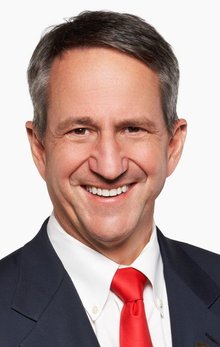
Christophe Beck
Chairman and CEO

Emilio Tenuta
Senior Vice President and Chief Sustainability Officer at Ecolab