GE Vernova’s Sustainability Report: Powering the Energy Grid
As global energy demand continues to rise, the challenge of expanding access to reliable electricity while reducing emissions has become increasingly urgent.
GE Vernova’s 2025 Sustainability Report highlights how the company is advancing this dual objective through investments in cleaner power generation, breakthrough technologies, responsible operations and workforce development.
The report demonstrates how sustainability is being integrated across the business, from supply chains and product design to digital innovation and large scale infrastructure projects.
By combining electrification with decarbonisation, GE Vernova is positioning itself to help meet growing energy needs while supporting long term environmental and social progress.

Circularity and the energy transition
The report highlights measurable progress across GE Vernova’s environmental performance and broader sustainability goals.
According to GE Vernova, approximately 20% of global energy consumption is produced from electricity.
“At its core, our work is not only about electrons and emissions,” said Scott Strazik, GE Vernova CEO.
“Energy is about people and we’re working to electrify the planet in a way that enables individuals, communities and economies to thrive, every day.”
New generating capacity brought online in 2025 operated at a carbon intensity approximately 31% below the global average carbon intensity of the existing grid, while the deployment of lower emission technologies helped avoid an estimated 22 million tonnes of CO₂.
The company also achieved a 64% reduction in Scope 1 and 2 operational emissions from 2019, including a 27% year-on-year reduction in 2025.
The goal of carbon neutrality in Scope 1 and 2 GHG emissions is set for 2030.
Circular economy principles continued to gain momentum, with 53% of GE Vernova’s top products now covered by its 4R circularity framework (Rethink, Reduce, Reuse and Recycle), up from 38% in 2024.
By 2030, GE Vernova aims to have 90% of its top products covered by its 4R circularity framework.
Complementing these achievements, the newly launched Electrification Impact Tracker provides greater visibility into the company’s contribution to global electrification and sustainable development.
“Sustainability is central to how the electrification segment delivers for our customers and is reflected in our focus on safety, quality and our commitment to a lean mindset of continuous improvement across our global operations,” says Philippe Piron, CEO of Electrification, at GE Vernova in the report.
“It also shapes how we think about our responsibilities: reducing environmental impact, conserving resources, supporting communities and upholding human rights throughout our operations and value chain.”
It is predicted that by 2030, the energy industry will create 30 million jobs.
Together, these initiatives demonstrate how sustainability is being embedded across energy generation, resource management and operational performance to support a lower carbon future.
Sustainable supply chain growth
GE Vernova’s Corporate Sourcing Sustainability team is part of the Chief Financial Officers organisation and is determined to ensure that the sustainability framework is integrated across business segments and suppliers.
Sustainability leaders won’t want to miss Sustainability LIVE: The Leadership Summit at London Climate Action Week, taking place at Code Node on 25 June 2026.
Register now for this exclusive invite-only event.
Sustainability is becoming a defining factor across global supply chains and GE Vernova’s 2025 progress reflects a commitment to responsible growth throughout its value chain.
Nearly half (47%) of the 26GW of new generating capacity brought online during the year was deployed in developing and emerging economies, helping expand access to reliable and affordable electricity where it is needed most.
GE Vernova is making wind energy procurement a core lever of its decarbonisation strategy.
“At GE Vernova Wind, we’re helping close that gap by delivering reliable, affordable, lower-carbon power through ~59,000 turbines, which generated more than 120GW globally in 2025,” says Vic Abate, CEO of Wind, at GE Vernova in the report.
“We also drove greater operational discipline by scaling Lean manufacturing and reducing waste to help lower our emissions.
“Scope 1 and 2 emissions remain a priority, with a 25% reduction in 2025 driven by electrification, efficiency and increased use of renewable energy.”
When it comes to energy procurement, sustainability is embedded in supplier qualifications, sourcing decisions and performance management, supporting the company’s aims of developing resilient and decarbonised supply chains.
Within the business, AI is used to improve supply chain risk analysis across multiple environmental and social areas to strengthen its resilience.
GE Vernova works closely with its supplier network to identify potential chain risks, identify responsible practices and improve sustainability across business strategies.
The company also strengthened its focus on ethical business practices and human rights by enhancing due diligence processes and adopting a new values-based Code of Conduct.
Beyond infrastructure deployment, GE Vernova continued investing in future workforce capabilities, reaching approximately 10,700 students and learners through workforce development programmes since the beginning of 2024.
These efforts demonstrate how sustainability extends beyond environmental performance to include social responsibility, community development and the creation of resilient supply chains that support long term economic growth.
Technology driving sustainable innovation
Technology remains central to GE Vernova’s sustainability strategy, with 2025 marking significant progress in several breakthrough energy solutions.
The company advanced small modular reactor (SMR) technology by beginning construction of the BWRX-300 project in Ontario, which is expected to become the first operating commercial SMR in the Western world.
Progress was also achieved in carbon capture and storage, with construction beginning on the Net Zero Teesside Power project in the United Kingdom, while a direct air capture pilot system became operational in New York.
In addition, GE Vernova expanded its capabilities in hydrogen and ammonia fuel technologies to support lower carbon power generation pathways.
“The story of GE Vernova is one of an unrelenting focus on delivering the technologies the world needs not just today, but importantly for the decades ahead,” said Roger Martella, Chief Corporate Officer and Chief Sustainability Officer.
“I have never been more optimistic about our ability to help meet not only the needs of today, but of the generations that follow.”
These developments illustrate how technological innovation can accelerate sustainability by reducing emissions, improving energy efficiency and enabling the transition to a more diverse and resilient energy system.
The company also acknowledges that data centres are a key sector of vast growth when it comes to global power demand.
AI and technology is accelerating, GE Vernova is providing customers with a diversified energy portfolio, as well as researchers with plans on how to decarbonise data centres and use AI sustainably.
The portfolio includes integrated expertise across planning, generation, grid infrastructure, power conversion, energy storage and digital orchestration.
According to GE Vernova, data centres require a stable power system that is capable of withstanding large, quickly shifting demand profiles.
To help tackle this, the company strengthens these systems through advanced power conversion and stabilisation technologies.
Sustainable construction expansion
Construction and infrastructure development play a critical role in delivering a more sustainable energy future.

During 2025, GE Vernova brought 26 GW of new generating capacity online and energised 68 GW of new power transformers, helping strengthen electricity networks and improve energy access globally.
Major projects such as the GE Vernova Hitachi (GVH) BWRX-300 Small modular reactor (SMR) in Canada and the Net Zero Teesside (NZT) facility in the UK demonstrate how sustainability considerations are increasingly embedded in large scale construction from the outset.
After pouring the foundations, preparing the steel and fabricating the equipment, construction of the BWRX-300 will be completed, resulting in the first operating SMR in the Western world, with each SMR providing approximately 300 MW of electricity.
Once the NZT facility is constructed, it is expected to be the world’s first commercial-scale gas power plant equipped with both carbon capture and storage, generating more than 740 MWs.
“Within GE Vernova Power, sustainability is central to how we operate and how we help our customers,” says Eric Gray, CEO of Power, at GE Vernova in the report.
“We’re focused on managing our own carbon footprint while simultaneously advancing technologies that provide more efficient, reliable and lower-carbon power generation solutions across nuclear and hydroelectric power and pioneering alternative fuels, Direct Air Capture and carbon capture technologies. “
“In 2025, we increased efficiency at our facilities, improved how we manage waste and continued to expand Lean manufacturing to meet demand while minimising new construction and environmental impact.”
These projects are designed not only to expand energy capacity but also to support lower carbon electricity generation and more efficient grid operations.
By integrating sustainability into infrastructure planning and delivery, GE Vernova is helping create energy systems capable of meeting future demand while minimising environmental impact.
Company portals

Executives
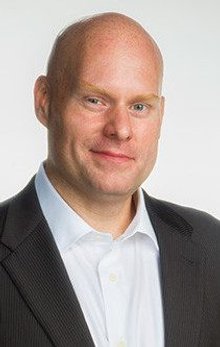
Eric Gray
Chief Executive Officer, Power
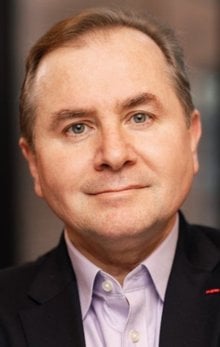
Philippe PIRON
President Electrification
Roger Martella
Executive Vice President, Chief Corporate Officer
Scott Strazik
Chief Executive Officer

Vic Abate
Chief Executive Officer, Wind