How Cisco is Smashing its Circular Economy Goals

For more than half a decade, tech heavyweight Cisco has been on a journey towards circularity.
Across the past six years, the US firm has been incorporating circular design (which means that materials are reused, repurposed or recycled wherever possible) into all its new products and packaging.
This week, Cisco announced that it had officially achieved 100% integration of its 25 Circular Design Principles by the end of its 2025 fiscal year, earning the 2025 Reuters Global Sustainability Award for Circularity along the way.
- Circularity is a model of production and consumption that aims to eliminate waste and reduce the use of new resources by keeping products and materials in use for as long as possible. It contrasts with the linear 'take-make-dispose' system by instead emphasising reuse, repair, refurbishment and recycling to create a closed-loop system.
Training and governance drive implementation
The rollout required extensive internal engagement, with over 7,000 employees completing circular design training programmes.
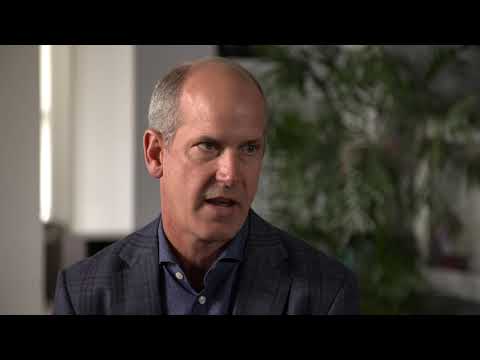
Mary de Wysocki is Cisco's Chief Sustainability Officer. She announced the milestone via Cisco's website and says that the achievement is the culmination of a huge, prolonged team effort.
"This moment represents years of partnership, creativity, and persistence across our teams," she says.
"By designing with circularity in mind, we are not only reducing waste; we are extending product life, improving efficiency and security, and driving meaningful progress for our customers and communities."
Central to the implementation was a web-based Circular Design Evaluation Tool that now assesses every new product and packaging design against the company's principles.
Products must achieve a minimum score of 75% before receiving approval for release.
The company established a governance structure comprising steering, oversight and audit committees to maintain alignment and accountability across divisions.
Material and cost savings demonstrated
Specific products illustrate the practical outcomes of the circular design approach.
The Webex Room Bar eliminates foam packaging, uses 55% recycled plastic and saves over 32,000 pounds of material annually.
More substantial savings emerged from modifications to the Catalyst 9000 product line, where removing oil-based paint generated US$9 million in cost reductions between fiscal years 2020 and 2025.
The paint elimination also reduced approximately 318 metric tonnes of volatile organic compounds and about 3,400 metric tonnes of CO2 equivalent emissions over the same period.
Data infrastructure supports reporting
Cisco created a Sustainability Data Foundation to consolidate and govern sustainability data, including metrics related to circular design implementation.
The platform enables analysis of product carbon footprints and assessment of efficiency gains from circular design principles.
Progress updates appear in the company's Purpose Reporting Hub and annual Purpose Report, providing transparency on measurable outcomes.
The cross-functional team responsible for the initiative received a 2024 Cisco Pinnacle Award, the company's highest recognition for product and engineering innovation.
By designing with circularity in mind, we are not only reducing waste; we are extending product life, improving efficiency and security, and driving meaningful progress for our customers and communities.
Industry context and future applications
As digital infrastructure expands to support artificial intelligence deployments, circular design principles offer methods for optimising use of critical raw materials.
Mary emphasised the business rationale, noting that "circular design makes good business sense and helps us deliver even greater value to our customers, partners, and suppliers".
The company shares its circular design practices through industry groups including the World Business Council for Sustainable Development and the World Economic Forum's Circular Transformation of Industries initiative.
Modularity and repairability features extend product lifecycles, allowing customers to upgrade and repair equipment rather than replace entire systems.

Cisco's circular economy plans going forward
Despite reaching its 100% integration target, Cisco indicated the work represents an ongoing commitment rather than a conclusion.
Mary is not content to rest on her laurels, though. Instead, she sees the milestone as "just the beginning", with plans to evolve the Circular Design Principles based on experience and customer requirements.
The approach aligns waste reduction objectives with business efficiency goals, particularly relevant as the technology sector faces increasing scrutiny over resource consumption and electronic waste.
Teardown events involving engineers, marketers and supply chain partners continue to identify opportunities for sustainable innovation across product lines.
The company's framework addresses hardware design, packaging materials, sourcing decisions and repairability considerations across its product portfolio.
Company portals
Cisco

Executives
Mary de Wysocki
SVP, Chief Sustainability Officer | People, Policy, Purpose Strategy & Reporting