
How Renault Group Embeds ESG into its Supply Chain
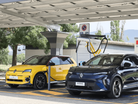
Renault Group's suppliers play a role in the company's environmental outcomes. This ranges from selecting partners based on ESG criteria to sourcing materials and designing vehicles.
According to Renault Group, raw material supplies and components accounted for an average of 17% of the carbon footprint of vehicles sold in 2024.
The commitment of procurement teams and suppliers is a factor in reducing greenhouse gas emissions and creating sustainable value.

Operational and environmental objectives
Renault Group's "futuREady" strategic plan connects operational performance with environmental performance. The company has set targets to reach net zero carbon emissions in Europe by 2040 and worldwide by 2050.
"Our responsible purchasing policy is a key lever for creating sustainable value for Renault Group, and it cannot contribute to reducing our carbon footprint without the commitment of our suppliers," says Anthony Plouvier, Chief Procurement Officer at Renault Group. The responsible purchasing policy applies to supplier selection and collaboration standards.
It covers eco-design, circular economy and battery production.
The policy treats sustainability as a continuous improvement discipline. Suppliers are positioned as engaged partners in the group's performance, including environmental performance.
ESG evaluation in supplier selection
Anthony explains that the responsible purchasing policy is based on evaluating suppliers against ESG criteria. "Responsibility and sustainability criteria carry as much weight as performance and quality in our supplier choices. A low ESG score is now a deal breaker," says Anthony.
Renault Group builds supplier relationships on shared principles across its value chain. This could support continuous improvement in the supply chain and product manufacturing.
- More than 90% of budgets are allocated to suppliers with a high ESG score
- On-site visits and audits of high-risk Tier 1 suppliers and battery supply sites by 2030
- 30% reduction in supplier CO₂ emissions for raw materials and components
- Over 30% circular economy materials per vehicle project
Suppliers must provide visibility on their climate trajectory. They must disclose their carbon footprint using the Carbon Disclosure Project Supply Chain methodology.
For Renault Group, decarbonisation starts in the tendering phase.
Sustainability leaders won’t want to miss Sustainability LIVE: The Leadership Summit at London Climate Action Week, taking place at Code Node on 25 June 2026.
Register now for this exclusive invite-only event.
Early integration in vehicle design
The plan to transform supplier relationships includes integrating suppliers early into vehicle design. This allows them to contribute to product development and innovation and could strengthen value chain transparency.
"In practical terms, suppliers are involved earlier in product and project development phases, enabling them to propose solutions. Renault Group's Procurement function works closely with design teams to identify the most effective levers available through suppliers to meet vehicle decarbonisation targets," says Anthony. Materials represent between 10% and 40% of a vehicle's carbon footprint, depending on the powertrain.
Renault Group applies several approaches to reduce environmental impact:
- More frugal use of rare materials
- Increased use of recycled or bio-based materials
- Anticipating end-of-life dismantling and recycling
The group uses circular economy solutions through subsidiaries.
Anthony details the impact of battery production on the company's carbon footprint. The production accounts for one-third of an electric vehicle's total carbon footprint.
Renault Group is working to reduce the carbon footprint of its batteries through more sustainable sourcing. The company has set a target to reduce its battery carbon footprint by 35% between 2019 and 2030.
This target is part of the broader effort to reduce emissions across the supply chain. The focus on battery production reflects the weight it carries in overall electric vehicle emissions.
Company portals

Executives
Anthony Plouvier
Chief Procurement Officer