How is AS Watson Targeting Plastic Packaging Pollution?
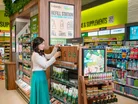
With its 12 retail brands across 31 markets, AS Watson is the largest international health and beauty retailer.
Its operations focus on combining offline and online retail, unifying the purchasing experience for its customer base of 180 million loyalty members.
The company has strengthened its sustainability commitments, with a target to reduce its use of virgin plastic by 21%.

About AS Watson’s packaging goals
AS Watson’s plastic reduction ambition includes its renewed pledge to reduce virgin plastic in its own-brand packaging by 21% by 2030, compared to a 2022 baseline year.
This commitment covers four sources of the company’s packaging, which have been identified as the areas that can make the most impact:
- Product packaging
- In-store carrier bags
- Online business parcels
- Single-use plastics in warehouses
To achieve this goal, AS Watson aims to eliminate unnecessary packaging, increase its use of recycled plastic, promote recyclable or reusable packaging and expand its refill and reuse systems.
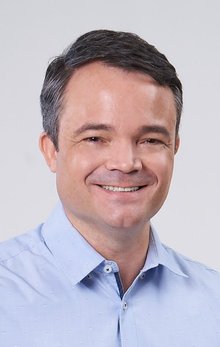
Sebastien Pivet, Chief Sustainability Officer and QA Director at AS Watson, says: “Reducing plastic waste is one of the most urgent environmental challenges of our time and retailers have a responsibility to lead this transition.
“By setting an ambitious 21% reduction target for virgin plastic in our own-brand packaging by 2030, we are turning our 185-year legacy of care into clear, measurable actions that cut plastic at source across all our markets.
“By expanding refill and reuse systems and increasing recycled content, we’re making significant progress towards reducing plastic waste from our operations.”
How companies can work together to reduce plastic waste
The virgin plastic goal is in line with the Ellen MacArthur Foundation’s Global Commitment 2030, which provides a blueprint for companies to eliminate plastic waste and pollution.
Over the past 10 years, more than 1,200 businesses and organisations have united behind this shared goal, using the circular economy to build long term resilience.
The Ellen MacArthur Foundation’s 2030 Plastics Agenda outlines the importance of market transformation and collaborative action in the next few years.
The agenda is backed by leading global companies, including Unilever, PepsiCo, UN Environment Programme, Nestlé and L’Oréal.
AS Watson is encouraging business, industry peers and partner suppliers to join the agenda and work together across the value chain to inspire customers to choose sustainable products.
The company believes that through this shared industry commitment, the retail sector is able to scale circular packaging solutions and deliver meaningful environmental benefits.
Rob Opsomer, Executive Lead, Plastics at the Ellen MacArthur Foundation, says: “We are at a crossroads. In tackling global challenges, early optimism of what’s possible is increasingly colliding with the complex realities of scaling solutions in a shifting and uncertain world.
“We know the destination. A circular economy, where we eliminate the plastics we don’t need, innovate towards reuse models and new materials and circulate the plastics we still use.
“This offers a root cause solution to plastic pollution with profound benefits for the economy and for nature, as well as for people and societies.”
All sustainability, net zero and sustainable supply chain leaders should attend:
- Sustainability LIVE: The Net Zero Summit - QEII Centre, London, March 4-5
- Sustainability LIVE: The US Summit - Navy Pier, Chicago, April 21-22
Co-located with Procurement & Supply Chain LIVE, these events brings together CSOs, ESG leaders and senior decision-makers at a moment when sustainability, supply chains and commercial performance are increasingly interconnected.
Tickets can be booked online today for The Net Zero Summit and The US Summit. Group discounts available.
Recycled packaging for beauty products
AS Watson has been working on creating impact across its global market, by making changes in packaging for its brands.
In Europe, for example, its brand Superdrug has redesigned the packaging for its Naturally Radiant range, removing the laminated mirror board.
All cartons in this range are now fully recyclable and FSC certified, with every unit containing at least 30% recycled plastic content.
Sebastien adds: “As AS Watson celebrates its 185th anniversary, this milestone reinforces the company’s long-standing commitment to making a positive impact across its global operations.
“Sustainability shapes every decision we make and it will continue to guide how we innovate and grow responsibly alongside our customers and communities.”
Company portals


Executives
Rob Opsomer
Executive Lead - Plastics
Sebastien Pivet
Chief Sustainability Officer and QA Director