Data Centre Use Up, Emissions Down - What's Google's Secret?
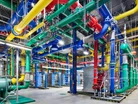
The advancement of artificial intelligence presents a major challenge for technology companies.
The powerful models that could help address climate change also require vast amounts of electricity, creating a potential conflict with corporate environmental goals.
As data centres worldwide consume more power for increasingly complex algorithms, the industry faces questions about its ability to balance innovation with sustainability.
Google, however, has reported a 12% reduction in emissions from its data centres in 2024, despite a 27% increase in electricity consumption.

Clean energy procurement and consumption
In its 10th annual environmental report, Google attributes this to a strategy involving clean energy procurement, hardware innovation and infrastructure efficiency, noting that AI can help build a more energy-efficient world.
In 2024, Google signed contracts for more than 8 GW of new clean energy generation, its largest annual total and double the amount from the previous year.
This brings the company's total since 2010 to more than 22 GW.
The clean energy purchases made in 2024 alone avoided more than 8.2 million metric tons of carbon dioxide equivalent emissions.
Google also brought 2.5 GWs of new clean energy online from projects contracted in previous years.
For the 8th consecutive year, it maintained a 100% renewable energy match globally.
The carbon-free energy percentage across its data centres and offices rose to 66% on an hourly basis, with nine of its data centre regions reaching at least 80%.
AI-driven efficiency and hardware innovation
Google reports that its data centres now provide more than six times more computing power per unit of electricity compared to five years ago.
“Transparency, accuracy and rigor are the foundation of sustainability reporting,” says Luke Elder, Lead Sustainability Reporter at Google.
“As the volume and complexity of data and strategies grow, we’re innovating our processes to meet rising expectations without compromising on these core commitments.
“This year, we integrated generative AI into our workflow to support the development of Google’s 2025 Environmental Report.
“We’ve learned a tremendous amount from this first implementation and are already building more ways to leverage AI for future reports.”
The average annual power usage effectiveness (PUE) for its global fleet fell to 1.09 in 2024.
A PUE figure closer to 1.0 indicates that almost all energy is used for computing rather than for overheads like cooling.
This progress is supported by custom processors.
The 7th-generation Tensor Processing Unit runs nearly 30 times more efficiently than the first Cloud TPU from 2018.
Google is also using AI to improve its own sustainability reporting.
Exploring nuclear and geothermal energy sources
Looking beyond conventional renewables, Google has signed the world's first corporate agreement to buy nuclear energy from small modular reactors (SMRs) through a partnership with Kairos Power.
This deal is set to add up to 500 MWs of clean energy to US grids by 2035.
SMRs differ from traditional nuclear plants as they are smaller, factory-built units.
In addition, Google has broadened its partnership with Fervo Energy for enhanced geothermal projects in Nevada, contracting for a 115-MW project.
These initiatives show a transition towards securing 24/7 carbon-free energy sources.
A catalyst for change
Five of Google’s products enabled customers to collectively reduce an estimated 26 million metric tons of GHG emissions in 2024, a figure that exceeds Google’s own total emissions.
For example, Nest thermostats helped users save more than 25 billion KW-hours of energy, while fuel-efficient routing in Google Maps cut emissions equivalent to removing approximately 630,000 petrol-powered cars for a year.
“AI isn’t just a tool – it’s a catalyst,” Google says.
“It’s helping people make smarter decisions faster and its potential to help manage emissions in key sectors – like transportation and energy – is substantial.”
Company portals


Executives
Luke Elder
Senior Lead, Sustainability Reporting