How JLR is Reducing Emissions with Solar Energy Investments
According to the IEA, solar PV generation increased by a record 320 TWh (up 25%) in 2023, reaching more than 1,600 TWh.
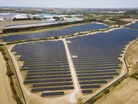
Jaguar Land Rover (JLR) is launching a new, large-scale solar farm at its Gaydon headquarters in Summer 2025.
The 26-hectare, 18 MW facility spans the equivalent of 36 football pitches and will generate up to 31% of the site’s electricity.
This development marks the completion of the first of three UK-based solar projects.
Expanding solar capacity across the UK
Alongside the installation, JLR has invested in biodiversity, planting native wildflowers beneath and between the solar arrays and restoring hedgerows with pollinator-friendly species, aiming to achieve a biodiversity uplift well above regulatory requirements.
At JLR’s Electric Propulsion Manufacturing Centre (EPMC) in Wolverhampton, a major rooftop solar expansion is due for completion in Autumn.
The installation, featuring more than 18,000 solar panels, will become the UK’s largest automotive rooftop array.
The government’s Clean Power 2030 Action Plan, published in December 2024, set out details on the UK’s clean power target.
It calls for total solar capacity to reach 45–57 GW by 2030, around 2.5 times higher than the 18.1 GW installed as of March 2025.
The plan also highlights the potential for an additional 9–10 GW through the deployment of rooftop solar over the same period.
Building on the government’s plan and existing system, the 10.7 MW facility will produce around 9,512 MWh of clean electricity annually, equivalent to powering more than 3,500 homes for a year.
The combined rooftop solar capacity will supply nearly 40% of the site’s energy needs, supporting the production of electric drive units and batteries for JLR’s next generation of vehicles.
The company also plans to install more than 10MW of solar car ports at its Halewood site in Merseyside from 2026.
"The UK is a world leader in renewables, so I'm delighted to see JLR is leading the way and helping the UK become a clean energy superpower,” comments Sarah Jones, The UK Industry Minister.
“We’re serious about the benefits of net zero, which is why our modern Industrial Strategy is driving growth into our clean energy sector to attract even more investment and create jobs, backing the Plan for Change."
The project will be the UK’s largest of its kind, incorporating canopy structures and solar walkways to provide EV charging points, sheltered parking and improved access for employees and visitors.
Global progress on renewable energy
JLR’s renewable energy strategy extends beyond the UK.
In China, its joint venture CJLR has completed a 20 MW expansion of its rooftop solar array.
Since becoming operational in May 2025, the system has generated more than half of the plant’s monthly electricity consumption.
“JLR is proud to have delivered these renewable energy milestones,” says Andrea Debbane, Chief Sustainability Officer at JLR.

“They are important because they directly reduce our global operational emissions and help move us closer to our net zero goal, whilst delivering tangible value today and for the long-term.
“The delivery of our self-generated renewable energy projects across the UK and China is part of our strategic shift to gain greater control over our energy mix against a backdrop of uncertainty, reducing our reliance on volatile markets and global grid infrastructure.”
The installation also contributes to temperature regulation within the workshop, reducing energy use while enhancing comfort for workers.