How Orano & Capgemini's Robots Could Change Nuclear Energy
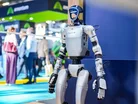
Orano and Capgemini have deployed what they describe as the first intelligent humanoid robot in the nuclear sector at the Orano Melox Ecole des Métiers in France's Gard region.
The robot, named Hoxo, a convergence of embedded AI, advanced sensors and autonomous navigation systems designed specifically for nuclear facilities.
The technology is set to undergo a rigorous four-month testing phase, during which Orano Melox's innovation teams plan to evaluate the robot's capabilities across mobility, precision and AI-driven operations.

Technical capabilities and operational scope
Hoxo is equipped with real-time perception systems and the capacity to execute technical gestures whilst operating alongside human teams.
The robot's design enables it to replicate human movements, a feature that Capgemini and Orano suggest could prove valuable in challenging intervention environments within nuclear facilities.
"This project, led by our AI Robotics & Experiences Lab, embodies the convergence of robotics, artificial intelligence, computer vision and digital twins," says Pascal Brier, Chief Innovation Officer at Capgemini and member of the Group Executive Committee.
"It redefines human-machine interaction in sensitive environments and pushes the boundaries of industrial automation. Through this initiative, we harness the potential of physical AI to address Orano’s most demanding industrial challenges."
Industrial applications and sector implications
The companies position Hoxo as an agile and scalable robotic platform intended to enhance industrial performance and potentially provide robotic assistance to operators.
"This is more than just a technical achievement, it’s a bold step forward for an industry that has always embraced progress and pioneered change," says Dr Cara Antoine, EVP and Chief Product, Innovation & Portfolio Officer at Capgemini.
"This project brings together robotics, AI, computer vision and digital twins in a way that truly redefines how humans and machines collaborate in sensitive environments," she adds.
"It’s pushing boundaries and imagining what’s possible for the future of industrial automation. It’s inspiring to witness how innovation and partnership are shaping the next chapter of nuclear operations."
Broader context for nuclear automation
The nuclear sector has historically invested in automation technologies, though the introduction of humanoid robotics with embedded AI represents a distinct approach from traditional industrial robotics.
The testing phase at Melox will determine whether Hoxo's combination of mobility and AI-driven decision-making delivers practical advantages in nuclear facility operations.
The deployment comes as the nuclear industry faces pressure to improve operational efficiency whilst maintaining stringent safety standards, particularly as several countries reconsider nuclear energy's role in decarbonisation strategies.
Whether humanoid robots prove more effective than existing automation solutions in nuclear environments remains to be demonstrated through the upcoming testing period.
Arnaud Capdepon, Director of Orano Melox, believes the new robot could be transformative for the industry at large.
"Hoxo opens new perspectives for our operations by combining an intelligent and ergonomic robotic solution with the expertise of our on-site teams," he says.
"It’s an innovation we aim to evolve to meet our industrial needs, contributing to both safety and competitiveness as we tackle the challenges of today and tomorrow."


Executives
Arnaud Capdepon
Directeur d'Usine
Dr. Cara Antoine
Executive Vice President and Chief Technology, Innovation & Portfolio Officer
Pascal Brier
Group Chief Innovation Officer