How PepsiCo’s Coconut Farm Promotes Regenerative Agriculture
COP30, the first global climate conference held in the Amazon, has been described by its President, André Corrêa do Lago, as the “COP of implementation”.
To this end, PepsiCo has developed a coconut “demonstration farm” in Brazil, showing how climate action can be prioritised in agriculture.
This reflects COP30’s agenda which covers sustainability in food systems and biodiversity.

PepsiCo oversees the growth of nearly 50 crops in more than 60 countries to produce its most popular food and drink brands.
One of these crops is the green coconut, which is the main ingredient in PepsiCo’s Kero Coco coconut water.
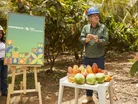
Petrolina, Brazil is home to PepsiCo’s one-of-a-kind coconut demonstration farm which helps educate farmers on regenerative agriculture techniques.
PepsiCo has started an intercropping programme at the farm, growing cacao plants in between the coconut trees.
The cacao plants thrive in the shade of the coconut trees while the coconuts benefit from the rich nutrient-dense soil from the cacao plants.
This programme has been adopted by local farms, which helps introduce crop diversity and is expected to increase farmers income by approximately 30% to 70%.
Alexsandro Castro Souza, Agricultural Manager for PepsiCo Brazil, says: “The most rewarding aspect has been witnessing the improvement of quality of life and financial sustainability of family farmers.
“Seeing them embrace regenerative techniques that enhance productivity and long-term sustainability is particularly fulfilling.”
Sustainable crop irrigation
PepsiCo’s sustainability goals include increasing the adoption of regenerative agriculture, restorative or protective practices across 10 million acres of land by 2030.
At its farm in Petrolina, PepsiCo uses regenerative practices in the way it cares for the coconut trees.
It has installed an advanced irrigation management system which calculates the exact water needs of every coconut tree, guided by real-time weather data including sunlight, temperature and humidity.
The system activates irrigation using tailored hoses which deliver the optimal amount of water to each tree.
During COP30, Jim Andrew, Chief Sustainability Officer at PepsiCo, says on LinkedIn: “Facing increasing climate risk and impacts, the global food system is fragile and in need of transformation.
“This matters for PepsiCo – as a company rooted in agriculture – and importantly, for the world’s ability to sustainably grow the food it needs today and in the future.
“This requires accelerated action and impact, at scale.”
How sustainable are green coconuts?
Kero Coco coconut water is made only with green coconuts which are grown in northeastern Brazil.
Green coconuts are chosen specifically as they contain more water and are naturally sweeter than mature brown coconuts.
After harvesting the coconut water, PepsiCo uses the outer husks for natural fertiliser.
They are used on crops to naturally prevent weed growth, which helps reduce chemical use, lower greenhouse gas emissions and improve soil moisture.
“Unlike annual crops such as potatoes or corn, coconut palms are produced for many years, requiring long-term planning and practices that sustain ecosystem health for over a decade,” Alexsandro says.
“Harvesting green coconuts for water demands specific methods to preserve the fruit’s integrity and ensure high quality.”
Company portals

Executives
Alexsandro Silva Castro Souza
Agricultural Manager, Brazil
Jim Andrew
Chief Sustainability Officer, EVP and Executive Committee member