How These Fortescue Trains are Moving Mining To Net Zero
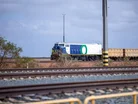
Battery-electric locomotives transform mining
The mining industry continues to be a major contributor to global emissions, including facilities dedicated to extracting resources for renewable energy technologies.
Fortescue is working towards industry decarbonisation through innovative solutions aimed at reducing emissions across its operations and demonstrating untapped potential within the sector.
The company's development in responsible mining includes the commissioning of two battery-electric locomotives, which will transport goods throughout its operations.
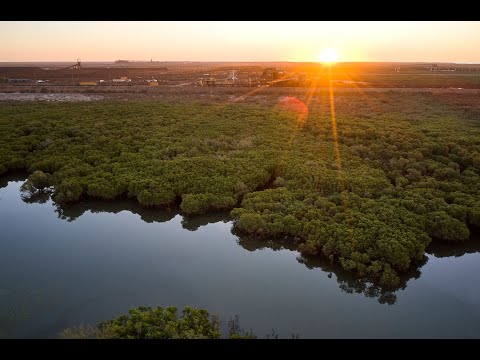
Fortescue is a global metal mining company, using technology and sustainable practices to advance the industry.
The organisation supplies iron ore on a major scale and has committed to eliminating fossil fuels from its operations. Its metals business consists primarily of iron ore operations in the Pilbara, Australia, where three mining hubs are connected by 760 kilometres of rail infrastructure.
Fortescue's two new battery-electric locomotives will form part of the company's Pilbara iron ore operations in Australia.
Progress Rail will deliver the battery-electric locomotives, which could reduce Fortescue's diesel consumption by approximately one million litres annually. Each locomotive features batteries with a capacity of 14.5 MWh, capable of recovering between 40% and 60% of energy through regenerative braking.
The locomotives will run on renewable power delivered through Fortescue's Pilbara Energy Connect programme.
"Real Zero is about transforming the way we power our assets, move our materials and run our operations, not offsetting emissions but eliminating emissions at source," explains Dino Otranto, Chief Executive Officer of Fortescue Metals and Operations.
"Decarbonising our rail network is a critical part of that task and the commissioning of these battery-electric locomotives demonstrates that heavy-haul rail can operate reliably without fossil fuels."
Dino adds that through Pilbara Energy Connect, the company has already constructed more than 480 kilometres of high-voltage transmission lines, physically linking energy assets to operations and rail network. This infrastructure enables renewable power to replace diesel and gas across the Pilbara.
Pursuing Absolute Zero by 2030
With carbon emissions recognised as a major driver of climate change, Fortescue is pursuing Real Zero – an approach that goes beyond Net Zero, with plans to reach absolute zero emissions across Scope 1 and 2 terrestrial emissions by 2030.
The company's Real Zero strategy moves from a reliance on carbon offsets or credits to a focus on eliminating emissions at source through technological innovation and infrastructure transformation.
The company has implemented various innovative projects to mine metals without emissions.
Project Roadrunner represents its battery-electric haul truck prototype, utilising a 1.4 MWh battery that can be charged in 30 minutes. The company is now applying this innovation to its rail transportation.
This comprehensive approach to decarbonisation extends across all aspects of Fortescue's operations, from mobile equipment to fixed infrastructure. The integration of renewable energy sources with battery storage systems creates a framework that could enable the company to progressively phase out fossil fuel dependency whilst maintaining operational efficiency.
Renewable infrastructure supports operations
The company has already implemented systems to limit its emissions, including operating a 100 MW solar farm at North Star Junction. A 250 MWh battery energy storage system was installed to support it, with capabilities of delivering 50 MW of power for up to five hours.
The mining company is also advancing its 190 MW Cloudbreak Solar Farm, with additional solar farms under development to support its decarbonisation journey.
"Battery storage is the backbone of a renewable-powered mining system," says Agustin Pichot, CEO of Growth and Energy at Fortescue. "By integrating Fortescue Zero's Elysia battery intelligence and management software, we're able to optimise performance, extend battery life and intelligently balance energy across the network in real time."
The company is also expanding its electric mining equipment portfolio, with 12 electric excavators and one electric drill operational across its Pilbara sites. Through these efforts, Fortescue continues to pursue decarbonisation within the mining sector, supported by its growing portfolio of renewable energy and electrified infrastructure.
Company portals

Executives
Agustin Pichot
Chief Executive Officer Growth & Energy
Dino Otranto
Chief Executive Officer
John G. Newman
Chief Executive Officer