How TotalEnergies Misled Consumers with Climate Advertising
A landmark ruling from a Paris court on 23 October 2025 has found that TotalEnergies misled consumers through its advertising, marking the first judicial decision of its kind against an oil major for greenwashing.
The ruling, which declares parts of the French company’s promotional campaigns unlawful, could reshape how fossil fuel companies communicate their climate claims worldwide.
About the case
At the centre of the case were advertisements positioning TotalEnergies as a leader in the energy transition.
The company’s marketing asserted that it placed “climate at the heart of its strategy” and sought to deliver “cleaner, safer and more affordable energy” while pursuing net zero ambitions by 2050.

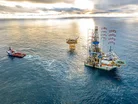
Yet the court found these claims to be inconsistent with TotalEnergies’ continued expansion of fossil fuel production projects in countries such as Iraq, Uganda, Tanzania and Denmark.
By promoting a ‘green’ image while investing heavily in new oil and gas developments, the court concluded, the company had unlawfully misled the public into believing it was part of the climate solution rather than a major contributor to the crisis.
A precedent-setting judgment
This decision represents the first greenwashing judgment issued against a multinational oil and gas company for misrepresenting its net zero commitments. The court ruled that TotalEnergies’ corporate advertising constituted deceptive commercial practice and violated French consumer law.
Under the court’s orders, TotalEnergies must cease using the illegal advertisements within one month. In addition, it must publish the ruling prominently on its website for 180 days. Failure to comply will result in a fine of €10,000 (US$11,622.50) per day.
While the judges declined to assess other contested advertisements – such as those promoting fossil gas and biofuels – on procedural grounds, the central finding nonetheless sets a clear legal standard for what constitutes misleading sustainability communication in the energy sector.
Environmental organisations behind the case
The case was brought forward by several major environmental groups, including ClientEarth, Greenpeace France, Friends of the Earth France and Notre Affaire à Tous.
They argued that TotalEnergies’ marketing campaigns created a false impression of its decarbonisation strategy, misusing terms such as “net zero” to mask ongoing fossil fuel growth.
According to the claimants, the company’s “Energy is reinventing itself” campaign, featuring imagery of wind turbines and solar installations, formed part of a broader narrative intended to depict TotalEnergies as a key actor in the energy transition. In reality, the groups contended, the company’s operations remain dominated by oil and gas, contributing more greenhouse gas emissions than those of France as a whole.
“These claims amount to misleading marketing with our future on this planet as the price,” says Johnny White, ClientEarth lawyer. “This landmark judgment sends a clear message to oil & gas companies in Europe and beyond: claiming to be part of the transition while backing new fossil fuel projects comes at a legal cost.”
TotalEnergies’ sustainability strategy
“TotalEnergies has placed sustainable development in all its dimensions at the heart of its strategy, projects and operations, in order to contribute to the well-being of the populations,” Total’s website says.
The company’s has four “axes of sustainable development”:
- Climate and sustainable energy
- Safety, respect and wellbeing
- Environment
- Positive impact for stakeholders
“In 2025, we are staying the course of the transition strategy to which we are resolutely engaged since 2020,” Patrick Pouyanné, TotalEnergies Chairman and CEO says in his opening message in the company’s Sustainability and Climate 2025 Progress Report.
“Through this Sustainability & Climate 2025 Progress Report, you can follow the continued commitment of our 100,000 employees to supply to as many people as possible a more affordable, more available and more sustainable energy.
“You will be able to appreciate how we are pragmatically allocating our human and financial capital to the development of our activities, taking into account the abatement costs of the various emission reduction technologies at our operated industrial sites on the one hand, and our customers' emissions on the other.”
The report outlines the company’s transition strategy, ambition of carbon neutrality and explores the four axes.
“TotalEnergies [is] the company most committed to the energy transition among the majors, by developing, in a determined and structured way, an Integrated Power business unit,” says Jacques Aschenbroich, Total’s Lead Independent Director, Chairman of the Governance and Ethics Committee, in the report.
“As a result, TotalEnergies is one of the key players in renewable energies, and the Integrated Power business is achieving encouraging levels of profitability."
Is this a turning point in climate accountability?
For TotalEnergies, the reputational impact could be significant.
While its Patrick has previously denied any intent to mislead the public, the ruling places the company under legal scrutiny that may extend beyond France. It underscores that courts are increasingly willing to test the truthfulness of corporate climate claims – a development many see as crucial for aligning business communications with credible climate action.
As pressure mounts for transparent net zero pathways, this ruling could mark a pivotal moment in holding fossil fuel producers accountable not only for their emissions but also for their influence on public perception.
Company portals


Executives
Johnny White
Lead, Accountable Corporations
Patrick Pouyanné
Chairman and CEO