How Veolia & TotalEnergies are Tackling Methane Emissions
Veolia and TotalEnergies have signed a memorandum of understanding to advance cooperation across energy transition and circular economy initiatives, with a particular focus on reducing methane emissions from landfills.
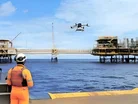
The French companies jointly announced on 6 October that Veolia is studying the deployment of TotalEnergies' AUSEA technology, which uses drones to measure methane emissions at landfill sites.
Initial tests have shown the technology's ability to provide reliable and replicable measurements, detect leaks and identify areas with the highest emissions.
The drone-based system adds a rapid solution to Veolia's existing methods for reducing emissions at its waste management facilities.
Targeting 80% methane capture by 2032
The deployment forms part of Veolia's strategy to maximise methane capture at landfills, with the company targeting 80% capture by 2032.
The initiative also marks an expansion of the AUSEA technology beyond its original application in the oil and gas industry.
"I am very pleased with the agreement signed today with TotalEnergies," says Estelle Brachlianoff, Veolia's CEO.
"By combining our expertise, whether in sustainable water management, the circular economy or the reduction of methane emissions, we are putting our innovation capabilities at the service of the ecological transformation and the competitiveness of our industries."
Methane is a potent greenhouse gas with a global warming potential far higher than carbon dioxide over shorter timeframes, making its reduction an absolute priority for companies seeking to lower their environmental impact.
Broader partnership encompasses water and resources
The partnership extends beyond methane to address industrial water consumption and circular economy challenges.
Veolia will support TotalEnergies in reducing freshwater withdrawals by 20% by 2030 compared to 2021 at sites in water-stressed areas, building on an agreement between Veolia and SATORP in Saudi Arabia.
The companies will develop wastewater reuse projects and deploy water treatment technologies at TotalEnergies facilities.
TotalEnergies will support Veolia in accelerating low-carbon energy deployment at desalination plants, with the partners having already built the largest solar power plant for a seawater desalination facility in Oman.
The collaboration also includes research into recovering strategic chemical elements from waste, including rare earths found in permanent magnets used in wind turbines, photovoltaic panels and batteries.

Long-standing partners deepen collaboration
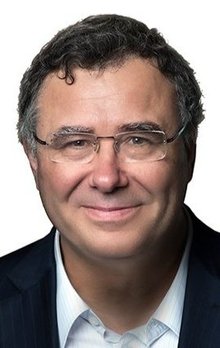
"We are delighted with this partnership with Veolia. TotalEnergies has cutting-edge solutions and technologies to offer Veolia and vice versa," says Patrick Pouyanné, Chairman and CEO of TotalEnergies.
"Together, we can make a concrete contribution to the energy transition and the circular economy."
Patrick added that cooperations like those being developed with Veolia are useful to make tangible progress and sustainably limit the environmental footprint of both companies.
Veolia, which employs 215,000 people across five continents, achieved consolidated sales of US$44.7bn in 2024.
TotalEnergies operates in approximately 120 countries with more than 100,000 employees producing oil, biofuels, natural gas, biogas, low-carbon hydrogen, renewables and electricity.
Company portals

Executives
Estelle Brachlianoff
Group CEO
Patrick Pouyanné
Chairman and CEO