
Human Rights Day: Equality, Justice & "Everyday Essentials"
Every year on 10 December, Human Rights Day marks a global commitment to protecting the dignity and freedom of every individual.
This year, the United Nations highlights the theme of: Human Rights, Our Everyday Essentials.
This year’s message is clear: human rights are positive, essential and attainable, and they remain a winning proposition for humanity.

Human rights as positive forces in daily life
This year’s campaign reframes human rights not only as protections but as sources of joy, safety and confidence.
These rights are seen as “lived realities” by the UN, underpinning everything from the freedom to express an opinion to the right to a healthy environment.
When recognised and upheld, these rights can help people thrive.
By showing how human rights already exist within everyday interactions, the UN aims to express how important these rights are.
“Human rights are the oxygen of humanity,” writes António Guterres, Secretary-General of the United Nations, on LinkedIn.
“But one by one, they are being suffocated.
“Human rights are on the ropes and being pummeled hard.”
The essentials that unite us
Human rights are universal constants at a time when uncertainty can disrupt communities and widen divisions.
“In a world of uncertainty, human rights remain our everyday constants,” says the UN.
The UN stresses that these rights provide the common ground shared across every background, belief, gender, sex and race.
They can enhance safety, participation and freedom of expression, allowing societies to function with fairness and respect.
When the world feels unstable, such rights can help to ground daily life, offering reassurance that dignity and equality are not privileges but entitlements for everyone.
Attainable rights
The UN's campaign also emphasises that human rights begin with small, individual actions.
Treating others with respect, challenging injustice and amplifying ignored voices all contribute to a culture where dignity is upheld.
Yet rights also depend on broader collective effort.
Communities, movements and nations play a vital role in shaping environments where justice and equality can flourish.
By bridging the gap between principles and lived experience, the UN hopes to inspire people to see themselves as agents of meaningful change.
“We can help end the suffocation of human rights,” writes António on LinkedIn.
“Let’s do it together.
“We don’t have a moment to lose.”
The universal declaration of human rights
Human Rights Day commemorates the adoption of the Universal Declaration of Human Rights (UDHR) on 10 December 1948.
Proclaimed as a “common standard of achievement for all peoples and all nations”, it was the first global articulation of the fundamental rights owed to every person without distinction.
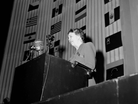
The First Lady of the United States from 1933 to 1945, Eleanor Roosevelt, was appointed in 1946 as a delegate to the UNs General Assembly by President Harry Truman.
As the first Chairperson of the Commission on Human Rights, she played a key role in drafting the UDHR, using her influence and credibility with both to guide the process to completion.
In 1968 she was posthumously awarded the United Nations Human Rights Prize.
Although not legally binding, the UDHR has inspired more than 60 human rights instruments that form today’s international framework.
It remains central to the 2030 Agenda for Sustainable Development and is the most translated document in the world, available in 577 languages.
The Office of the High Commissioner for Human Rights continues to coordinate global observance each year, ensuring the Declaration’s principles remain visible and relevant.
In 2025 the message resonates strongly: human rights are not remote aspirations but everyday essentials that shape peaceful, sustainable and equitable societies.
Company portals

Executives
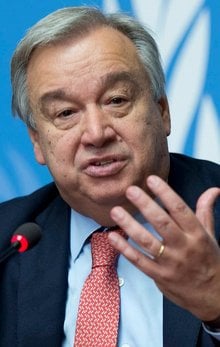
António Guterres
Secretary General