Hybrid Projects Can Support Europe’s Energy Transition
One of the major bottlenecks to Europe’s rollout of renewable energy capacity is the bloc’s constrained and ageing power grid.
The huge rollout of new-generation capacity, as wind and solar technologies expanded faster than fossil-fuel generators were retired, has left the physical grid infrastructure bursting at the seams.
Approximately 120GW of planned renewable projects in Europe are at risk due to grid constraints, according to think tank Ember.
“Half of countries reporting grid data lack the grid capacity needed to connect new power generation. The biggest constraints are in Austria, Bulgaria, Latvia, the Netherlands, Poland, Portugal, Romania and Slovakia,” Ember’s research found.
But grid upgrades are often costly, time-consuming and laden with permitting hurdles.
New data from Ember, however, has found that an additional 25GW of clean energy could be deployed without new grid upgrades through hybridisation.
Hybridisation combines technologies like wind, solar and storage behind a single grid connection.
Ember says hydropower plants are particularly well suited for hybridisation, because grid capacity is often underused during the day.
“Political ambitions mean nothing if clean electrons are stranded in connection queues,” said Elisabeth Cremona, Energy Infrastructures Lead at Ember.
“For countries facing gridlock, hybridisation offers an immediate, zero-intervention solution.”
“By adding wind or solar at the same connection point as a hydropower plant, developers can get online faster, and operators can use grid infrastructure more efficiently – on average doubling utilisation – while staying within export limits,” Elisabeth adds.
Tried and tested
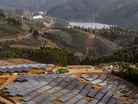
Ember’s data suggests significant potential, but hybrid projects are not a new idea. In January 2026, Portuguese utility EDP commissioned an 89MW hybrid site that combines a solar plant with 90,000 panels and a capacity of 48MW with existing hydroelectric infrastructure at the Pracana dam on the Ocreza River, inaugurated in 1951 and with a capacity of 41MW.
“Pracana is another milestone in our strategy: by combining hydropower and onshore solar, we reinforce system stability, accelerate the energy transition, and reduce territorial impact. It is EDP’s first project of this kind globally and proves that innovation and efficiency can go hand in hand,” said Pedro Vasconcelos, head of EDP’s business in the Iberian Peninsula at the time of the inauguration.
Meanwhile, in May Iberdrola — one of the world’s largest renewables players — commissioned the 195MW Tâmega Norte wind project connected to the Tâmega Hydroelectric System, with pumped storage. Iberdrola says the site is the first wind-hydro hybrid project on the Iberian Peninsula.
“By integrating wind farms with a large hydroelectric storage system, Tâmega will not only increase renewable capacity, but also strengthen grid stability and accelerate electrification,” said Pedro Azagra Blázquez, CEO of the Iberdrola Group.