How The Dominant Solar Sector is Continuing to Innovate
Germany has quickly become a leader in renewable energy. One recent step to boost clean electricity, especially in crowded cities where space is limited, was allowing people to install solar panels on their balconies.
These portable panels can then be plugged straight into a home’s electrical system, often without needing a permit. Now, more countries are looking at approving the use of balcony solar to help boost energy security.
The Balkonkraftwerk, or balcony power plant, revolution in Germany shows how the solar industry is finding new ways to grow beyond large solar projects alone.
The state of solar
Global solar capacity surpassed 3TW in 2025, capping off a decade of rapid growth. The sector had reached 2TW in 2024 and 1TW in 2022. Today, solar supplies almost 10% of the world’s electricity, up from 3% five years ago.
SolarPower Europe predicts that global solar capacity could reach 6.6TW by 2030.
However, this projection is lower than an earlier forecast of 7.1TW, reflecting the challenges of a fast-growing sector: grid bottlenecks, insufficient storage and limited system flexibility.
Slow permit approvals, a lack of funding and concerns about supply chains show that the solar industry needs to keep innovating and look for new places to install panels.

Key solar innovations
Floating solar: This technology places solar panels on water, such as reservoirs, lakes, and hydroelectric dams.
Using existing water sites, floating solar complements land-based systems and demonstrates how different energy solutions can work together.
Benefits include:
- Higher efficiency: The cooling effect of water can boost solar panel performance by up to 15% compared to panels on land.
- Water conservation: Solar panels reduce evaporation from reservoirs, saving water – especially in areas prone to drought.
- Reduced land-use pressure: Placing solar panels on water eliminates the need to buy additional land, helping protect natural habitats.
- Chance for improved water quality: The shade from panels can sometimes reduce algae growth.
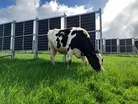
Agri-PV: Agri-PV combines farming and solar energy on the same land, answering the criticism that solar panels take up valuable farmland. This approach supports sustainable practices and benefits both farms and their communities.
When solar panels are raised higher, the land underneath can still be used for grazing cattle and other animals. The panels can also give shade to animals or protect crops as the climate changes.
Benefits include:
- Improving crop yields: Research in Europe and elsewhere has shown that agri-PV can increase yields by up to 16% for fruits and berries.
- Providing shade for farm animals: Higher temperatures can increase heat stress, weaken immune systems or disrupt metabolism.
- Local biodiversity and ecosystem protection: Solar panels reduce soil evaporation, increase soil carbon storage, prevent erosion and help restore organic matter.
- Offer additional revenue streams for farmers: Farmers can continue producing and selling food while also receiving benefits from the solar project operators.
Building-Integrated Photovoltaics (BIPV)
With BIPV, solar panels can replace conventional building materials such as roof tiles or glass facades. The development of transparent solar panels means windows can be replaced.
Builders can use these in new buildings or renovations, swapping standard materials for ones that generate power. BIPV also helps generate energy along a building’s exterior without requiring additional land.
Benefits include:
- Dual economic value: BIPV materials, such as solar facades or roof tiles, perform the same function as the materials they replace.
- Space and energy efficiency: Commercial buildings often have more wall space than roof space. BIPV lets them generate more solar power without using extra land or making the building bigger.
- Improved thermal performance: BIPV glass panels insulate better than standard single-pane glass. They reflect infrared light, which keeps buildings cooler and reduces the need for air conditioning.
- Aesthetic integration: Unlike bulky traditional solar panels, BIPV systems are designed to blend in with the building.
- RWE - A leading developer of renewable energy projects in Europe, expanding into agri-PV and floating solar research and development.
- BayWa - An early mover in the agri-PV and floating-solar sectors, taking a market-leading position across both technologies.
- LONGi - The Chinese solar company is using its expertise to develop BIPV with several demonstration projects up and running.
- Statkraft - Launched an internal programme called "The AgriPower Initiative" to build knowledge of agri-PV and develop effective tools for smart projects.
- ABB - Supported the Cirata array in Indonesia; ABB says that floating solar technology is vital to meeting worldwide renewable energy demand.
- Lighthouse bp - One of Europe’s largest floating solar panel arrays was funded by Lightsource bp on London’s Queen Elizabeth II reservoir.
- Enel - By leveraging Agri-PV installations to support local ecology, Enel safeguards pollinator populations, with a specific focus on protecting bee habitats.
- Engie - Integrating agriculture with solar power is a strategic asset as it works toward its 400GW renewable energy goal by 2030.
- Akuo Energy - Akuo launched its first agri-PV project in 2007 on the island of Reunion. Since then, more than 20 projects have been developed totalling 150MW.
- Fred. Olsen 1848 - Using a unique rope-mesh and tensioning system, Fred. Olsen 1848 is developing a floating solar concept capable of operating in more turbulent wave environments.
RWE
The German power company has devoted considerable time and energy to agri-PV in recent years. At a site in Bedburg, north-west Germany, RWE’s 3.2MW demonstration plant combines green electricity production with agriculture.
Since 2024, around 6,100 solar modules have powered over 1,000 homes while researchers test three agri-PV technologies across a seven-hectare site.
Firstly, a vertical design with the solar modules installed rigidly on a substructure, similar to a fence. In the second, known as a tracker system, modules are mounted on a movable axis, enabling them to follow the sun's path from east to west.
Finally, an elevated pergola system was evaluated. Ideal for fruit growing, this setup shelters potted raspberries. The modules protect crops from extreme weather and serve as irrigation frames, improving harvesting conditions.
More recently, RWE launched its first commercial-scale agri-PV facilities. Situated in the Campania region’s Benevento province, the Morcone and Acquafredda projects have a combined capacity of 19.1MW. With approximately 32,500 solar modules deployed across both locations, these advanced systems can supply renewable power to roughly 13,000 homes nationwide.
“Advanced Agri-PV enables us to use scarce land resources responsibly and efficiently by generating two different yields from the same land — agriculture and renewable energy”, says Sopna Sury, CEO RWE Renewables Europe & Australia.
BayWa
As well as being a specialist in Agri-PV, German power company BayWa has also developed a portfolio of floating solar projects totalling 230MW in Thailand, Germany, Austria and the Netherlands
BayWa’s 27.4MW Bomhofplas floating solar park in the Netherlands is a prime demonstration of how underutilised water bodies, such as former sandpits, can be reused and given new life with floating solar.
Spanning 182,500 square metres and 73,000 modules, the facility was completed in just seven weeks in early 2020.
Its east-west orientation optimises energy production throughout the daylight hours while providing shade that reduces water evaporation.
Twenty 'Biohuts' were also installed beneath the floating solar panels, designed to serve as shelters and nurseries for fish and other aquatic animals. A three-year study was conducted by Ecocean to investigate the role of biohuts in nature restoration. During the monitoring process, a total of 431 individual fish and 1,951 invertebrates were recorded.
“When it comes to Floating PV, you have to use the right long-lasting technology. Thanks to our expertise and innovation, we have developed a system that is creating renewable energy opportunities for underused lakes such as disused quarries, mineral extraction pits and reservoirs,” says Toni Weigl, Head of Project Management, BayWa.
LONGi
Chinese solar manufacturer LONGi Solar is ranked as the leading global solar PV module manufacturer by analyst firm Wood Mackenzie, recognised for its technology maturity, supply chain resilience and capacity utilisation.
It has taken its experience in the solar sector and applied it into the next generation of technologies by also leading in the Building-Integrated Photovoltaic (BIPV) space.
LONGi developed a BIPV project within the Boao Zero Carbon Demonstration Zone on Dongyu Island, southeast China. Created through a partnership between Hainan Province and the Ministry of Housing and Urban-Rural Development, this site serves as a global benchmark for sustainable growth and represents the first zero-carbon international forum park. Recognised as a priority initiative for Hainan, the island now boasts a total BIPV capacity of 3.88MW.
While maintaining the structures’ natural light, LONGi developed a range of BIPV solutions – including solar roofs, curtain walls and power-generating glass and railings. These innovations seamlessly blend solar technology into the building’s design while expanding the possibilities for PV applications – including tiles for domestic buildings.
Company portals



Executives
Sopna Sury
CEO – RWE Renewables Europe & Australia

Toni Weigl
Head of Project Management Europe