
How Much is Clean Energy Curtailment Costing UK Consumers?

London's annual electricity demand could have been met by the amount of clean energy curtailed by wind and solar farms across Great Britain and Ireland in 2025, according to new analysis from Montel.
The energy analyst’s report, Curtailed Renewables in GB and Ireland in 2025, reveals how ageing transmission networks are becoming a costly barrier to the energy transition. Curtailment in Great Britain jumped 22% year-on-year to 10 TWh, while Ireland saw another 2.1 TWh of renewable power go unused.
The findings point to a major supply chain bottleneck: wind and solar installations are generating record volumes of clean electricity, yet the grid cannot deliver it efficiently from remote generation sites to population centres.
Northern Scotland remains the most constrained region, with 8.8 TWh of wind power curtailed – enough to power all Scottish homes for a year. The issue stems from saturated transmission boundaries between Scotland and England, which block flows to high-demand areas further south.

Montel’s analysis notes: “Only 61% of the energy which could have been generated in the [Northern Scotland] region made it to the grid.”
The growing mismatch between where power is produced and where it’s consumed is driving up costs for billpayers. The report warns that “outdated transmission networks could continue to drive up consumer bills as NESO, EirGrid and SONI are forced to operate networks unfit for the net zero future.”
The issue in Scotland
According to Montel, 98% of Great Britain’s curtailed renewable generation occurred in Scotland, underscoring how concentrated the infrastructure challenge has become.
When wind farms are ordered to shut down due to grid congestion, they receive curtailment payments – while grid operators must simultaneously pay gas plants or battery storage providers to produce replacement power. This creates a costly double payment for consumers.
In 2025, direct curtailment payments in Great Britain fell 10% to £363m (US$495.4m), but the total cost of replacing curtailed wind energy surged past £1bn (US$1.34bn), 20% higher than the previous year.
The apparent drop in curtailment procurement costs reflects the entrance of newer projects like Moray West, which can bid more competitively thanks to modern subsidy structures. However, these savings are outweighed by rising costs for replacement power.
UK Shadow Energy Secretary Claire Coutinho criticised Energy Secretary Ed Miliband’s renewable expansion plans in response to the findings. According to reports, she said: “We are paying more than ever before to pay wind farms to switch off when the wind blows. Costs are set to triple by 2030 as he approves more wind farms than ever before. He cares far more about his own Clean Power 2030 target than looking after consumers.”
Octopus Energy has previously warned that curtailment charges could add up to £8bn (US$10.7bn) to consumer bills by 2030 unless network upgrades keep pace with the rapid rollout of renewable energy.
All sustainability, net zero and sustainable supply chain leaders should attend:
- Sustainability LIVE: The Net Zero Summit - QEII Centre, London, March 4-5
- Sustainability LIVE: The US Summit - Navy Pier, Chicago, April 21-22
Co-located with Procurement & Supply Chain LIVE, these events brings together CSOs, ESG leaders and senior decision-makers at a moment when sustainability, supply chains and commercial performance are increasingly interconnected.
Tickets can be booked online today for The Net Zero Summit and The US Summit. Group discounts available.
Infrastructure funding meets slow delivery timeline
To ease grid congestion, regulator Ofgem has authorised the UK’s three major transmission operators – National Grid, Scottish Power, and SSE – to invest up to £90bn (US$120.8bn) in new lines and substations. Yet these upgrades require at least five years to deliver, meaning constraint costs are likely to remain high as Ed Miliband pushes forward with his 2030 decarbonisation targets.
Some relief arrived in 2025 with the commissioning of the Greenlink interconnector linking Wales and the Republic of Ireland. The new connection reduced Northern Irish wind curtailment from 30% in 2024 to 24% last year by easing pressure on the older Moyle interconnector. Still, almost a quarter of available wind energy in Northern Ireland remained unused.
Solar curtailment, though relatively limited, is rising quickly. Montel reported: “Solar curtailment costs rose over the year to total over £252,000. While this is substantially lower than the corresponding figures for wind, it represents a rise from the negligible costs associated with solar curtailment in 2024.”
In Ireland, solar curtailment quadrupled between 2024 and 2025, signalling that grid limitations are now beginning to affect multiple renewable technologies.
In total, 12.1 TWh of renewable electricity was curtailed across Great Britain and Ireland in 2025 – highlighting the widening gap between renewable generation capacity and transmission capability, and the lagging pace of infrastructure delivery needed to support a net zero energy system.
Company portals






Executives
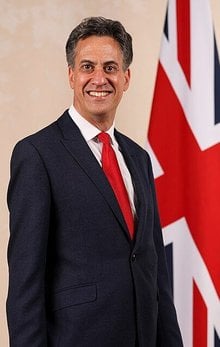
Ed Miliband
Energy Secretary