Inside Google's First-of-its-Kind Gas and CCS Energy Project
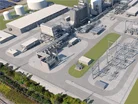
Google has announced its first corporate agreement to support a natural gas power plant equipped with carbon capture and storage technology, marking a significant expansion of the company's clean energy strategy.
The Broadwing Energy facility, located in Decatur, Illinois, is set to have more than 400 megawatts of generating capacity and will be able to capture approximately 90% of its carbon dioxide emissions for permanent underground storage.
The project is also Google's first collaboration with Low Carbon Infra, a portfolio company of infrastructure investor I Squared Capital, to develop CCS facilities across the US.
"Today, Google is taking a major leap forward to unlock the next generation of advanced clean energy technology, through a new agreement to support a first-of-its-kind gas power plant with carbon capture and storage," says Kate Brandt, Google's Chief Sustainability Officer.
Industrial site uses existing infrastructure
The power plant will be constructed at an industrial facility operated by Archer Daniels Midland, which has nearly a decade of experience storing CO₂ from ethanol production.
The carbon dioxide that is captured at the site will then be permanently stored in ADM's adjacent EPA-approved Class VI sequestration facilities, more than a mile underground.
Google has committed to purchasing the lion’s share of the electricity generated by the plant, where commercial operation is slated to begin in early 2030.
The project is expected to create around 750 full-time jobs over the next four years and will support dozens of permanent positions once operational.
Part of Google’s broader clean energy portfolio
The CCS agreement follows Google's strategy to commercialise multiple advanced energy technologies, including enhanced geothermal, advanced nuclear and long-duration energy storage.
“We've been chasing CCS opportunities for quite some time,” says Michael Terrell, Google's Head of Advanced Energy.

“When we published our strategy to build a portfolio of solutions as part of our 24/7 carbon-free energy aspiration, we identified CCS as a critical technology, alongside advanced nuclear, enhanced geothermal, long duration storage, flexible demand and other techs.”
The company has already outlined stringent safety and environmental criteria for potential CCS projects as part of its broader effort to support grid infrastructure serving its data centres.
The growing prominence of carbon capture and storage
CCS is a sophisticated form of technology that is able to capture CO₂ from power plants or industrial facilities and store it permanently underground.
Both the IEA and the IPCC have identified CCS as a valuable tool for reducing emissions from power generation and carbon-intensive industries, like steel manufacturing and cement production.
“Through this partnership, Low Carbon Infra and Google are joining forces on Broadwing Energy in Decatur, Illinois, our first in a series of carbon capture and storage projects,” says Jonathan Wiens, CEO of Low Carbon Infrastructure.
“The project marks a major step forward in demonstrating how industrial and power sector decarbonisation can work together to meet growing energy needs sustainably,” he adds.
Transparency measures and performance standards
The Broadwing project is set to incorporate a newly released standard for CCS-specific Energy Attribute Certificates, developed by industry experts to ensure that the quantification of emissions is as accurate as possible.
Google and Low Carbon Infra intend to use their collaboration to advance technical and operational improvements, including raising CO₂ capture rates and improving system performance and economics.
"It was a privilege to lead this deal and collaborate with an extraordinary internal team and forward-thinking partners," explains Donna Calderon, Senior Lead for Energy Strategy at Google.
The company has emphasised that transparency will be critical to ensure the environmental integrity of its CCS projects.
Growing energy demands and AI development
The announcement comes at a time when technology companies need more energy than ever, with the rise of AI and the expansion of data centres dependent on huge levels of electricity.
In 2024, Google revealed that five of its AI-powered products helped users collectively reduce an estimated 26 million metric tonnes of CO₂, which is roughly equivalent to emissions from the annual energy use of over 3.5 million US homes.
The company views this CCS investment as part of a broader strategy to harness AI's potential while also managing the associated energy demands through diverse clean energy technologies.
“We’re proud to be building a diverse portfolio of advanced clean technologies, which together are helping create a bright energy future for people everywhere,” says Kate.
Company portals


Executives

Donna Calderon
Senior Lead for Energy Strategy
Jonathan Wiens
Chief Executive Officer
Kate Brandt
Member Board of Trustees
Michael Terrell
Head of Advanced Energy