
Is Trump About to Scrap Key US Climate and EV Regulations?
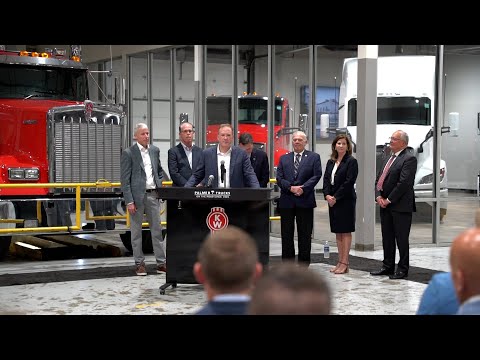
The U.S. Environmental Protection Agency (EPA), under the leadership of Administrator Lee Zeldin, has proposed to rescind the 2009 Endangerment Finding, a legal foundation underpinning federal GHG regulations for vehicles and engines.
Announced at an Indiana car dealership alongside high-profile officials including Secretary of Energy Chris Wright and Indiana Governor Mike Braun, the proposal signals a dramatic reversal in the nation’s climate policy.
What is the endangerment finding?
The Endangerment Finding was issued in 2009 by the Obama Administration, enabling the EPA to regulate GHG emissions under the Clean Air Act.
It concluded that six key pollutants, including CO₂, posed a risk to public health and welfare.
This finding has since formed the legal basis for more than US$1tn in climate-related regulations, including the Biden Administration’s EV mandates.
The case for repeal
Administrator Lee Zeldin argues that the regulation has imposed undue costs on consumers and manufacturers without sufficient scientific backing.
"With this proposal, the Trump EPA is proposing to end sixteen years of uncertainty for automakers and American consumers,” says Lee.
“The Obama and Biden EPAs twisted the law, ignored precedent and warped science to achieve their preferred ends.”
Zeldin emphasised that rescinding the finding would “end US$1tn or more in hidden taxes on American businesses and families,” claiming it would reinstate consumer choice, reduce supply chain costs and lower prices on goods delivered by trucks.
Chris Wright, Secretary of Energy comments: “Thanks to President Trump’s leadership, America is returning to free and open dialogue around climate and energy policy... policies that expand access to affordable, reliable, secure energy and improve quality of life for all Americans.”
Political and industry support
The announcement drew strong support from Indiana’s leadership and members of Congress.
Governor Mike Braun praises the decision: “Today’s announcement is a win for consumer choice, common sense and American energy independence.”
Attorney General Todd Rokita comments: “Over the last four years, conservative state attorneys general were the last line of defence... now we are on the front lines helping to unleash American energy.”
Chris Spear, President and CEO of the American Trucking Associations, welcomes the rollback of GHG Phase 3 rules: “This electric-truck mandate put the trucking industry on a path to economic ruin... we need policies rooted in real-world conditions."
Kelly Loeffler, Small Business Administration Head comments:" “Thanks to President Trump, the Obama-Biden green new scam era is finally coming to an end. EPA’s reconsideration of the endangerment finding will eliminate burdensome regulations and save small businesses at least US$170bn."
"I’m excited to work alongside Administrator Zeldin to cut red tape and unleash President Trump‘s new golden age for Main Street.”
The broader sustainability context
While the EPA asserts that the repeal is backed by updated scientific data and a more accurate economic assessment, estimating annual savings of US$54bn, climate advocates warn the proposal could undermine national and global progress on emissions reduction.
The EPA's own rationale now claims that previous assumptions linking carbon dioxide emissions from vehicles to climate endangerment were speculative.
The agency cites the Department of Energy’s 2025 Climate Work Group study as part of the new evidence base.
However, the proposal directly conflicts with ongoing efforts to decarbonise transport, which remains one of the largest sources of emissions in the US.
It would remove emissions standards for all new light-, medium- and heavy-duty vehicles, and eliminate measures like the start-stop feature that, while unpopular, help cut emissions.
Legal and scientific implications
The EPA’s move also leans on recent Supreme Court rulings, including West Virginia v. EPA, which clarified that significant regulatory decisions must come from Congress, not federal agencies.
Administrator Zeldin argues the 2009 Endangerment Finding ignored this principle: “The Obama Administration ignored Congress’ clear intent... using unprecedented logic to expand EPA’s power.”
This interpretation, however, could face challenges from environmental groups, states and scientific bodies that see the rollback as a political maneuver rather than a policy grounded in scientific consensus.
The EPA has opened a public comment period and will publish participation details on its website and in the Federal Register.
In parallel, it is also reviewing its 2027 and later light- and heavy-duty vehicle standards and plans to roll back the EV mandate entirely.
Whether this proposal ultimately succeeds will depend on legal scrutiny, scientific debate and political developments in the coming months.
For now, it marks one of the most significant deregulatory moves in US environmental policy history, one that could reshape the nation's climate path and its leadership on sustainability.
President Trump’s climate policies
Donald Trump’s administration is implementing sweeping rollbacks that significantly weaken environmental protections across the US.
More than 100 regulations have been repealed or weakened, affecting clean air, water quality, vehicle emissions, hazardous chemical controls and wildlife conservation.
These actions not only led to increased greenhouse gas emissions but also heightened risks to public health, particularly in vulnerable communities.
The decision to withdraw from the Paris Agreement dealt a major blow to international climate cooperation, stalling global progress on emissions reduction.
Simultaneously, the administration ramped up fossil fuel production, expanding drilling on public lands, advancing pipeline approvals and scaling back support for renewable energy.