
What does US UNESCO Exit Mean for the Environment?
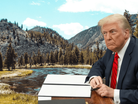
The United States will again withdraw from UNESCO by the end of December 2026, marking a second departure from the UN agency under the Trump Administration.
The decision reignites debates around national sovereignty, global cooperation and the stewardship of natural and cultural heritage.
While political in motive, the implications reach far beyond Washington, touching environmental protections, international conservation efforts and the future of US engagement with global sustainability goals.

Why is the US withdrawing?
The Trump Administration cited UNESCO’s support for “divisive social and cultural causes” and alignment with the UN’s Sustainable Development Goals as reasons for withdrawal, according to Tammy Bruce, US Department of State Spokesperson.
Tammy also points to the agency’s 2011 decision to admit Palestine as a member state, claiming this fosters anti-Israel bias, concerns previously voiced in 2017 when the US first exited under Trump.
The Biden Administration reversed the UNESCO exit in 2023, emphasising the strategic costs of absence – particularly in shaping AI ethics and global education standards.
However, Trump’s re-election campaign has renewed its opposition to what it describes as "globalist ideological agenda", reasserting ‘the America First’ stance on international diplomacy.
UNESCO’s contribution to global sustainability
UNESCO has played a pivotal role in preserving heritage and supporting sustainable development through education, science and culture.
Its World Heritage Sites programme is vital to environmental conservation, while its recent work includes:
- The reconstruction of Mosul’s Old City in Iraq
- The adoption of a global framework on the ethics of artificial intelligence
- Educational support in crisis zones like Ukraine, Lebanon and Yemen
- Strengthened biodiversity and girls’ education programmes.
Despite US criticism, UNESCO has implemented major financial and structural reforms.
“I deeply regret President Donald Trump's decision to once again withdraw the United States of America from UNESCO,” says Audrey Azoulay, Director-General of UNESCO, in an official statement.
“This decision contradicts the fundamental principles of multilateralism, and may affect first and foremost our many partners in the United States of America – communities seeking site inscription on the World Heritage List, Creative City status and University Chairs.”
Natural World Heritage sites in the US
There are 26 UNESCO World Heritage sites in the US, 13 of which are natural.
These are ecologically, geologically and culturally significant areas, many of which have faced environmental threats in recent years:
- Carlsbad Caverns National Park
- Everglades National Park
- Grand Canyon National Park
- Great Smoky Mountains National Park
- Hawaii Volcanoes National Park
- Kluane / Wrangell-St. Elias / Glacier Bay / Tatshenshini-Alsek (shared with Canada)
- Mammoth Cave National Park
- Olympic National Park
- Redwood National and State Parks
- Waterton Glacier International Peace Park (shared with Canada)
- Yellowstone National Park
- Yosemite National Park
- Papahānaumokuākea Marine National Monument.
Many of these sites face mounting environmental pressures that could worsen without global attention or multilateral oversight.
UNESCO’s role has often been to provide this accountability, visibility and expert coordination.
Economic and political drivers
Critics argue that the withdrawal is not simply ideological, but driven by economic interests that conflict with environmental stewardship.
"It’s about power, profit and the fear of science stopping them" writes Ingmar Rentzhog, Contributing Author at Forbes and CEO and Founder of We Don’t Have Time, a climate solution media outlet, on LinkedIn.
Recent federal decisions reflect this tension between industrial development and ecological preservation:
- Oil drilling in Alaska’s Arctic National Wildlife Refuge, long contested globally
- Uranium mining near the Grand Canyon, previously paused due to international scrutiny
- Gas pipelines proposed near Yellowstone’s protected areas
- Stripped protections for Bears Ears National Monument, opening the land to coal and mineral mining
- Ignored damage to Indigenous sacred sites in favour of resource extraction.
These actions are emblematic of broader efforts to deregulate environmental policy, often in direct opposition to UNESCO’s mission to protect natural and cultural heritage.
UNESCO’s continuing mission
Despite the loss of a major funder, UNESCO is not unprepared.
Audrey outlined reforms that have reduced dependence on US contributions, which now comprise 8% of the organisation’s total budget, down from 22% in 2011.
Voluntary contributions from member states and private donors have doubled since 2018, providing a more stable financial footing.
“The reasons put forward by the United States to withdraw from the Organization are the same as seven years ago even though the situation has changed profoundly,” continues Audrey,in an official statement.
“UNESCO today constitutes a rare forum for consensus on concrete and action-oriented multilateralism.”
UNESCO remains the only UN agency dedicated to Holocaust education and the fight against antisemitism, a mandate it has pursued with support from American Jewish institutions and civil society.
What’s at stake?
The departure raises concern over whether US-based conservation, heritage and research projects, especially those reliant on international recognition, will suffer.
It also risks ceding influence to other powers, particularly China, in shaping global frameworks around emerging technologies and education policy.
The US withdrawal from UNESCO is a politically charged move that reflects a deeper tension between national economic interests and international cooperation on sustainability.
It risks undermining the preservation of some of America’s most treasured landscapes and weakening the global institutions that protect them.
Whether temporary or lasting, this decision places greater importance on multilateral resilience and on public scrutiny of decisions made in the name of sovereignty but at the expense of science, culture and nature.