JPMorgan: Three Ways Ports Can Avoid a Climate Catastrophe
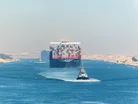
Ports are central to global trade, ensuring supply chains stay connected.
As the world faces rising geopolitical tension and climate instability, J.P.Morgan warns that ports must adapt or risk falling behind.
From climate threats like flooding and storms to shifts in trade policy and infrastructure demands, ports sit at a critical junction between commerce and climate change.

Trade expansion strains outdated port systems
With global expansion by businesses on the rise, trade in 2024 reaches a value of US$33tn.
More than 70% of this figure, by value, moves via maritime transport.
When measured by volume, 80% of global trade is carried by sea.
These numbers reveal the enormous pressure placed on port infrastructure worldwide.
Vital trade corridors, such as the Suez Canal and the Strait of Malacca, act as critical infrastructure points where cargo is refuelled, containers swapped and vessels repaired.
These strategic choke points make maritime routes more efficient but also more vulnerable.
The Organisation for Economic Cooperation and Development projects that maritime trade will more than double by 2050.
As a result, ports must expand in scale and capability. J.P.Morgan identifies three primary investment needs for sustainable growth:
Improving container efficiency
Adopting technology to reduce the space needed per container
Extending hard infrastructure to increase port capacity.
Without these upgrades, ports risk becoming bottlenecks, unable to meet future trade demands, the company says, adding that sustainability must not only focus on reducing emissions but also include infrastructure prepared for increased loads.
Climate hazards threaten supply chain stability
Ports do not only face pressure from growth but also from rising climate threats.
According to the study, around 80% of ports are exposed to flooding every year.
Specific regions, such as the US Gulf Coast and Southeast Asia, are particularly exposed to hurricanes and typhoons.
The report highlights that “a single 300-mile-wide hurricane/typhoon can cause damage across multiple ports at once with wind damage, saltwater storm surge and rain and riverine induced flooding.”
Such events would not only destroy infrastructure but also block shipping routes and stall supply chains.
The potential for disruption becomes massive, especially when considering that 80% of trade depends on the efficiency of ports.

As global sea levels rise, the physical location of ports becomes a growing vulnerability.
Infrastructure near coastlines faces the risk of permanent or repeated flooding.
J.P.Morgan calculates that adapting ports to withstand sea-level rise will cost between US$223bn and US$768bn globally by 2050.
This investment is essential to avoid future trade losses.
Geopolitical instability only adds to this threat.
Wars, tariffs or sanctions can lead to sudden shifts in trade routes.
When containers are delayed or held up away from ports, known as container dwelling, port capacity shrinks and efficiency drops.
One past example is the Suez Canal crisis in 2021.
When the canal was blocked, more than 200 ships carrying 16.9m tonnes of deadweight were held up.
Maersk alone lost nearly US$89m.
The global impact rippled across shipping schedules, proving how fragile port-based trade can be.
Mitigation dominates over adaptation in port planning
Despite the threats, ports tend to focus on mitigation, cutting GHG emissions, rather than adaptation to climate impacts.
Out of the 35 largest ports in the world, 31 have climate mitigation strategies.
However, only 23 have plans in place for adaptation.
This signals a gap in how ports prepare for long-term resilience.
Mitigation efforts include electrified cranes, sustainable fuels and reduced carbon emissions from shipping processes.
These measures are essential for environmental impact but do little to protect ports from the physical effects of climate change.
When a port becomes unusable due to flooding or storm damage, cargo must be rerouted to other locations, often to be flown in or trucked from alternative destinations.
This increases emissions and delays, the opposite of what sustainable logistics aims to achieve.
J.P.Morgan highlights the risk of rising sea levels putting entire port cities underwater.
Without the ability to handle goods where they land, the trade system becomes far more complex and carbon-intensive.
To maintain smooth trade operations, ports must now invest in dual-track strategies.
That means continuing to cut emissions while also building infrastructure that withstands flooding, extreme weather and political uncertainty.
As 80% of world trade depends on ports, the urgency to act is real.