PepsiCo: Tackling Global Food Security with Quaker Oats
Nearly 45 million children under five have a weight that is too low for their height, according to the World Health Organisation.
This issue, which is known as wasting, is the most visible and life-threatening form of malnutrition.
Globally, 149 million children’s growth and cognitive development are permanently stunted by chronic undernutrition.
PepsiCo is working to tackle this issue and bring food security to communities around the world through its Quaker brand.

The Quaker Bowl of Growth programme
PepsiCo has launched many global initiatives to fight hunger and malnutrition and bring growth, resilience and hope.
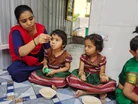
In India, PepsiCo’s Quaker brand, the PepsiCo Foundation and the MAMTA Health Institute for Mother and Child has launched the Quaker Bowl of Growth programme.
This aims to tackle childhood malnutrition in India by providing children aged three to five with nutritious food so they can grow up healthy.
As part of the project, PepsiCo is supplying children with panjiri, a nutritional supplement made with Quaker Multigrain and millet and fortified with 18 vitamins and minerals.
During the pilot phase of the Quaker Bowl of Growth programme, 1,000 children were given panjiri. The results showed that 89% of the children showed improvement or stable growth and 95% of caregivers reported an increase in their children’s appetites.
The programme has also launched workshops and community engagement sessions to teach families about nutrition, hygiene and sustainable health practices.
Guatemala’s malnutrition problem
There is a similar story in Guatemala, where nearly half of all children under five suffer from chronic childhood malnutrition.
In 2020, Quaker launched its Quaker Qrece (Quaker Grows) project with support from CARE Guatemala and the PepsiCo Foundation.
Children between the ages of two and five are given a specialised food made from oats, milk, eggs and peanuts with 17 essential vitamins and minerals.
Families can also attend workshops about hygiene, safe water and waste management to help promote a healthier lifestyle.
More than 3,000 children in 86 communities have participated in the programme, with 90% showing improved nutrition.
Rubén Jordán, Programme Manager for CARE Guatemala, says: “The most gratifying thing has been to see the change in the children, to become stronger, more curious and happier.
“It has also been inspiring to see mothers regain self-confidence and become community leaders.”
Empowering food security in Brazil
PepsiCo’s goal is to make nutritious food accessible to 50 million people by 2030.
To support this, its R&D team developed a new solution to providing nutritious food in Brazil.
The team found that the husk of an oat grain can be peeled to reveal a rice-like kernel, which can provide twice the fibre and protein of regular white rice.
PepsiCo has developed Quaker Oat Rice, which can be easily integrated into typical Brazilian diets.
In Brazil, 33 million people face food insecurity and nearly 12% of children under five have stunted growth.
During the launch of Quaker Oat Rice, 100% of profits were donated to Amigos do Bem, a local NGO which helped provide meals to 25,000 Brazilians in the product’s first year.
"This product can be at the table and a part of people’s meals," says Livia Favaro, Corporate Affairs Senior Impact Manager for PepsiCo in Brazil.
“It can be as simple as rice and beans and can be as fancy as a risotto. You can make it into a dessert; it can be in a salad – it’s very versatile," she adds.
“This is just the beginning of a journey to fight food insecurity in Brazil.”
Company portals


Executives
Livia Favaro
Senior Positive Impact Manager
Ruben Jordan
Programme Manager