RGreen Invest & Arverne Drive Sustainable Geothermal Energy
A €52.4m (US$54.8m) investment by RGreen Invest could accelerate France's geothermal ambitions.
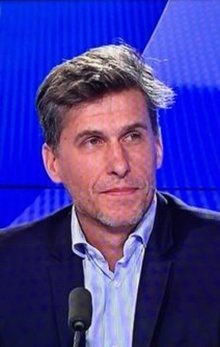
The sustainable investment firm has partnered with Pierre Brossollet, Founder and CEO of Arverne, channelling funds through his holding company GEOGREEN to expand the country's geothermal infrastructure.
RGreen Invest operates as a sustainable investment firm across Europe.
According to the company, it manages around US$3.3bn of assets with a focus on renewable energy infrastructure and climate change mitigation.

Geothermal drilling with oil expertise
The firm's investment strategy centres on energy sovereignty.
This approach aims to help companies and countries establish greater control over their power sources.
The partnership with Arverne represents one of the largest private investments in French geothermal infrastructure in recent years, signalling growing institutional confidence in the sector's commercial viability and strategic importance to national energy policy.
Arverne operates as France's leading solutions provider for the geothermal energy sector.
The investment could expand the company's capacity to deliver heat and lithium extraction projects across multiple French regions.
Arverne was founded in Pau in 2018. The company's subsidiary, Arverne Drilling Services, traces its origins to 1958 when it served the oil, gas and mining sectors.
Pierre redirected this drilling expertise toward geothermal energy.
Deep geothermal extraction uses similar processes to hydrocarbon drilling but focuses on heat rather than fossil fuels.
The technical knowledge accumulated over decades in fossil fuel extraction has proved directly transferable to geothermal operations.
This includes understanding of subsurface geology, drilling mechanics and fluid management systems that are essential for accessing heat reservoirs several kilometres below the surface.
The group includes three business units. Arverne Drilling Services handles boring and well engineering, 2gré sells geothermal heat and Lithium de France extracts lithium from hot brine pumped to the surface.
This structure allows the company to monetise multiple outputs from single drilling operations.
The model could reduce the financial risk associated with geothermal exploration.
Paris airport powers terminal one
Arverne drilled two geothermal wells at Paris Charles de Gaulle airport in late 2024.
The project was completed for site operator Groupe ADP.
Terminal one now receives up to 80GWh of energy annually from the wells.
This makes it one of Europe's largest airport geothermal installations.
"We firmly believe that underground resources, particularly geothermal energy, are key solutions for the energy transition," Pierre said at the time.
The company secured a 30-year concession with energy group Dalkia in the Paris suburbs.
The geothermal district heating network for Clichy-sous-Bois and Livry-Gargan has a value close to €90m (US$94.1m).
Expanding across the Paris basin
Arverne created a joint venture in May called Francilienne de Géothermie.
The partnership with Banque des Territoires, the local investment arm of French state bank Caisse des Dépôts, targets geothermal projects across the Île-de-France region.
The region sits above the Dogger aquifer. This porous limestone layer has supported geothermal heating in the Paris basin for decades.
Arverne's operations extend to Alsace. Lithium de France began drilling its first geothermal doublet at Schwabwiller in mid 2025 as part of a project designed to produce both heat and lithium from the same wells.
The dual-output model could address two sustainability challenges simultaneously.
Heat production reduces reliance on fossil fuels while lithium extraction supports electric vehicle battery manufacturing.
European geothermal capacity and barriers
According to the International Energy Agency, the world's geothermal resources at a depth of just 8km could provide 600TW of power. Current global energy demand stands at just 20TW.
Geothermal remains a marginal contributor to Europe's energy mix relative to wind and solar. However, output is growing.
According to industry body EGEC, geothermal district heating output across Europe grew by 4.6% between 2023 and 2024. France has set targets to quadruple geothermal production by 2035 to reach 28TWh.
EU member states endorsed geothermal for the first time in December 2024.
A coalition of nearly 70 businesses and investors is now pressuring the European Commission to publish a dedicated geothermal strategy.
Capital risk and permitting challenges
Upfront capital risk remains the chief barrier to geothermal expansion. Exploration drilling can cost tens of millions of euros before a developer knows whether a well will perform as hoped.
According to analysts at Rystad Energy, failure rates for exploratory wells vary massively by geology and country.
Rates range from under 10% in Hungary and Germany to as much as 30% in the Netherlands.
Permitting adds a second layer of friction. Regimes differ so widely between EU member states that developers can feel like they are starting from scratch every time they cross a border.
Public perception presents another challenge.
Deep drilling occasionally triggers seismic tremors and incidents in Basel, Switzerland and Staufen, Germany led to damaged buildings and shaped public attitudes, though reports noted that seismic risk assessments were inadequate for these projects.
Investment framed around energy security
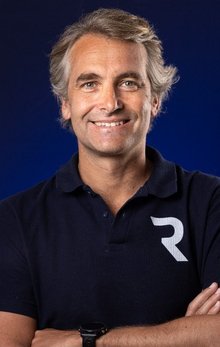
Nicolas Rochon, Founder and CEO of RGreen Invest, has framed the investment in terms of energy security rather than pure financial return.
"We are delighted to partner with Arverne, a national champion that has demonstrated its ability to unlock the exceptional potential of France's geothermal resources to deliver strategic infrastructure that strengthens both French and European energy security," he says.
Pierre is emphatic about the road ahead for Arverne and France.
The company has set targets that could deliver more than half of France's national energy roadmap goals.
"By 2031–2033, Arverne aims to produce around 4TWh of deep geothermal energy annually in France, representing more than half of the targets set out in the national energy roadmap and avoiding close to one million tons of CO₂ compared with natural gas," he says.
According to Pierre, lithium production will support the wider energy transition.
"Annual production of 27,000 tons of lithium carbonate in Alsace will provide enough material to supply batteries for around 800,000 electric vehicles," he explains.
The coalition of businesses and investors argues the technology could realistically replace up to 42% of Europe's remaining coal and gas generation given enough time and investment.
This includes the EGEC and Cleantech for Europe among its signatories.
Company portals
Executives
Nicolas Rochon
Founder and CEO
Pierre Brossollet
Founder and CEO