Shell, TotalEnergies & Equinor's Milestone in Carbon Capture
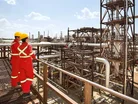
Carbon capture is expected to be a key part of how the world can make its way to the net zero target of 2050 as outlined in the Paris Agreement
Shell, TotalEnergies and Equinor have collaborated to create the world’s first pipeline to transport CO₂ into the Aurora reservoir.
The company's collective mission is to reduce and remove industrial emissions in Europe, naming the project The Northern Lights.
Acting as a carbon transport and storage service the companies will support various businesses to balance emissions through Carbon Capture and Storage (CCS).
Anna Mascolo, Executive Vice President, Low Carbon Solutions at Shell said on Linkedin: “Northern Lights has just made history – Shell's joint venture CCS project with Equinor and TotalEnergies is now the world’s first fully operational scheme to offer cross-border CO₂ transport and storage as a commercial service, with the first volumes now safely stored.”
How does the carbon capture work?
The carbon capture project will pump CO₂ through a 100 kilometre pipeline into the Aura reservoir that is 26,000 metres below the seabed.
The reservoir is located in the Norwegian North Sea, where CO₂ from Norway will now be stored for the rest of 2025.
The carbon will be transported from two Norwegian industries, Heidelberg Materials, a cement factory and Hafslund Celsio, a waste-to-energy plant.
The carbon carriers are able to carry up to 7,500 cubic metres of CO₂ in each voyage.
It works by liquified CO₂ from capture sites being shipped to onshore receiving terminals, before being stored permanently in the reservoir under the sea.
Michel Ziad Hajjar, Managing Director at TotalEnergies said on Linkedin: “Happy to announce that the first CO₂ volumes were successfully transported by vessel from Heidelberg Materials’ cement factory in Brevik, Norway to Northern Lights’ facilities in Øygarden.
“This is a new phase for the CCS industry in Europe offering hard-to-abate sectors a credible and tangible way to reduce CO₂ emissions.
“Well done for the Northern Lights' team!”
The history of the project
The Northern Lights project was started following the Norwegian government’s ambitions to develop a full scale CCS value chain by 2024.
In 2016 the government issued studies that confirmed the CCS project was feasible, pushing them to make it a reality.

In 2024 the first stage of the project was completed with the Northern Lights’ reception and storage facility being built to house 1.5 million tonnes of CO₂ annually.
The facilities include a terminal that receives carbon cargoes, a 100km subsea pipeline was built to transport the CO₂ alongside subsea injection facilities that ensure safe storage of the carbon.
Hege Skryseth, Executive Vice President at Equinor said on Linkedin“I can only imagine the atmosphere in the control room of Northern Lights in Øygarden on Thursday, August 21st at 10:30am.
“The recent achievement is not only a technological breakthrough, but also a testament to years of dedication and collaboration across Equinor and with external partners. The Northern Lights Joint Venture is equally owned by Equinor, Shell and TotalEnergies.
“Carbon Capture and Storage (CCS) can capture up to 90% of CO₂ emissions from fossil fuel use in electricity generation and industrial processes, permanently storing it underground and playing a vital role in combating climate change.
“To meet the goals of the Paris Agreement, we need substantial reductions in global CO₂ emissions. Relying solely on renewable energy technologies will not be enough; we must also adopt low-carbon technologies and strategies like CO2 storage.”
What does the future hold for the project?
Currently the project is anticipated to capture 400,00 tonnes of carbon annually from the cement factory.
In 2026 the companies plan to expand by adding CO₂ captured from Denmark and the Netherlands.
As part of this expansion Ørsted is set to get involved by getting carbon emissions from its ammonia plant in the Netherlands captured and transported to the storage facility.
In 2028 the project is expected to continue to expand with the annual storage capacity of five million tonnes of carbon.
The Swedish energy provider Stockholm Exergi has signed up to store up to 900,000 tonnes of CO₂ annually.