Sustainable Fashion & Water Positivity: Gap’s Impact

Global apparel retailer Gap operates more than 2,500 stores worldwide, including in the US, UK, Canada, France, Ireland and Japan.
It has released its 2025 Impact Report, covering the environmental and social impact of its operations, as well as its progress against its sustainability targets.

Gap’s environmental impact
Since being founded in 1969, Gap has focused on making a positive impact on the planet and its communities.
It published its first sustainability report in 2003 and had its emissions targets verified by the SBTi in 2024.
Gap has set short-term targets to reduce Scopes 1 and 2 greenhouse gas emissions by 90% and Scope 3 emissions by 32.5% by 2030 from a 2017 baseline.
It also plans to source 100% renewable electricity for company-operated facilities globally.
In 2025, it achieved a 70% reduction in Scopes 1 and 2 emissions and a 20% reduction in Scope 3 emissions, and had 46% of its electricity come from renewable sources.
Its long-term target is to achieve net zero carbon emissions across its value chain by 2050.
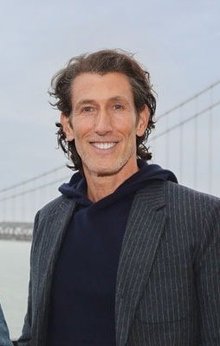
Richard Dickson, President and CEO of Gap, says: “Since our founding, we’ve worked to bridge gaps and create a better world, guided by a simple belief: When purpose and profit align, companies can be a force for good, for people and the planet.
“In a remarkably dynamic year for the apparel industry, I’m proud that Gap Inc. met the moment – performing while transforming, strengthening our business and the positive impact we make every day.
“As one of the largest specialty apparel companies in the US, we have the scale, capabilities and platform to matter. That’s why, for us, aligning purpose and profit is not only the right thing to do, it’s strategic.”
Collaborations for water positivity
Gap aims to prioritise water stewardship throughout its operations, investing in water resources and reducing freshwater use.
Its target is to empower five million people affected by the apparel industry to improve their equitable access to clean water and sanitation.
Since 2017, the company has reached 2.8 million people with clean water access.
In January 2026, Gap partnered with Water.org, Starbucks, Amazon and Ecolab to launch Get Blue.
This initiative aims to accelerate access to safe water and sanitation by aligning business leadership, allocating resources and capital and engaging consumers.
Its mission is to reach families and communities in need around the world, advancing Water.org’s goal to reach 200 million people by 2030.
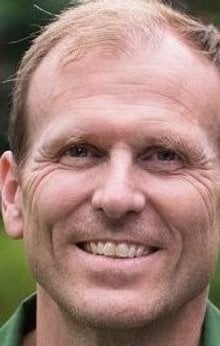
Gary White, CEO and Co-Founder of Water.org, says: “Solving the global water crisis is possible if the business community comes together and focuses on measurable change.
“Water sits at the centre of opportunity in the global economy.
“Get Blue gives companies a way to lead on an issue their industries depend on and to help scale solutions that are already reaching millions of people who need them.
“This is the kind of leadership required to end the water crisis within our lifetimes.”
Sustainability leaders won’t want to miss Sustainability LIVE: The Leadership Summit at London Climate Action Week, taking place at Code Node on 25 June 2026.
Register now for this exclusive invite-only event.
Circular commitments
Throughout its development and manufacturing process, Gap considers the full life cycle of its clothing products.
It aims to adopt more circular business models while minimising waste from its packaging and direct operations.
In 2025, Gap maintained 100% recycled content in polybags and polymailers across its brands.
It also achieved its goal of sourcing 100% of cotton from more sustainable sources, including Better Cotton Initiative, recycled, organic, regeneratively grown and traceable US-grown cotton.
At its San Francisco headquarters, approximately 7,000 pounds of e-waste were diverted from landfills and used to support families in need with refurbished technology.
It also diverted more than 3,000 pounds of food from the waste stream, donating it to local charities and providing meals to the local community.

Executives
Gary White
CEO & Co-Founder
Richard Dickson
Chief Executive Officer