Team Brady at the E1 Series: EV Boat Racing Championship
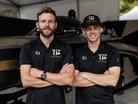
The 2026 electric boat racing championship from the E1 Series has launched, with Team Brady aiming to secure an unprecedented third consecutive title in the emerging motorsport category.
Team Brady opened their campaign on the Red Sea in Jeddah with a strong performance, claiming pole position before crossing the line in second place.
The result sets the tone for what promises to be their most challenging season yet, with an expanded grid and evolving competition format adding new layers of complexity to the championship battle.
"We're heading into this season with confidence, but also with the understanding that things can change quickly in this sport, tactics will evolve and success will come down to being the fastest to adapt," says Ben King and Joe Sturdy, Team Brady's Co-Team Principals.
"With new teams, new locations and a new qualifying format, it's exciting to be part of a championship that's growing and it will be great to see more fans and partners coming into the sport. The challenge is only getting bigger, and we can't wait to get started."
Want to hear more from Ben and Joe? Learn about the future of EVs across water, land and air at Sustainability LIVE: The Net Zero Summit 2026.
How the championship evolved
The E1 Series emerged from the vision of Alejandro Agag, who previously established Formula E and Extreme H, working alongside former F1 engineer Rodi Basso.
The championship was announced in 2020, with testing of the RaceBird boat commencing in 2022.
SeaBird Technologies designed the RaceBird, with Victory Marine handling manufacturing duties.
The electric powertrain came from Mercury Racing, while Kreisel Electric supplied the rechargeable battery systems.

The championship's inaugural season launched in 2024, featuring nine teams and 18 pilots competing across five rounds.
Season two in 2025 expanded the series with the arrival of a team led by LeBron James and two additional race events.
The 2026 calendar features eight events spanning from Nigeria to the US, providing Team Brady with multiple opportunities to clinch their third championship.
Sam Coleman, a pilot for Team Brady, says: "I am incredibly proud to be part of making Team Brady successful on the water.
"We are extremely motivated to fight for another Champions of the Water title and go for the three-peat."
All sustainability, net zero and sustainable supply chain leaders should attend:
- Sustainability LIVE: The Net Zero Summit - QEII Centre, London, March 4-5
- Sustainability LIVE: The US Summit - Navy Pier, Chicago, April 21-22
Co-located with Procurement & Supply Chain LIVE, these events brings together CSOs, ESG leaders and senior decision-makers at a moment when sustainability, supply chains and commercial performance are increasingly interconnected.
Tickets can be booked online today for The Net Zero Summit and The US Summit. Group discounts available.
Electric propulsion returns to marine racing
Similar to Alejandro Agag's other racing series, E1 could demonstrate that electric vehicles can deliver extreme performance comparable to internal combustion engines.
Electric propulsion has significant historical precedent in marine applications, and environmental concerns are driving renewed interest in the technology.
Anthony Reckenzaun launched the Electricity in 1882, marking one of the first significant electric boats.
By the 1893 Chicago World's Fair, 55 electric launches ferried more than a million passengers.
Gasoline engines during this period were unreliable, prone to exploding and difficult to start.
The landscape shifted around 1910 when the electric starter and mass-produced gasoline transformed the industry.

Internal combustion engines became cheaper, lighter and offered considerably longer range than the heavy lead-acid batteries available at the time.
Since the 2000s and advances in lithium-ion chemistry, electric boats have been experiencing resurgence.
Many lakes across Europe and some protected waterways in the United States have started banning internal combustion engines due to noise and water pollution concerns.
Companies like Torqeedo and Navier are utilising battery technology derived from the automotive industry to enhance the speed and range of marine vessels.
Hydrofoils are also being integrated into models, lifting boat hulls out of the water to reduce friction and achieve longer range capabilities.