Tesla 2026: Prioritising Solar and Dropping "Sustainable"
Founded in 2003 as an EV company, Tesla has expanded its focus significantly over the past two decades, from batteries and energy to its current wider technology offering.
The most recent reflection on this journey came at the start of the year when CEO Elon Musk announced a change in wording to Tesla’s guiding mission from – “Sustainable Abundance” to “Amazing Abundance.”
Despite Tesla reporting its second consecutive quarterly decline – with annual revenue dipping to US$94.8bn – Musk remains upbeat about the company’s outlook.
In spite of a 61% drop in profit during the final quarter of 2025, Musk announced major new capital spending focused on AI, infrastructure, and humanoid robotics. “We're making big investments for an epic future,” he told investors during a Q&A call on 28 January.
The billionaire also confirmed that Tesla has paused production of the Model S and Model X at its California plant to make room for its boldest development yet – humanoid robots. In parallel, Musk’s AI company, xAI, is receiving a US$2bn cash boost.
Reiterating his belief that AI and robotics will deliver a future of abundance, Musk said Tesla continues to make progress in vehicle autonomy and has started to “produce Optimus robots at scale.” Meanwhile, China’s BYD recently overtook Tesla as the world’s largest EV manufacturer.
According to Tesla CFO Vaibhav Tanjea, margins will likely come under further strain as the company transitions to a fully subscription-based model for Full Self-Driving (FSD).
All sustainability, net zero and sustainable supply chain leaders should attend:
- Sustainability LIVE: The Net Zero Summit - QEII Centre, London, March 4-5
- Sustainability LIVE: The US Summit - Navy Pier, Chicago, April 21-22
Co-located with Procurement & Supply Chain LIVE, these events brings together CSOs, ESG leaders and senior decision-makers at a moment when sustainability, supply chains and commercial performance are increasingly interconnected.
Tickets can be booked online today for The Net Zero Summit and The US Summit. Group discounts available.
Investing in solar to power AI
To support his vision of energy self-sufficiency for AI, Musk said the “solar opportunity is underestimated.”
He explained: “We think the best way to add significant capability to the grid – let’s say it’s powering AI data centres – is solar and batteries on earth and solar in space. That's why we are going to work towards getting 100 gigawatts a year of solar cell production integrating across the entire supply chain from raw materials to finished panels.”

He added that Tesla aims to become a “significant manufacturer of solar cells” as it doubles down on “massive investments in AI.” This, he said, will also drive growth across the “entire battery supply chain.”
Even with 26.6% year-on-year growth in its energy business and the upcoming Megapack 3 and Megablock launches, Vaibhav cautioned that Tesla expects “margin compression from the increased low-cost competition, impacts to market from policy uncertainty and the cost of tariffs.”
Prioritising humanoid robots
Tesla is preparing to unveil the next generation of its humanoid robot, Optimus 3, within months. Musk said the robot would be “surprising to people” and “an incredibly capable robot.”
“Optimus really will be a general-purpose robot that can learn by observing human behaviour,” he added. “You can demonstrate a task, verbally describe it, or even show a video – and it will be able to perform that task.”
After being surpassed by BYD in EV sales, Musk acknowledged that China will also be Tesla’s main rival in robotics. “I do think that by far the biggest competition for humanoid robots will be from China,” he said.
“China is incredibly good at scaling manufacturing, actually quite good at AI,” adding that the open distribution of AI models there means “they keep getting better.”
“So, China's very good at AI, very good at manufacturing, and will definitely be the toughest competition for Tesla."
Executives
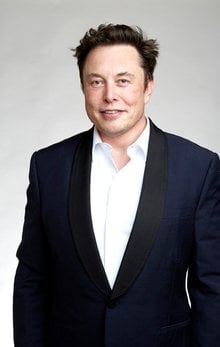
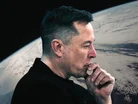
Elon Musk
Tesla CEO
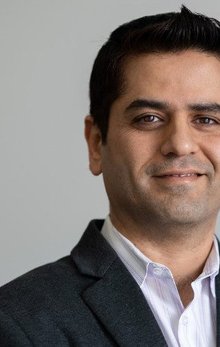
Vaibhav Taneja
Chief Financial Officer