How Samsung is Supporting Tesla's Autonomous Developments
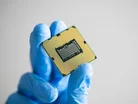
Samsung has secured a US$16.5bn contract to manufacture advanced AI chips for Tesla, establishing one of the most substantial semiconductor partnerships around.
The South Korean tech leader announced this groundbreaking agreement with an undisclosed partner through a regulatory filing on Monday. Following this, Tesla CEO Elon Musk confirmed the collaboration via his social media outlet, X.
Elon Musk disclosed that Samsung will be responsible for creating Tesla's next-gen A16 chips at a new production facility in Taylor, Texas, situated outside Austin.
"The strategic importance of this is hard to overstate," he wrote on X, emphasising the significance of the arrangement for Tesla's ambitions in the driverless vehicle market.
The deal marks a crucial development for Samsung's Texas operations, which had been facing challenges in attracting key clients since the project's inception.
Musk indicated that Samsung had agreed to allow Tesla to "assist in maximising manufacturing efficiency" and pledged to "walk the [manufacturing] line personally to accelerate the pace of progress".
Government support and industry context
This agreement is built on strong foundations of US government investments in domestic semiconductor manufacturing.
In December, the Biden administration committed US$4.75bn to support Samsung's Texas semiconductor facilities, as part of the Chips Act, a legislative move to decrease US reliance on foreign semiconductor production. Former US Commerce Secretary Gina Raimondo stated at the time that the funding would ensure America maintained a "steady stream" of chips essential for artificial intelligence and national security applications.
For Samsung, this deal delivers the pivotal client needed to stabilise its Texas operations, which have faced significant delays and uncertain demand forecasts.
Problems with manufacturing
Samsung's Texas facility has encountered multiple challenges since it was first conceptualised, raising questions about the project's feasibility without key clients. Ryu Young-ho, a Senior Analyst at Seoul-based NH Investment & Securities, described the Taylor plant as having "so far had virtually no customers", making the Tesla contract "quite meaningful" for Samsung's American expansion plans.
In October, Reuters reported that Samsung had delayed shipments of chip-manufacturing equipment from Dutch supplier ASML intended for the Texas site due to the lack of major client commitments. The operational start of the facility has already been postponed to 2026, illustrating the hurdles semiconductor manufacturers face when establishing new production capacities.
Tesla and the semiconductor market
Currently, Samsung manufactures Tesla's AI4 chips, crucial for the automaker's full self-driving assistance systems. However, Tesla has diversified its supply chain with other major players, including the Taiwan Semiconductor Manufacturing Company (TSMC), which plans to produce Tesla's AI5 chips initially in Taiwan, shifting later to production in Arizona.
The contract for the new A16 chips suggests Tesla's strategy includes preparing multiple generations of AI processors to enhance its autonomous vehicle development programs.

What does the deal mean for the sector?
The agreement highlights the critical role of specialized AI semiconductors in the automotive industry, especially for companies focusing on autonomous driving technologies. By committing US$16.5bn to chip manufacturing, Tesla shows confidence in the evolving market for its autonomous vehicles.
For Samsung, the deal validates its approach to establishing a robust manufacturing presence within the United States while ensuring a substantial revenue stream for its semiconductor division. This partnership also represents wider geopolitical trends toward localising crucial technology supply chains amidst continuous US-China trade tensions.