
'The Alarm is Sounding': ESA Warns of a Space Debris Crisis

Pollution is quickly becoming an extra-terrestrial problem. While the vastness of space may give the impression of emptiness, that is far from the case in Earth's orbit.
Since humans have been launching space missions, millions of pieces of man-made debris have accumulated in the planet's orbit. The amount of debris has shot up dramatically as a result of the boom in satellite constellations like Starlink.
Worryingly, these pieces of flotsam and jetsam are now stuck spinning around the Earth in perpetuity with no way of being retrieved.
The European Space Agency (ESA) is particularly worried about the way things are going. The organisation has called for the global adoption of a new space environment health index – a framework it has designed to quantify the impact of human activity on Earth's orbit.

The metric, which will feature in ESA's annual Space Environment Reports going forward, condenses complex debris data into a single score that reflects how stressed the orbital environment has become.
According to ESA's calculations, we are currently at health index level four – four times beyond what the agency considers the threshold for long-term sustainability.
Stijn Lemmens, Space Debris Mitigation Analyst at the ESA, says: "The space environment health index is an elegant approach to link the global consequences of space debris mitigation practices to a quantifiable impact on the space debris environment.
"With the new metric, ESA is promoting a common language for assessing the impact of our space activities and making consequences concrete."
How the ESA's space health index works
The health index evaluates objects and missions based on several factors: size and shape, lifetime in orbit, collision avoidance capability, passivation measures and fragmentation risk.
A high score indicates greater negative environmental impact, while a low score reflects more sustainable behaviour.
The ESA likens the system to energy-efficiency ratings for household appliances, suggesting that future missions could receive an "A" rating for sustainability.
The benchmark is based on guidelines established by the Inter-Agency Space Debris Coordination Committee in 2014, before the boom in large satellite constellations and commercial space missions.
Even then, forecasts were troubling – the expected future was already three times riskier than the minimum deemed desirable. The huge proliferation of satellites since has pushed that figure higher still.
Behind the ESA's Zero Debris mission
To the ESA, this index is more than just a scientific exercise. The agency has already used the model internally to define its Zero Debris approach, which aims to eliminate debris generation from ESA missions by 2030.
"We had to evaluate different policy options to define the Zero Debris approach," explains Francesca Letizia, Space Debris Mitigation Engineer at the ESA.
"We used the Health Index model to translate the mandate for a Zero Debris approach into numbers, identifying a path that would not exceed the orbital sustainability threshold."
The index could also inform licensing and regulation decisions, with authorities potentially adopting it as part of criteria for approving new missions.
Insurance providers and policymakers may likewise find applications for the metric as the commercial space sector expands.
The importance of urgency
Critics might question why immediate action is necessary when the most severe consequences aren't expected to happen for another 200 years, but the ESA argues that the cumulative nature of orbital debris means every object launched today adds to long-term risk.
Fragmentation events – when satellites or rocket stages break apart – create debris fields that persist for decades.
The agency warns that long before space becomes truly unusable, operational costs will escalate significantly.
Certain orbits may become inaccessible, with particular implications for human spaceflight programmes that require stringent safety standards.
The index offers a framework for transparency and accountability, though its effectiveness will ultimately depend on adoption by other space agencies and commercial operators.
Whether it gains traction as an international standard remains to be seen.
Company portals


Executives

Francesca Letizia
Space Debris Mitigation Engineer
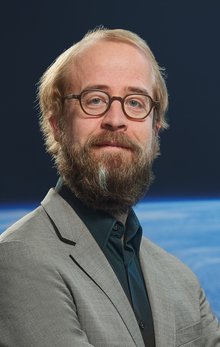
Stijn Lemmens
Space Debris Mitigation Analyst