
What does the Rio-Tinto & Glencore Merger mean for Energy?

The renewed merger discussions between Rio Tinto and Glencore could represent a pivotal moment for sustainable mining practices, as the industry grapples with the dual challenge of meeting green transition demands while managing legacy fossil fuel operations.
The two mining giants have confirmed they are in "preliminary discussions" regarding a "possible combination of some or all of their businesses, which could include an all-share merger".
This potential consolidation would create a combined entity with an enterprise value exceeding US$260bn, marking the latest development in a sector increasingly shaped by environmental pressures and the race to secure critical minerals for decarbonisation.
These talks follow an earlier attempt at combination in March 2025 that ultimately ended without agreement.
Rio Tinto, the FTSE 100 company founded in 1873, currently holds an enterprise value of US$162bn (£120bn).
In a formal statement, the company says: "The parties' current expectation is that any merger transaction would be effected through the acquisition of Glencore by Rio Tinto by way of a court-sanctioned scheme of arrangement.
"There can be no certainty that an offer will be made or as to the terms of any such offer, should one be made."

The coal question reshapes negotiations
One notable aspect of the 2026 talks is the potential shift in approach to fossil fuels, which carries significant implications for the sustainability credentials of any combined entity.
In 2024, the Financial Times reported that negotiations faced challenges partly due to disagreements over Glencore's coal operations; Rio Tinto exited the coal sector in 2018 as part of its commitment to reducing carbon exposure.
However, the political context has changed.
Following Donald Trump's decision on 20 January 2025 to withdraw the US from key United Nations climate treaties and shifts in global energy policies, coal has remained profitable.
The Financial Times reported that Rio may now be open to retaining Glencore's coal business, which could allow the company to maintain exposure to both transition metals and fossil fuel assets.
This potential reversal raises questions about how mining companies balance short-term profitability against long-term environmental commitments, particularly as investor pressure for sustainable portfolios intensifies.
Securing metals for energy transition
A central sustainability narrative driving this potential merger is the surging global demand for copper and other transition metals essential to decarbonisation efforts.
On 27 January 2026, copper prices reached over US$13,300 (£9,900) a tonne, with projections from the International Copper Study Group indicating a potential supply shortfall of 10 million tonnes by 2040.
Copper is required for power distribution and cooling systems in data centres supporting AI infrastructure, as well as for renewable energy installations and electric vehicle production.
A merged Rio-Glencore entity would hold significant copper assets alongside substantial reserves of cobalt and lithium, positioning it as what Derren Nathan, Head of Equity Research at Hargreaves Lansdown, describes as "a global leader in multiple industrial metals including iron ore and transition metals such as copper, cobalt and lithium".
Glencore's Chief Executive, Gary Nagle, says the company's goal is to become "the biggest copper producer in the world", reflecting the strategic importance of these materials in the global shift away from carbon-intensive energy sources.
Regulatory scrutiny on critical minerals
The deal faces substantial regulatory scrutiny, particularly concerning access to materials deemed critical for sustainable technologies.
Under UK takeover rules, Rio has until 5 February 2026 to make a formal offer.
If it proceeds, it must navigate approval from China's State Administration for Market Regulation (SAMR), given Beijing's position as the largest consumer of iron ore and copper, the Australian Competition and Consumer Commission (ACCC) in markets where both firms operate, and EU review processes assessing the combination's implications for access to critical raw materials for European manufacturing.
As Gary says, the industry needs to consolidate "not just for the sake of size, but also to create material synergies, to create relevance, to attract talent, to attract capital".
Whether regulators view this consolidation as beneficial for securing sustainable mineral supplies or problematic for market concentration could ultimately determine the outcome of these discussions.

Executives

Derren Nathan
Head of Equity Research
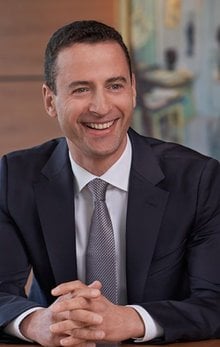
Gary Nagle
CEO