What is Google’s Progress on its Water Stewardship Projects?
Approximately 90% of Google’s water withdrawal is used to cool servers in its data centres, driven by the rising demand for AI.
To reduce its water consumption, it has set a target to replenish 120% of its freshwater consumption on average across its facilities by 2030.
For World Water Day 2026, Google has released an update on its goals to replenish freshwater in its local communities.
This works alongside its commitment to advance responsible water use while the demand for digital services continues to grow.

Google’s water projects
In 2025, Google replenished more than seven billion gallons of water across its operations, offsetting the water consumed in its offices and data centres.
It supported 165 projects across 97 watersheds in the communities where the company operates.
Google estimates that its projects will replenish more than 19 billion gallons of water in 2030 once they are fully implemented.
The company’s aim is to improve the quality and reliability of water for communities, while improving the health of critical landscapes and ecosystems.
Kate Brandt, Chief Sustainability Officer at Google, said on LinkedIn: “To celebrate World Water Day, Google released our 2026 Water Stewardship Project Portfolio.
“We have an ambitious goal to replenish more freshwater than we consume, on average, across our offices and data centres by 2030 and help improve watershed health in the communities where we operate.”
Restoring watersheds
Google’s water portfolio includes nature-based projects, aiming to boost biodiversity and water quality.
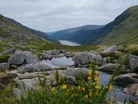
In Ireland, Google is supporting Peatland Finance Ireland’s restoration efforts in the Wicklow Mountains.
It is working on raising the water table in the bogs, with a target to enhance biodiversity and water-holding capacity in the area, as well as reducing local flood risks.
Google is also working with Hsinchu City and the Ministry of Environment in Taiwan to improve the Touqian River’s water quality.
It is using a natural gravel filtering system to remove pollutants from the river water, helping local water and ecosystem health.
Kate says: “Our water replenishment work is deeply personal for me, both globally and in my own backyard. As just one example, close to home for me, the Tuolumne River is the primary drinking water supply for my own family and millions of my fellow Bay Area residents.
“To protect it, we’re showing up across the entire watershed: restoring 200 acres of the Rim Fire scar in the Stanislaus National Forest to keep our taps clean, healing an eroded meadow in Yosemite to raise the water table and transforming old orchards at El Puente into flood-ready riverside forests.
“Reading through this report, I’m really proud of our team’s progress – both globally and in many local watersheds – supporting resilience for people today and for the generations to come.”
Sustainability, procurement and supply chain leaders won’t want to miss Sustainability LIVE: The US Summit, taking place at Navy Pier, Chicago, on April 21–22.
Co-located with Procurement & Supply Chain LIVE, the event unites senior decision-makers at a time when supply chains, sustainability and business performance are more interdependent than ever.
Secure your place now for The US Summit – group booking discounts available.
Agricultural innovations
In 2025, Google scaled advanced irrigation technologies across its communities, in order to promote water conservation.
In the Colorado River Basin, the company is partnering with the Gila River Indian Community to implement Rubicon Water smart sensors.
This project aims to conserve water, retain water in Lake Mead and provide economic benefits to local farmers.
It is also working with The Nature Conservancy in Indiana to promote the adoption of cover crops for farmers, which help retain water and improve water quality.
Farmers across nine counties in the state will be eligible for a discount on crop insurance premiums for using cover crops through the project.
Tara Varghese, Global Water Stewardship Lead at Google, writes on LinkedIn: “I am incredibly proud to share the release of Google’s 2026 Water Stewardship Project Portfolio.
“This update is more than just a progress report; it demonstrates how we are collaborating to address local water challenges through stewardship and innovation.”
Urban water infrastructure
Google’s water projects also include building smart infrastructure to meet the growing water demands of cities.
In Virginia, Google is supporting the installation of Continuous Monitoring and Adaptive Control technology on stormwater detention ponds, using data to control the release of water.
This brings the advantages of flood protection and improved water quality in the region.
The company has partnered with FluxGen in Bengaluru, India to deploy an AI-powered Water Intelligence Suite in schools.
This system works by identifying inefficiencies while educating students on responsible water management.
Through these projects, Google aims to meet water demands while protecting the health of the ecosystems sustaining the cities.
Company portals

Executives
Kate Brandt
Member Board of Trustees
Tara Varghese
Global Water Stewardship Lead