World Water Day: Achieving PepsiCo’s Water Stewardship Goals
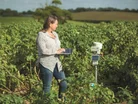
World Water Day, held on 22 March every year, focuses on the importance of fresh, safe water for global communities.
As part of World Water Day 2026, PepsiCo has announced that it has achieved two of its 2025 water goals.
These are part of its wider sustainability framework, pep+ (PepsiCo Positive), where it aims to put sustainability at the centre of its business strategy.
PepsiCo’s water goals
The first goal that PepsiCo has achieved is replenishing 100% of the water used at all company-owned facilities located in high water-risk watersheds.
This means that for every litre of water used by PepsiCo at its facilities, it restores the equivalent amount of water – or more – back into natural resources in the watershed.
It does this through nature-based conservation and wetland restoration projects, water infrastructure initiatives and on-farm irrigation efficiency efforts.
Its other target was to fully adopt the Alliance for Water Stewardship (AWS) Standard across all of its owned high water-risk manufacturing sites globally.
This is a voluntary framework for businesses that helps them measure and manage their water usage.
Jim Andrew, Chief Sustainability Officer at PepsiCo, says: “Water is foundational to our business and the communities where we operate.
“Reaching these goals shows what is possible when business strategy, local expertise and global partnerships come together.
“This is pep+ in action: delivering real impact for people and ecosystems while building long-term business resilience.”
Managing watersheds
In 2025, PepsiCo had more than 60 active projects that helped replenish nearly 29 billion litres of water into local watersheds.
These projects are locally led and community centres, aimed at improving watershed health.
These efforts have helped PepsiCo achieve its water replenishment goal through returning, restoring or preserving the volume of water it draws from these high risk areas.
Through the projects, PepsiCo has helped improve ecosystem health, strengthen community resilience and advance sustainable water management.
Its projects span water-stressed areas across the globe, including the US, Dominican Republic, Egypt, Spain and Turkey.
Sustainability, procurement and supply chain leaders won’t want to miss Sustainability LIVE: The US Summit, taking place at Navy Pier, Chicago, on April 21–22.
Co-located with Procurement & Supply Chain LIVE, the event unites senior decision-makers at a time when supply chains, sustainability and business performance are more interdependent than ever.
Secure your place now for The US Summit – group booking discounts available.
Reaching AWS Standards
PepsiCo joined the Alliance for Water Stewardship in 2018, aiming to adopt the AWS Standard at all company-owned manufacturing facilities in high water-risk regions by the end of 2025.
The company says it aimed to use the Alliance as a vehicle for advocacy, helping to ensure that freshwater resources in high-risk locations are available for everyone.
The adoption of AWS Standards has been led by cross-functional teams of PepsiCo associates, coming together to identify local water risks and evaluate opportunities for the implementation of water stewardship practices.
Roberta Barbieri, Global Vice President, Sustainability – Climate and Water at PepsiCo, says: “Water is a fundamental human right, and yet water scarcity remains a significant global challenge, affecting millions around the world.
“We aim to lead in responsible water stewardship and we’re proud of what we’ve accomplished so far. But the work doesn’t stop here.
“As we look ahead to 2030, we’ll continue striving towards our ambitions – to be Net Water Positive and to live up to our vision that wherever we operate, water resources are more sustainable and more resilient because of our presence.”
PepsiCo’s future ambitions
PepsiCo’s water milestones have been verified by a third party, with achieving the goals strengthening the company’s progress towards its broader pep+ ambitions.
The company will continue to focus on its 2030 ambitions, including an expanded watershed replenishment goal, where it aims to replenish back into the local watershed 100% of the water used in high water-risk PepsiCo facilities as well as franchise bottler manufacturing facilities.
It also aims to improve water-use efficiency in its high-water risk and franchise bottler sites.
These are part of its overarching goal to reach 100 million people with safe water access, through initiatives, partnerships and its business strategy.
Jim writes on LinkedIn: “This is the result of executing a shared vision, taking the time to understand what works locally across every high water-risk area where we own manufacturing operations and applying best practices and nature-based solutions to reduce water stress and support communities.
“It’s about conserving and protecting water both inside our facilities and across watersheds that impact many. It’s working alongside farmers, conservationists and governments to strengthen shared resilience.
“As we look ahead to our 2030 ambitions and aiming to fulfil our vision to be Net Water Positive, we’ll keep pushing, so that wherever we operate, water resources are more sustainable and resilient because of our presence.”
Company portals

Executives
Jim Andrew
Chief Sustainability Officer, EVP and Executive Committee member

Roberta Barbieri
VP of Water & Climate