What is PepsiCo’s Enhanced Climate Resilience Platform?
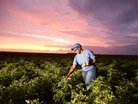
Regenerative agriculture can bring many benefits to farmers including improving soil health, enhancing biodiversity and boosting crop resilience.
To help farmers mitigate climate risks further, PepsiCo has launched an enhanced version of its open-access and open-source Climate Resilience Platform.

In 2023, the Climate Resilience Platform (CRP) was first developed and launched, led by the Alliance of Biodiversity International and supported by PepsiCo.
The open-access and open-source platform uses climate research to provide actionable insights that enable farmers to anticipate risks within their yields and implement precise interventions to prevent them.
The development of the CRP supports PepsiCo’s commitment to regenerative agriculture.
Its Positive Agriculture agenda aims to promote the adoption of regenerative, restorative or protective practices and focuses on economic prosperity and security for farmers.
About CRP 2.0
PepsiCo’sCRP 2.0 provides enhanced capabilities, broader accessibility and compatibility with future updates.
The platform will fulfill PepsiCo’s objective to increase publicly available agriculture research which helps bring scientific rigour to regenerative agriculture.
The development of the advanced CRP model has been enabled through PepsiCo’s leadership and co-funding from the Foundation for Food and Agriculture Research (FFAR).
The FFAR contributed US$1m in recognition of the platform’s potential for greater impact for farmers mitigating the impacts of climate change.
Margaret Henry, Vice President of Sustainable and Regenerative Agriculture at PepsiCo, says: “By helping translate science into actionable insights, we aim to empower stakeholders across the food and agriculture system to make informed decisions, strengthen supply chains and accelerate the shift to regenerative agriculture.
“This is about helping create measurable impact from healthier soils to support more resilient communities.”
CRP 2.0 offers new ways to help agriculture professionals evaluate their climate risks and implement mitigation strategies.
It now allows farmers to quantify their climate risk exposure and provides enhanced data and tools to help foster collaboration between organisations.
It is also built through engagement with a global network of agri-climate experts to enhance data accuracy and relevance.
Building new collaborations
CRP 2.0 features six new countries added to the platform, with more organisations joining to help broaden the platform’s reach even further.
Olam Agri, a leading global business specialising in food, feed and fibre has begun integrating CRP into its operations.
It is committed to climate adaptation and agricultural innovation, which is reinforced through its participation with CRP.
Through this collaboration, Olam Agri will help extend the platform’s reach to include rice and cotton crops.
Olam Agri has made open-access contributions to the platform, which helps to empower stakeholders across rice and cotton supply chains to accelerate climate adaptation and strengthen crop resilience.
Laurence Jassogne, Head of Nature and Climate Solutions at Olam Agri, says: “Climate change is one of the greatest challenges facing agriculture, but also an opportunity to innovate for resilience.
“By contributing to the Climate Resilience Platform, we are enabling stakeholders across the agriculture and food system to anticipate risks, make informed investment decisions and adopt regenerative practices.
“Our collaboration will help extend the reach of this open-access tool to key crops such as rice and cotton, helping create long-term value for supply chains and secure livelihoods for farmers in some of the most climate-vulnerable regions.”


Executives

Laurence Jassogne
VP - Head of Nature and Climate Solutions
Margaret Henry
Vice President, Sustainable & Regenerative Agriculture