SHEIN Carbon Emissions Soar: Can it Ever be Sustainable?
Fashion, particularly fast fashion, is subject to a lot of sustainability scrutiny.
As a giant of the industry, SHEIN has been at the centre of a lot of this.
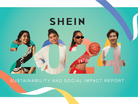
The company’s 2024 Sustainability and Social Impact Report shows that, despite efforts to improve its impact, SHEIN’s emissions increased by 23.1% from its base year of 2023.
“As we reflect on the progress made over the past year, we are reminded of SHEIN’s role in doing our part for a more sustainable future – one that is socially equitable, environmentally resilient and driven by innovation,” says Sky Xu, CEO at SHEIN, in the report.
“At SHEIN, we remain committed to making the beauty of fashion accessible to all. We recognise the complexities that come with delivering affordable, stylish apparel and other lifestyle products to customers across the globe.
“These challenges are multifaceted and continuously evolving; yet, we remain committed to making progress on our sustainability goals with innovative solutions and like-minded partners.”
SHEIN’s greenhouse gas emissions
In 2024, SHEIN’s greenhouse gas emissions increased by 23.1% from its base year of 2023.
Its Scope 1 fossil fuel combustion emissions increased by 94.3%, fugitive emissions decreased by 72.4% and Scope 2 market-based and location-based emissions increased by 3.5% and 32.9% respectively.

SHEIN’s Scope 3 emissions increased by 23.1%, or 12.8% under its near-term SBTi targets.
This includes a 107.6% increase in direct energy consumption during the use of SHEIN products and a 106% increase in emissions for fuels and energy purchased by the company that are not accounted for in Scopes 1 or 2.
It did achieve a decrease of 4.4% in its total Scope 1 and Scope 2 market-based emissions, and decreases in Scope 3 categories 2 and 8 of 55.2% and 48.1% respectively.
SHEIN’s total greenhouse gas emissions reached a total of 26,201,440 tonnes of CO₂e.
In 2024, SHEIN also faced a decrease in net profit of almost 40% despite a rise in sales of 19% according to the Financial Times.
“Like many companies, we face the complex challenge of decoupling our growth from resource consumption,” the report reads.
“We are actively working to lower our GHG emissions both within our operations and across our supply chain.
“As of May 2025, we have approved near- and long-term science-based emissions reduction targets with the SBTi, and the SBTi has verified our net zero science-based target by 2050.”
Renewables and energy efficiency
A significant portion of SHEIN’s emissions increases are attributed to energy.
By 2030, SHEIN says it aims to source 100% of energy used in operations directly managed by the business from renewable sources.
To do this, it is increasing on-site electricity production through solar PV installations at SHEIN-operated facilities alongside the purchase of energy attribute certificates.
In 2024, it says that 76% of the electricity purchased for its own operations was derived from renewable sources.
SHEIN has also rolled out energy saving actions at one of its warehouses in Foshan, China.
These actions included intelligent energy management systems, energy saving air conditioning systems, improved lighting and more energy efficient air handling units.
This, it says, helped the warehouse to make annual electricity savings of 5.5%.
Electrification is also at play with a new 9.6m "EV solution" developed by SHEIN and its logistics partners to replace conventional diesel trucks.
It plans to deploy more than 130 of these new EVs for warehousing and logistics operations within China in 2025 which SHEIN estimates will save nearly 10,000 tonnes of CO₂e.
Materials and waste management
In 2024, SHEIN generated 52,128 tonnes of industrial waste across its own operations.
The company’s materials portfolio saw an increase in polyester from 75.7% in 2023 to 81.5% and a decrease in cotton from 9.9% to 6.7%.

By 2030, it aims to transition 31% of polyester in SHEIN branded products to recycled polyester.
To address waste, the company says it has developed standardised waste recycling and management measures implemented across all 33 of its operated warehouses in China and the CIGM.
The report says that this resulted in an overall recycling rate of 95%.
SHEIN says that it has also launched initiatives including SHEIN Exchange, a peer-to-peer resale platform, to encourage its customers to engage in circular behaviour.
Explore the latest edition of Sustainability Magazine and be part of the conversation at our global conference series, Sustainability LIVE.
Discover all our upcoming events and secure your tickets today.
Sustainability Magazine is a BizClik brand