Why are Siemens & TotalEnergies CEOs Against EU’s Omnibus?

The European Commission is reassessing the EU’s Omnibus package, aiming to reduce compliance complexities for all companies, focusing the rules on the largest companies that have a “bigger impact on the environment and climate.”
The sustainability omnibus involves amendments to the Corporate Sustainability Reporting Directive (CSRD) and the Corporate Sustainability Due Diligence Directive (CSDDD/CS3D), along with a draft Taxonomy Delegated Act for public consultation – aiming to make sustainability reporting more efficient

How is the CS3D evolving?
The CS3D is being tightened and simplified to ease burdens, especially for small-medium enterprises (SMEs).
EY says "The main aim of the Simplification Omnibus Package is to ensure a clear, simple and harmonised regulatory framework for businesses and to realise a significant simplification in the fields of sustainability finance reporting, due diligence and taxonomy, in particular for SMEs and small mid-caps."
"The Simplification Omnibus Package reflects the commitment to reduce reporting burdens and enhance competitiveness in the EU, through amendment of the CSDR, CS3D and the EU Taxonomy Regulation."
Due diligence will generally cover a company’s own operations, subsidiaries and direct business partners only, not indirect tiers.
The CS3D is set to be amended on "Limiting the notion of (relevant) “stakeholder” and further restricting the stage of the due diligence process that require stakeholder engagement," says EY.
Companies are set to review the effectiveness of their due diligence every five years instead of annually.
Penalties are clarified without the 5% of global turnover floor and parts of the EU-wide civil liability and representative action regime are deleted.
"Simplification promised, simplification delivered!" says Ursula von der Leyen, President of the European Commission.
"EU companies will benefit from streamlined rules on sustainable finance reporting, sustainability due diligence and taxonomy.
"This will make life easier for our businesses while ensuring we stay firmly on course toward our decarbonisation goals.
"And more simplification is on the way."
EY says a main change to the CS3D is to "give companies more time to prepare by (i) deferring the first application deadline for the CS3D from July 2027 to July 2028 and (ii) advancing the deadline for the Commission to adopt general due diligence guidelines to July 2026."
CEOs against the CS3D
To date, 46 German and French CEO's have urged the abolition of the CS3D, writing to Emmanuel Macron, President of France and Friedrich Merz, Chancellor of Germany, to call for the full abolishment of CS3D.
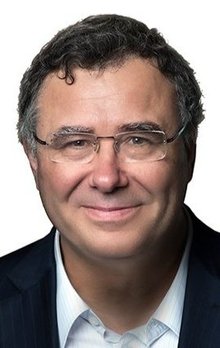
The letter, dated 6 October 2025 after the Franco-German business leaders’ meeting in Évian and signed on behalf of all 46 by Patrick Pouyanné, CEO and Chairman of TotalEnergies and Roland Busch, President and CEO of Siemens.
The letter sets out a wider deregulatory agenda beyond repeal: a reframing of competition policy to enable strategic mergers, a moratorium with substantial revision of digital rules such as the Data Act and the AI Act and a freeze on new EU directives with simplification by 1 January 2027.
“I appreciate the commitment to a more competitive Europe,” writes Teresa Ribera, Executive Vice-President for a Clean, Just and Competitive Transition, at the European Commission, on LinkedIn.
“Competitiveness cannot come at the expense of the environmental and social standards that define Europe’s democracies and remain the backbone of our shared prosperity.
“No one should be mistaken, we will not lower these standards because there is no competitiveness in a race to the bottom.”
It also calls for a strengthened Savings and Investment Union by end-2026, including a “28th regime” for capital markets, pan-European savings products backed by ECB guarantees and fewer barriers to cross-border investment.
The letter also calls for energy measures to delay the reduction of free emissions allowances until CBAM proves effective and an Energy & Climate omnibus to embed “technology neutrality” and build “One European Grid.”
Andreas Rasche, Professor of Business in Society and Associate Dean at Copenhagen Business School, writes on LinkedIn: "46 German and French CEOs have written a letter to Friedrich Merz and Emmanuel Macron calling "for the full abolishment of CS3D as a clear and symbolic signal to European and international companies that the governments and the Commission are really engaged to restore competitiveness in Europe."
"This reads a bit like: “We acknowledge that deregulation is underway, but it’s not enough. If you 'really' want to deliver, scrap it entirely.”"
The move sits awkwardly with both firms’ UN Global Compact commitments.
What’s next for the omnibus?
Once the official draft of the Simplification Omnibus Package is published, it must be approved by the European Parliament and the Council.
The timetable is unclear, though the European Commission has asked both institutions to "fast track" the file.
"The Commission has submitted two separate proposal directives," says EY.
"The first proposal focuses solely on postponing certain disclosure requirements under the CSRD and the transposition deadline under the CS3D.
"By separating these issues, the Commission aims to reach an agreement on the postponement as quickly as possible, thereby gaining time to address the negotiations regarding the more fundamental changes they propose."

By separating these issues, the Commission aims to secure swift agreement on the delay and buy time to negotiate the wider reforms.
"Member States that have already transposed the CSRD and CS3D will need to amend their implementations within 12 months after the text comes into force," says EY.
"In this context, it is important to note that Belgium has already transposed the original CSRD into its national law, meaning that this legislation is currently in effect.
"Conversely, the CS3D has not yet been transposed into Belgian law."
Company portals


Executives
Patrick Pouyanné
Chairman and CEO
Roland Busch
President and CEO of Siemens AG