Why did The UN’s INC-5.2 Fail to Organise a Plastic Treaty?
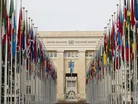
From 5 to 14 August 2025, parties from across the globe joined the second part of the fifth session of the Intergovernmental Negotiating Committee (INC) in attempts to develop an “internationally legally binding instrument on plastic pollution” according to the United Nations (UN).
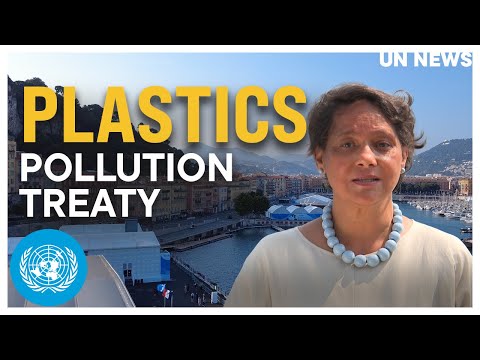
The international push for consensus on a deal proved “beyond the grasp of weary UN Member States” states the UN, with parties agreeing to resume discussions at a future date.
A complex and strained process
Delegates from 183 nations gathered at the Palais des Nations, with more than 2,600 participants including approximately 1,400 country representatives and nearly 1,000 observers from at least 400 organisations.
Civil society voices, including Indigenous Peoples, waste pickers, artists, youth activists and scientists, also played a visible role through protests, art installations and press briefings.
“This has been a hard-fought 10 days against the backdrop of geopolitical complexities, economic challenges and multilateral strains,” says Inger Andersen, Executive Director of the UN Environment Programme (UNEP).
“However, one thing remains clear: despite these complexities, all countries clearly want to remain at the table.
“While we did not land the treaty text we hoped for, we at UNEP will continue the work against plastic pollution – pollution that is in our groundwater, in our soil, in our rivers, in our oceans and yes, in our bodies.”
What happened at the negotiations?
In addition to meetings in Geneva, four contact groups also worked to address some issues:
- Plastic design
- Chemicals of concern
- Production caps
- Finance and compliance instruments.
Yet, despite “intensive engagement”, the INC was unable to reach consensus, the United Nations Environment Programme (UNEP) explains.
“Failing to reach the goal we set for ourselves may bring sadness, even frustration,” says Luis Vayas Valdivieso, INC Chair.
“Yet it should not lead to discouragement. On the contrary, it should spur us to regain our energy, renew our commitments and unite our aspirations.
“It has not happened yet in Geneva, but I have no doubt that the day will come when the international community will unite its will and join hands to protect our environment and safeguard the health of our people.”
Jyoti Mathur-Filipp, Executive Secretary of the INC Secretariat, says: “As this session concludes, we leave with an understanding of the challenges ahead and a renewed and shared commitment to address them.
“Progress must now be our obligation.”
NGO and business perspectives
Raffi Schieir, Director of Prevented Ocean Plastics, says: “While global agreements like the UN plastics treaty are important, the breakdown of talks in Geneva confirms again that we cannot wait for politicians and legislation to care for our oceans and the communities most affected by plastic pollution.
“Every day, waste workers, recyclers and local entrepreneurs are already delivering impact and need support.
“The path forward is clear, now is the time to double down on scaling the solutions we already know work, keep building, keep collaborating and keep people at the heart of the solution.”
Erin Simon, Vice President and Head of Plastic Waste & Business at the WWF, says: “It’s deeply disappointing to leave Geneva without meaningful progress once again.
“This breakdown in negotiations means the plastic crisis will continue unchecked, while the world waits for the urgent action it so desperately needs.
“The path forward is now uncertain, it's time to show that protecting people’s lives and the planet is non-negotiable."
Frederic Godemel, EVP of Energy Management at Schneider Electric, says: “Today, we’ve seen yet another round of talks on plastic pollution fail.
"Naturally, national interests are being protected, keeping the world dependent not only on plastic but on the unsustainable use of resources more broadly.
"We must take action for positive change. Plastic pollution isn’t just an environmental crisis, it’s a systemic challenge threatening our resources, economies and health."
Disappointment and frustration
Some officials, organisations and companies have voiced their disappointment in the failure to reach a plastic pollution agreement.
“I deeply regret that, despite earnest efforts, negotiations to reach an international legally binding instrument on plastic pollution, including in the marine environment, concluded without achieving a consensus,” said António Guterres, UN Secretary-General.
“I welcome the determination of Member States in continuing to work to beat plastic pollution and keep engaged in the process, united in purpose, to deliver the treaty the world needs to tackle this monumental challenge to people and the environment.”
Lauren Bevan, Head of Plastic Pollution Governance and Engagement at the UK Governments Department for Environment, Food and Rural Affairs (Defra), wrote on LinkedIn: “I’m gutted that INC-5.2 ended this morning in deadlock, with no agreement and a draft text that was simply too weak to address the plastic crisis.
“It’s deeply disappointing that INC-5.2 ended without an agreement on plastic pollution.
“To come so close yet fall short is frustrating, especially when the problem is urgent and global solutions do exist.”
Kirsten Schuijt, Director General of WWF International, wrote on LinkedIn: “INC-5.2 was supposed to be a turning point, a moment for global leaders to chart a path toward ending plastic pollution.
“Instead, we walked away with no agreed text and no clear way forward.”
The INC process began in March 2022 when the UN Environment Assembly passed resolution 5.2 to develop a legally binding treaty on plastic pollution, including in the marine environment.
While INC-5.2 fell short of agreement, the determination to continue remains strong.
With INC-5.3 on the horizon, the challenge now is to overcome divisions and deliver on the global demand for a treaty that can finally confront plastic pollution with the urgency it requires.