Will the UN’s INC-5.2 Plastic Treaty Talks Deliver Change?
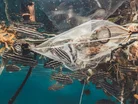
More than 460 million tonnes of plastic are produced every single year, of which an estimated 20 million end up polluting the environment, according to The International Union for Conservation of Nature (IUCN).
As the fifth round of the United Nations plastics treaty negotiations (INC-5.2) in Geneva takes place, a draft text presented by the Chair has sparked near-universal rejection from both countries and civil society.
With talks still ongoing, the outcome could shape the global approach to ending plastic pollution for decades to come.

What is INC-5.2 and why does it matter?
The Intergovernmental Negotiating Committee (INC) process was mandated by the United Nations Environment Assembly in 2022 to develop the world’s first legally binding treaty to end plastic pollution.
INC-5.2 is looking to create a draft text that reflects ambition, enforceability and the will of the global community.
Yet, the latest proposal excludes one of the treaty’s most vital components, an article on reducing plastic production.
“A successful agreement must reflect those differences while keeping our shared goal in focus: keeping plastics in the economy and out of the environment,” writes Chris Jahn, President and CEO at the American Chemistry Council, on LinkedIn.
“The global plastics industry is ready to do its part.”
Reactions across the globe
The Global Alliance for Incinerator Alternatives (GAIA) is at the forefront of negotiations for a legally binding international law aimed at eliminating plastic pollution worldwide, advocating for a bold and binding treaty that covers the full lifecycle of plastics.
GAIA is a worldwide network of more than 1,000 grassroots groups, non-governmental organisations and individuals in more than 90 countries.
“This new text sends a clear message to the world: we do not care about your health,” says Ana Le Rocha, Director of Global Plastics Policy at GAIA.
“We do not care about the science. We do not care about human rights. We do not care about your future. We only care about consensus.”
The INC-5.2 plastic treaty is set to affect the whole world, so national leaders are calling for stronger action.
“Enough is enough. Nations are gathered in Geneva, negotiating a legally binding plastics treaty, but this is no time for timid agreements or fossil-fuel appeasements,” writes Juan Carlos Monterrey Gómez, Vice President of the Bureau - Latin America & the Caribbean at UN Climate Change, on LinkedIn.
“The clock is ticking. Either our leaders meet this moment or our planet will drown in the brutal cost of inaction. No excuses. No delay.”
“The Chair’s text is a clear reflection of a weak process, and the provisions do not provide meaningful ways to end plastic pollution,” says Mohamed Kamal, Executive Director at the Greenish Foundation, Egypt.
“These back-handed manoeuvres are undemocratic and leave civil society and ambitious Member States in the dark,” says SiPeng of C4 Center in Malaysia.
Thais Carvajal of Alianza Basura Cero Ecuador says: “No treaty is better than a bad treaty.
“If we come out of INC-5.2 without an agreed upon text, it means that ambitious Member States stood up and refused to compromise on fossil fuel interests.
“If they take that brave step, civil society will have their backs.”
What was lost in the draft?
Despite some strong backing, the following measures were cut from the Chair’s text:
- More than 100 countries supporting plastic production cuts
- More than 100 countries supporting binding product and harmful chemicals phaseouts
- Almost 130 countries supporting a dedicated article on health
- More than 150 countries that support a strong financial mechanism.
This sidelining of ambition has prompted pushback not only from NGOs but also from business leaders.
“Nestlé is one of more than 300 businesses and investors supporting the call for an ambitious and legally binding treaty addressing the full lifecycle,” writes Chris Hogg, Global Head of Public Affairs at Nestlé, on LinkedIn.
“We feel this is really important. It’s rare to see business and civil society so aligned on environmental issues, this is one of those moments."
Which companies will be impacted?
An ambitious treaty would directly impact sectors across the plastics supply and value chain:
- Petrochemical companies like: BASF, DOW, LyondellBasell and others could face limits on virgin plastic production.
- Consumer goods and packaging giants like: Nestlé, Unilever, Procter & Gamble, Coca-Cola and PepsiCo could need to accelerate shifts towards reusable, recyclable and non-toxic packaging.
- Retailers and logistics providers like: Walmart, Amazon, Costco and others could adapt supply chains to support circular models.
- Chemical and materials innovators could see new opportunities in alternatives to single-use plastics – affecting companies like BASF, LG Chem and Merck.
- Financial institutions and investors could be expected to align capital flows with sustainable solutions – influencing companies like Chase, Wells Fargo, Citibank and many more.
If INC-5.2 results in a weak treaty, these companies may continue business as usual with limited accountability, adding to The Organisation for Economic Co-operation and Development’s estimated figure of more than a billion tonnes of global plastic waste.