
Woolworths Group: Advancing Nutrition, Circularity & Energy
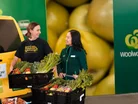
Woolworths Group is the largest retailer in Australia, with more than 190,000 team members and a range of supermarket brands.
Its operations are guided by its purpose to create better experiences together for a better tomorrow.
The company has published an updated Sustainability Plan, which sets out its strategy for protecting the environment and promoting healthy food choices for its consumers.

2030 Sustainability Plan
The new plan comes at the conclusion of Woolworths Group’s 2025 Sustainability Plan, which enabled the company to cut down on its direct emissions and increase its use of renewable electricity.
Its 2030 Sustainability Plan is designed around impact and value, while responding to a rapidly changing world and regulatory landscape.
Working towards its goal to be net zero by 2050, Woolworths Group aims to reduce absolute Scope 1 and 2 emissions by 80% FY30 and reduce absolute Scope 3 energy and industrial emissions by 55% by FY33, from a FY23 base year.
It also has a target to make positive action on nature by FY30, through improving its sustainable sourcing and driving positive animal welfare outcomes in its value chain.
Simon Lowden, Chief Corporate Affairs and Sustainability Officer at The Woolworths Group, writes on LinkedIn: “At Woolworths Group, sustainability isn’t just an aspiration – it’s how we do business. It’s the foundation of our purpose: creating better experiences together for a better tomorrow.
“Today, I’m excited to launch our new Sustainability Plan. It is anchored on five priority areas or missions – missions because we know to be successful will require end-to-end system focus.
“These five missions are anchored on where we know we can make the biggest difference – climate and nature, waste and circularity, human rights, social impact and health and nutrition – underpinned by fourteen goals. And the transparent reporting to back it up.”
How Woolworths cuts waste
According to Woolworths Group, one of the top concerns for customers is packaging and food waste, linked to high plastic use and low recovery rates for materials.
Woolworths Group has identified opportunities to implement circular solutions to keep resources in continuous use.
This is in line with the Australian Government’s 2035 target to double circularity and increase food waste recovery.
The company has set a goal to repurpose more than 90% of its food surplus by FY30, by addressing the lifecycle of food and keeping it at its highest possible value through redistribution.
It also aims to transition its own brand packaging to include an average of 30% recycled content by FY30.
Woolworths Group plans to continue to lightweight its packaging and replace plastic with alternative materials, as well as investing in partnerships to scale plastics recycling infrastructure and soft plastics recycling capacity to support its customers.
In the company’s 2025 Annual Report, Scott Perkins, Chair of Woolworths Group, writes: “This year marks the end of our five-year 2025 Sustainability Plan with meaningful progress achieved across key focus areas.
“Notable highlights over the plan period include the Group’s efforts to support our community through AU$480m (US$340m) in direct contributions, delivering over 165 million meals to people in need through our partners, addressing modern slavery in our supply chain and removing over 20,000 tonnes of virgin plastic from our own brand products.”
Promoting health & nutrition
According to the Australian Institute of Health & Welfare, obesity is a leading risk factor for premature death and disease in Australia and New Zealand.
To tackle this, Woolworths Group is aiming to support its customers in making healthier choices.
With its portfolio of supermarkets serving millions of customers each day, the company has the opportunity to influence change in how people eat, providing good nutrition and improving health outcomes.
It aims to make healthier food options more accessible and affordable, with a target to sustain more than an 80% share of healthier products in customer baskets.
The company plans to reformulate its own brand products by removing or reducing salt, sugar and saturated fats, while scaling its fresh categories and convenient meal solutions to meet customer demand for healthier and high-quality food options.
Simon continues: “What gives me genuine confidence in what comes next is that this plan isn’t driven by ambition alone.
“It’s grounded in evidence, shaped by our partners and stakeholders and owned across the business. Real accountability. Real partnerships. Real progress.
“I can’t wait to see what we deliver together.”
Company portals

Executives
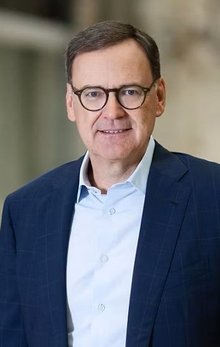
Scott Perkins
Chair
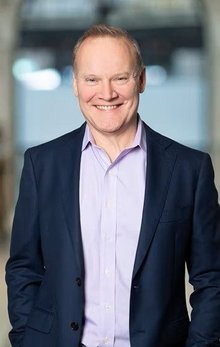
Simon Lowden
Chief Corporate Affairs and Sustainability Officer