What Does New Iberdrola Power Deal Mean for Rail & Freight?
Iberdrola – one of Europe’s leading electricity utilities and a global renewable energy pioneer – has joined forces with railway transport provider Renfe.
As a major investor in wind and solar infrastructure, this latest deal with Renfe furthers Iberdrola’s efforts to achieve carbon neutrality by 2040.
The energy and utilities company actively targets energy-intensive sectors such as transportation to drive the energy transition from fossil fuels to zero-emissions electricity.
Iberdrola’s role in this agreement strengthens its position as the top corporate virtual power purchase agreement (VPPA) provider in Europe, helping businesses like Renfe meet financial and environmental goals.

Iberdrola and Renfe decarbonise freight transport in Spain
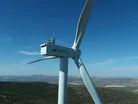
In this deal, the companies have signed an onshore wind power purchase agreement through a long-term VPPA of 370 GWh per year for 10 years.
This deal reinforces the competitiveness of wind technology in Spain, due to the country's mature infrastructure, strong policies and natural resources, making it one of Europe’s top producers of wind.
As such, wind power is a reliable and affordable source of clean electricity for high-demand sectors such as rail. Currently, over 80% of Spain’s rail traffic is already electrified, contributing to the reduction of annual CO2 emissions in Spain of more than 2 million tonnes.
David Martínez, Director of Iberdrola Clientes España, said: "With this agreement with Renfe we contribute to highlighting the value of zero-emission electrification in the transport sector, which is responsible for more than a third of energy consumption in our country. "
He added: “Collaborations like this are essential to support the development of a renewable electricity mix. PPAs, through their different modalities, are a key tool for customers who want to secure renewable energy at a fixed price and in the long term."
Renfe’s broader strategy to mitigate volatility and further ESG objectives
This deal also forms part of Renfe’s broader strategy to cover energy costs, allowing the company to mitigate market volatility, as well as advance its environmental sustainability objectives.
Widely seen as a low-carbon mobility leader, Renfe has – since 1990 – slashed its CO2 emissions per transported unit by more than 90%. The company is also seen as one of Europe’s cleanest passenger and freight operators, with more than 80% of its traffic running on electric lines.
Renfe is also investing in multimodal hubs, hybrid locomotives and digital platforms to reduce empty runs and optimise route planning.
The Iberdrola-Renfe deal reflects broader shifts across the rail and freight sectors, in particular, it furthers the alignment for the industry with Spain’s national and EU climate objectives.
Rail and freight investments made by Spain include:
- Initiatives such as "Plan de Recuperación, Transformación y Resiliencia" are investing €7bn to modernise rail infrastructure and expand electrified routes
- Shifting from road freight to rail to meet its climate goals. Currently, only 5% of freight moves by rail, Spain plans to double this share by 2030
- Improving rail connectivity for ports and logistics zones and integration with high-speed passenger networks to meet the EU's net zero strategy by 2050.
Marta Torralvo, General Economic-Financial Director at Renfe, said: "This agreement represents a new step in Renfe's energy management roadmap. Through this contract, renewable energy production projects are promoted, while Renfe's energy price is stabilised, which we consider very positive for the company's management."
She added: The high volatility of energy prices was causing significant alterations and uncertainties in the evolution of results and in this way these costs are predictable. Agreements such as the one signed with Iberdrola help us to move forward on this path.
“It should be noted that Renfe trains make up the passenger and freight transport system in Spain that consumes the least energy per unit transported. In fact, their carbon footprint is between 20 and 30 times lower than emissions from cars or planes."
Explore the latest edition of Sustainability Magazine and be part of the conversation at our global conference series, Sustainability LIVE.
Discover all our upcoming events and secure your tickets today.
Sustainability Magazine is a BizClik brand