Sustainability LIVE Singapore: Schneider Electric (Fireside)
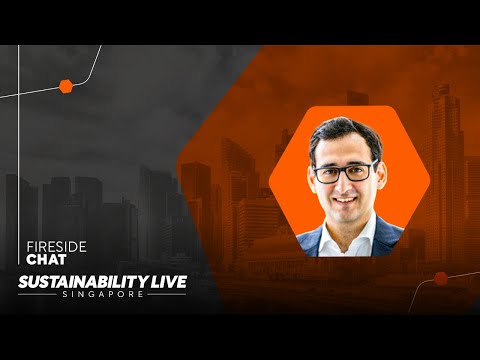
At Sustainability LIVE Singapore, Sorouch Kheradmand, Global Head of Sustainability at Schneider Electric, joined the conversation to unpack what “sustainability at scale” really looks like for business leaders.
In his opening remarks, Sorouch made it clear that sustainability is no longer a question of whether it fits into a business model – it must be integrated if organisations want to thrive.
“We are getting closer to 1.5 to 2 degrees. We are also seeing scarcity, natural resources and energy prices will be – so you have a whole lot of megatrends representing risks for businesses.”
But rather than viewing this as a constraint, he emphasised the opportunity. With climate regulation, energy risk and customer expectations all evolving, sustainability has become a strategic lever.
“The question is – what is it that you can do to help your customers go through those changes and do so in a way that is profitable for them?”
He positioned Schneider Electric not only as a practitioner of sustainable business transformation, but also as an enabler – developing tools, frameworks and platforms that help others do the same.
Defining scale and enabling transformation
When asked to define sustainability at scale, Sorouch outlined how the approach has shifted dramatically in recent years. What was once a consultancy-heavy process has become more accessible thanks to SaaS tools, education, and self-service platforms.
“We're beginning to see promoters of electrification, decarbonised electricity generation, flexibility of the grid and so on,” he said. This change is also influencing how quickly businesses can act.
“The technologies already exist... the question is not so much about what innovation you can bring, but rather what are the short-term actions you can take, which are the most profitable.”
Sorouch pointed to Schneider Electric’s internal programme, DCC 5.0, and their broader push around Electricity 4.0 as frameworks that combine data, digital tools and a focus on impact to help companies identify high-return sustainability moves.
For him, scaling isn't about waiting for new solutions – it's about unlocking action with what's already at hand.
"We all have actions that we can take that boost profitability, speed and competitiveness. The key is to enable them fast enough."
Supporting SMEs through accessible tools
Sorouch placed particular emphasis on the role of small and medium enterprises. Not only are they vital players in global supply chains, but they also make up a significant portion of companies falling under Scope 3 emissions.
“You cannot be serious about decarbonisation without being intentional about addressing your Scope 3 – your suppliers, your customers,” he said.
Recognising that SMEs often lack the resources to hire sustainability officers or invest in high-cost consultancy, Sorouch stressed the importance of simplified and scalable solutions.
Through initiatives like the Zero Carbon Project and the ‘School for Ideas’ programme, Schneider is equipping SMEs with the knowledge and tools to start their journey.
Self-service platforms such as Zeigo provide immediate access to action plans, impact modelling and investment priorities – lowering the barrier to entry for smaller firms while aligning them with global standards.
From culture to competitive edge
Ending the session, Sorouch reflected on how sustainability must evolve from compliance to culture.
“It’s a topic that is highly cohesive – you have a lot of people who want to work in that. The question for leaders is, how do you empower your teams?” he said.
He drew parallels between sustainability and digital transformation. Both are complex, both are necessary and both become effective when tied to core business goals.
“Look at what your company is doing, the risks that are actually important to your business, and what your customers are facing.”
He encouraged businesses to use this lens to unlock innovation, reposition offerings and future-proof operations.
“We need to stop looking at sustainability as box-ticking and instead see it as enabling your business to perform better, be more future-ready and serve customers better.”
When asked for a final example of a company getting it right, Sorouch highlighted both Schneider Electric’s own internal programmes and Decathlon’s resale initiative in Singapore – a circular economy model that reinforces value beyond the initial sale.
Essential diary dates for 2025
Discover the essential diary dates for Sustainability Magazine and its sister publications – Procurement Magazine and Supply Chain Digital.
To follow Sustainability LIVE on LinkedIn, click here.
To enter for the Global Sustainability & ESG Awards, click here.
- Sustainability LIVE Dubai | 22 April
- Sustainability LIVE Chicago | 28-29 May
- Procurement LIVE Chicago | 28-29 May
- Supply Chain LIVE Chicago | 28-29 May
- Sustainability LIVE London | 9-10 September
- The Global Sustainability & ESG Awards | 10 September
- Sustainability LIVE: Climate Week NYC | 22 September
- Sustainability LIVE: COP 30 Brazil | 11 November
Explore the latest edition of Sustainability Magazine and be part of the conversation at our global conference series, Sustainability LIVE.
Discover all our upcoming events and secure your tickets today.
Sustainability Magazine is a BizClik brand