Top 10: Sustainable AI Companies

Research from the London School of Economics and Political Science (LSE) and Systemiq shows AI can play a powerful role in the climate transition.
By 2035, it found that AI could reduce global emissions by 5.4 GtCO₂e annually, outweighing AI’s own energy use.
However, AI’s energy needs are not small. According to the International Energy Agency, data centres consumed around 1.5% of global electricity in 2024 which could more than double by 2030.
Sustainability Magazine has ranked 10 of the top companies developing sustainable AI.
10. Dell Technologies
Director, Social and Environmental Responsibility: Macani Toungara
Founded: 1984
Employees: 108,000
Headquarters: Texas, US

Dell builds high-density AI servers and full rack systems that run the largest models.
Its platforms push liquid cooling, denser layouts and tighter power control so each inference or training step uses fewer watts and less auxiliary cooling.
The PowerEdge XE9680L brings liquid directly to the hottest components, allowing more GPUs per rack with lower fan power and better thermals.
Dell’s eRDHx captures server heat at the rack and rejects it via warm-water loops, which it says lets sites deploy up to 16% more dense compute without raising total facility power.
9. AMD
Senior Director of Corporate Responsibility: Justin Murrill
Founded: 1969
Employees: 28,000
Headquarters: California, US
AMD beat its “30x25” goal for AI and HPC node efficiency, reporting a 38 times gain versus its 2020 baseline.
It has now set a new target to improve rack-scale energy efficiency 20 times by 2030 from a 2024 base, shifting focus from single servers to whole AI racks.
AMD’s data centre guidance and partner ecosystems support liquid-cooling approaches for high-density AI, which reduce the share of power spent on fans and chillers and enable more dense racks with the same power budget.
8. Intel
Head of Sustainability: Madison West
Founded: 1968
Employees: 100,000
Headquarters: California, US

Intel says that it aims to increase the energy efficiency of its client and server microprocessors tenfold by 2030.
The company is also developing immersion and liquid cooling designs that can help to reduce the amount of power needed in data centres.
Intel now puts small AI engines (NPUs) in laptops and PCs.
When simple tasks run locally, not everything is sent to a distant data centre, which saves power and reduces network traffic.
7. Apple
VP Environment, Policy & Social Initiatives: Lisa Jackson
Founded: 1976
Employees: 160,000
Headquarters: California, US
Apple runs as many AI tasks as possible on iPhone, iPad and Mac.
This reduces sending data over the network and cuts the need for server-side processing in data centres for everyday requests.
Heavier tasks move to Private Cloud Compute on Apple silicon servers, designed to execute models efficiently rather than at unnecessary scale.
Apple prioritises compact models for devices and tailored models for the cloud.
The aim is accurate results with less compute, which lowers electricity per task.
6. Meta
Global Head of Net Zero and Sustainability: Blair Swedeen
Founded: 2004
Employees: 75,000
Headquarters: California, US
Meta builds its own inference accelerator (MTIA) and its second generation improves model-serving throughput and performance per watt against the first.
It is deployed in production to handle recommendation workloads efficiently.
Meta also contracts large volumes of new wind and solar power to match the energy use of AI.
The company has also reworked its data centre design to support high-density AI with liquid-ready cooling alongside air for lighter racks.
“Sustainability at Meta is a shared pursuit – every person and every team helps move us along our journey,” says Blair Swedeen, Global Head of Net Zero and Sustainability at Meta.
5. IBM
Chief Sustainability Officer: Christina Shim
Founded: 1911
Employees: 290,000
Headquarters: New York, US
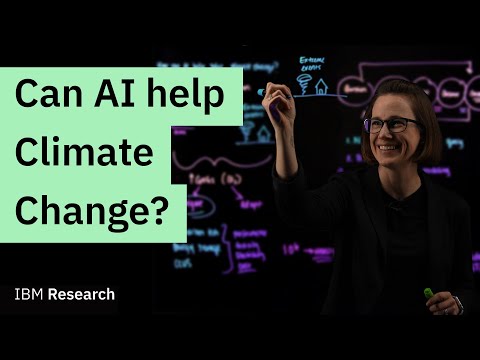
“We are doing a lot of great work on making AI more energy-efficient and cost effective,” says Christina Shim, Chief Sustainability Officer at IBM.
“In one case at the University of Alabama Huntsville, it’s been estimated that using IBM Research’s Spyre AIU chip for a geospatial AI workload may save up to 23 kW per second, the equivalent of 20 US homes’ use per year and 85 tons of carbon emissions.”
IBM’s Granite family focuses on compact, business-focused models rather than larger systems, aiming for accurate results at lower compute and cost.
Beyond general-purpose GPUs, IBM is developing specialised AI inference chips and analogue AI prototypes designed to deliver the same task with far less power.
4. Nvidia
Head of Sustainability: Josh Parker
Founded: 1993
Employees: 36,000
Headquarters: California, US
Moving information around a data centre can be a hidden energy cost.
Nvidia’s systems are designed to handle this more efficiently, so a larger share of site power goes to useful computation.
Its software helps keep servers well utilised so energy isn’t burned on machines sitting idle.
The GB200 NVL72 is a liquid-cooled, pre-integrated rack for large models.
Liquid cooling removes heat more efficiently than traditional air, allowing denser deployments so a larger share of site power feeds compute rather than cooling.
3. Microsoft
Chief Sustainability Officer: Melanie Nakagawa
Founded: 1975
Employees: 220,000
Headquarters: Washington, US

Microsoft’s Phi family champions small language models that deliver useful results with less compute.
Using right-sized models lowers electricity per task and enables more work to happen efficiently at the edge or on modest servers.
Azure now runs Microsoft’s own AI accelerator (Maia 100) alongside optimised CPUs, engineered for production model serving rather than brute force.
Purpose-built chips let Microsoft tune performance per watt at system level, not just on individual servers.
Microsoft is rolling out liquid cooling in traditionally air-cooled facilities to reduce the extra power spent on fans and chillers.
Its next-generation data centres are designed for zero-water cooling in normal operation, using closed-loop systems that recirculate coolant rather than consuming freshwater.
“Building the AI economy requires infrastructure, and we’re doing it with sustainability and local communities in mind,” says Melanie Nakagawa, Chief Sustainability Officer at Microsoft, on LinkedIn.
2. Google
Chief Sustainability Officer: Kate Brandt
Founded: 1998
Employees: 180,000
Headquarters: California, US
“Improving AI's energy efficiency is key to solving the world's biggest challenges,” says Kate Brandt, Chief Sustainability Officer at Google, on LinkedIn.
The company has released a comprehensive methodology for measuring the energy and water impact of its AI models to help improve the transparency of AI’s impact.
“By sharing our methodology, we hope to contribute to collective understanding and drive industry-wide progress towards more efficient and beneficial AI for everyone — including the planet,” Kate says.
Google serves AI on its own Tensor Processing Units (TPUs).
Newer TPU generations focus on better price-performance and throughput for training and serving, which translates into more AI output for a given power budget when deployed well.
Google’s Gemini range includes lighter models such as Gemini 1.5 Flash and 2.5 Flash-Lite that are explicitly optimised for speed and efficiency.
Using smaller, right-sized models lowers electricity per task and reduces the need for oversized server runs.
Google is also enabling 1 MW IT racks and liquid cooling through Open Compute Project work, so more of a data centre’s electricity goes to useful compute rather than fans and chillers.
1. AWS
Director of Sustainability: Chris Walker
Founded: 2002
Employees: 143,000
Headquarters: Washington, US

AWS designs its own silicon for AI. The second-generation Trainium2 and Inferentia2 chips are positioned to deliver higher throughput for training and inference at better energy efficiency than previous versions.
“Trainium2 is purpose built to support the largest, most cutting-edge generative AI workloads, for both training and inference, and to deliver the best price performance on AWS,” says David Brown, Vice President of Compute and Networking at AWS.
“With models approaching trillions of parameters, we understand customers also need a novel approach to train and run these massive workloads.”
AWS also offers built-in optimisation for deployed models so customers can hit the same quality with fewer operations.
Across both new and existing data centres, AWS is rolling out liquid cooling to remove heat more efficiently than air at high density, which reduces the extra power spent on fans and chillers and allows more AI compute in the same footprint.
“AWS's holistic approach to efficiency helps to minimize both energy and water consumption in our data center operations, contributing to our ability to better serve our customers,” says Chris Walker, Director of Sustainability at AWS.
“We are constantly working on ways to increase the energy efficiency of our facilities – optimising our data center design, investing in purpose-built chips and innovating with new cooling technologies.










Executives

Blair Swedeen
Chris Walker
Director, AWS Sustainability
Christina Shim
Chief Sustainability Officer
Josh Parker
Head of Sustainability
Justin Murrill
Senior Director of Corporate Responsibility
Kate Brandt
Member Board of Trustees

Lisa Jackson
Vice President, Environment, Policy and Social Initiatives
Macani Toungara
Director, Social and Environmental Responsibility

Madison West
Global Head of Sustainability
Melanie Nakagawa
Chief Sustainability Officer